What roller door flashings do at an opening
A roller door opening takes a lot of weather stress. Wind drives rain into the sides, dust blows in from the yard, and the top edge often sits right where roof run-off wants to track back. Roller door flashings are shaped metal trims that cover and seal those weak points. They give the opening a neater finish and help keep water off the frame, brickwork and internal floor line.
On workshops in Gouriqua Park, storage sheds in Hartenbos and light industrial units in George, we normally see damage start at the corners first. Once water gets behind a loose edge, the stain marks and rust spread faster than most owners expect. A properly made flashing reduces that risk and helps the door area last longer with less patching.
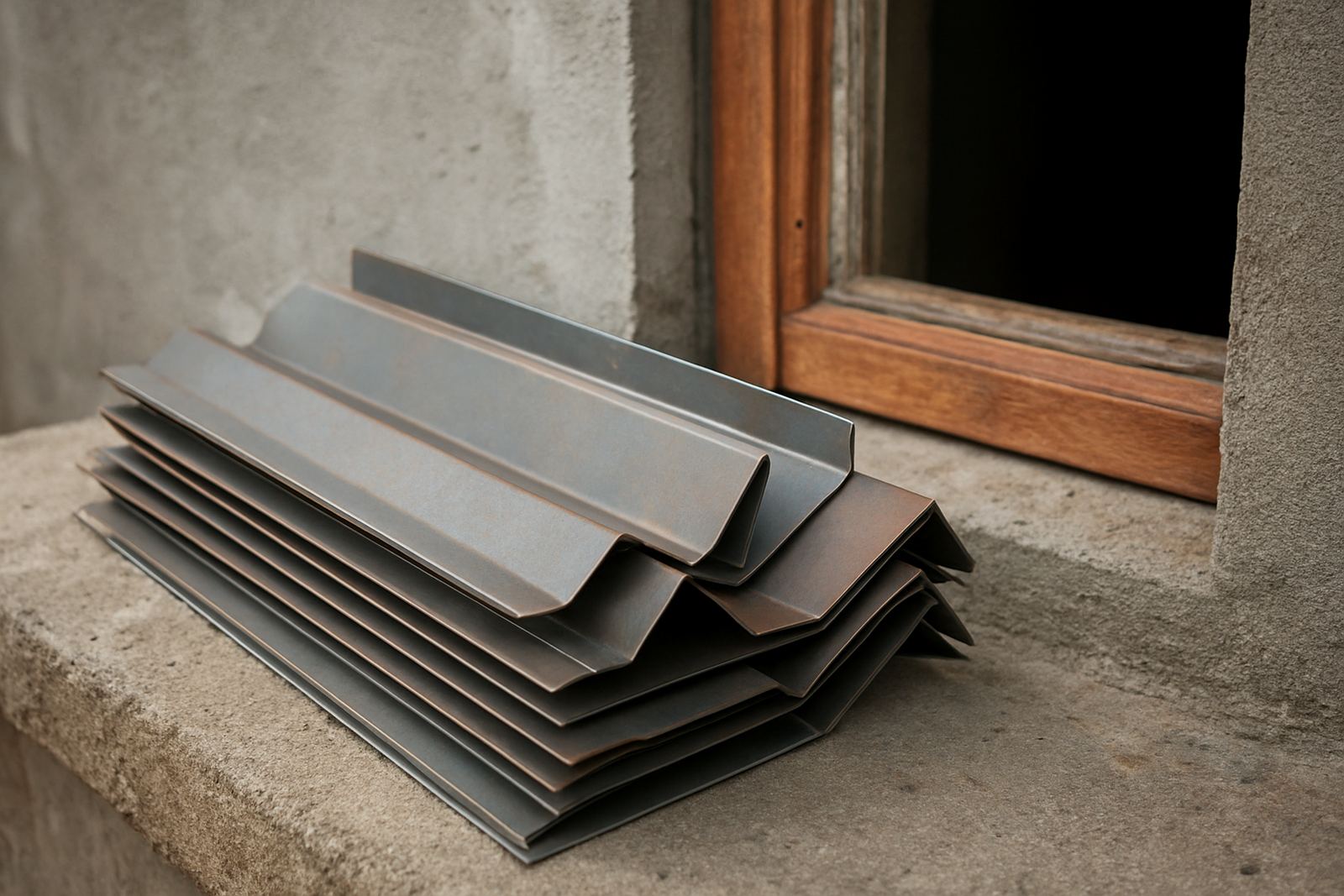
We fabricate flashings to suit the actual opening size, not an off-the-shelf length. That matters because roller doors are often set into uneven walls, different cladding profiles or older buildings where the masonry is not perfectly square.
Sizes, bends and finish options
Most roller door flashings are made from pre-painted steel or plain galvanised steel, depending on the building and the exposure. In coastal areas like Mossel Bay and Great Brak River, material choice matters because salt in the air can shorten service life if the wrong sheet is used. We can also match the flashing to the roof or wall colour where practical.
Common sizes depend on the opening, but the following are typical starting points:
- Face cover widths from 75 mm to 300 mm
- Return legs from 20 mm to 100 mm
- Lengths cut to suit single openings or joined runs
- Sheet thickness commonly 0.4 mm to 0.8 mm, depending on use
- Corner pieces, stop ends and overlap joints where needed
For wider industrial doors, we often form deeper returns so the flashing clears the roller curtain and still covers the edge properly. On smaller storage units, a lighter section is usually enough. The aim is to keep the profile tight without crushing the opening or making future door service difficult.
Where roller door flashings suit best
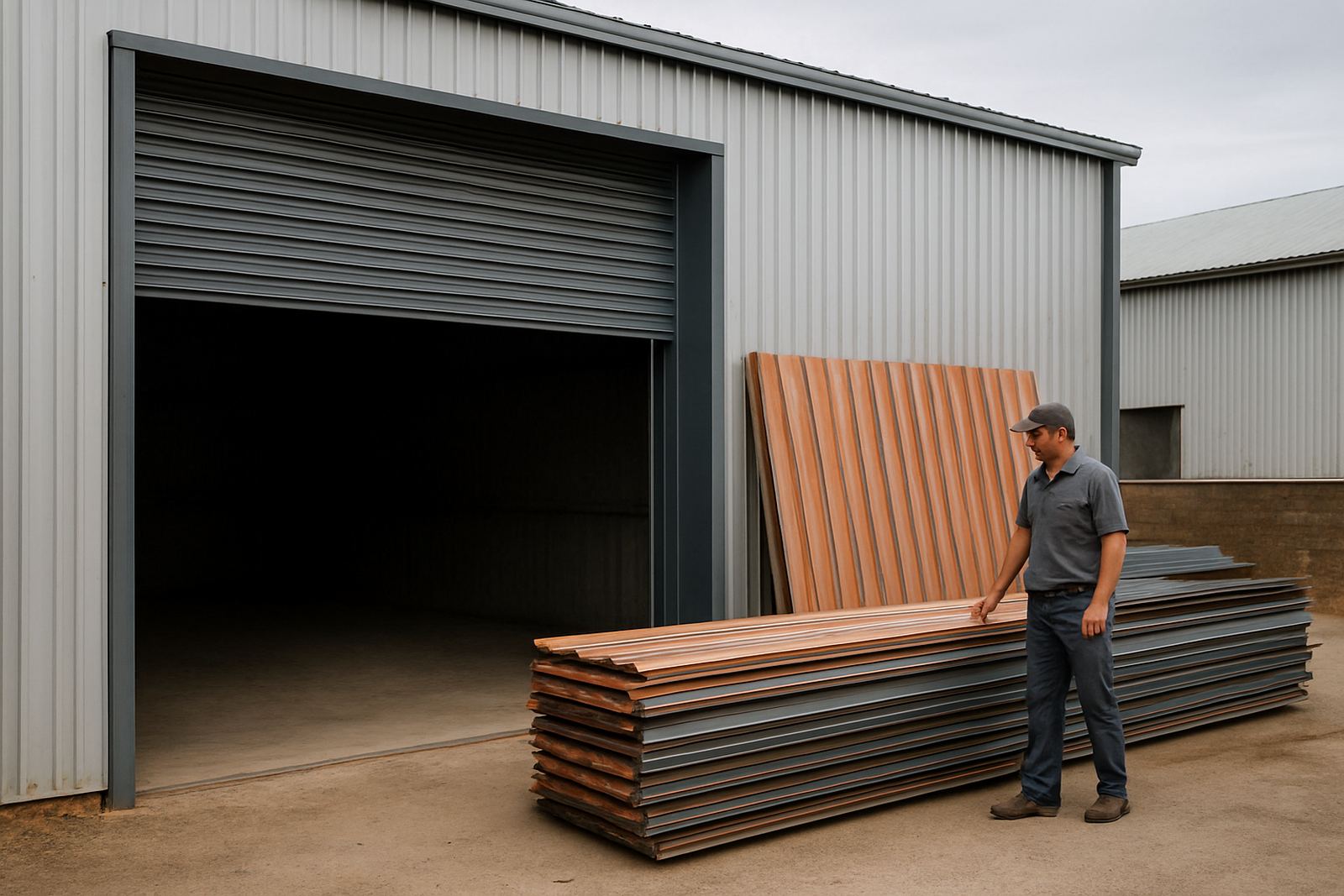
These flashings suit new builds and repairs on workshops, warehouses, storage units, carports with lock-up doors, and service yards where the door is exposed to weather. They are also useful where a door opening has been altered and the old trim no longer lines up with the new frame.
In the southern Cape we often fit them where there is a mix of cladding and masonry, or where the door sits below a parapet that sends water back toward the entrance. If a roller door is used daily for tools, stock or vehicles, sealing the opening properly helps reduce dust on equipment and keeps the threshold cleaner.
They are a practical choice for areas with load-shedding too because a manual roller door still has to work smoothly. If the surrounding flashings are bent or rubbing, the door can become harder to lift and drop. A clean, correctly set edge makes day to day use easier.
Measuring and ordering the right flashing
The best results come from site measuring. Roller door openings can vary by a few millimetres at the top and sides, and that affects how the flashing sits. We check the opening width, reveal depth, wall finish, lintel line and any obstructions like lights, cables or existing gutters.
When ordering, it helps to have these details ready:
- Opening width and height
- Wall type, brick, block or cladding
- Door type and whether it rolls internally or externally
- Colour preference or if plain galvanised is fine
- Whether old flashing must be removed first
- Any waterproofing or leak history at the opening
If the opening has been repaired before, tell us where the leak showed up. Often the real problem is not the middle of the opening but the corner or top return where the old trim was left too short. A proper measure saves time and reduces waste.
Installation on site and what the crew needs
Installation is normally straightforward once the door is set and the opening is ready. We fix the flashing to the prepared surface, seal the joints and make sure the door can travel without hitting the trim. On some openings we add small folded returns or lap joints so water runs away from the seam instead of sitting on it.
Most installations do not need power or gas on site. If the opening is being altered, welded, or tied into a new steel frame then cutting and fixing may be needed. In those cases we will plan for the correct access, safe work area and any hot-work controls required. If the job is at height or in a busy yard, we also factor in vehicle movement and loading times.
For business owners in Mossel Bay, Hartenbos and George, timing matters because the opening is often part of daily stock movement. We try to work around opening hours where possible so the door is not left open and exposed longer than needed.
Care, servicing and signs of trouble
Roller door flashings do not need much maintenance, but they should not be ignored. Check them after heavy rain, strong wind or any roof work nearby. Dirt build-up at the top edge can hold moisture, and a bent corner can let water track behind the sheet.
A simple inspection every few months is usually enough:
- Look for rust at cut edges and screws
- Check for gaps after high winds
- Make sure sealant has not cracked or pulled away
- Watch for water marks inside the opening
- Confirm the door still moves freely without scraping
If a flashing is damaged, it is usually better to replace the section than keep patching it. Small leaks around a roller door can become wall stains, swollen plaster and floor damage before anyone notices. Coastal humidity makes that worse, so early attention pays off.
Key facts
| Product | Custom roller door flashings |
|---|---|
| Material options | Pre-painted steel or galvanised steel |
| Typical sheet thickness | 0.4 mm to 0.8 mm |
| Common face widths | 75 mm to 300 mm |
| Use cases | Workshops, storage units, warehouses, carports |
| Service area | Mossel Bay, Hartenbos, Great Brak River, George, Wilderness, Sedgefield |