What a drip flashing does on a roof or wall
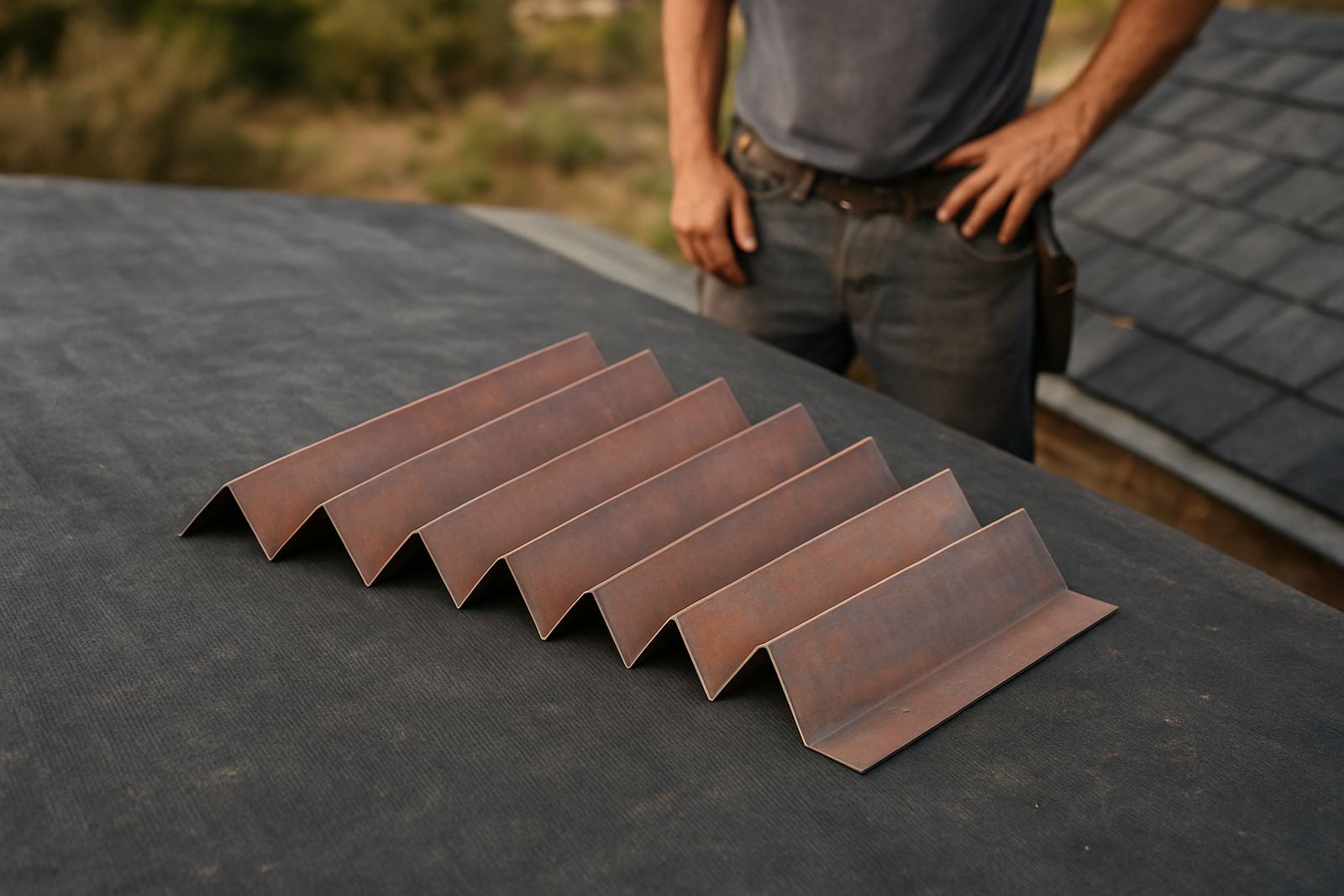
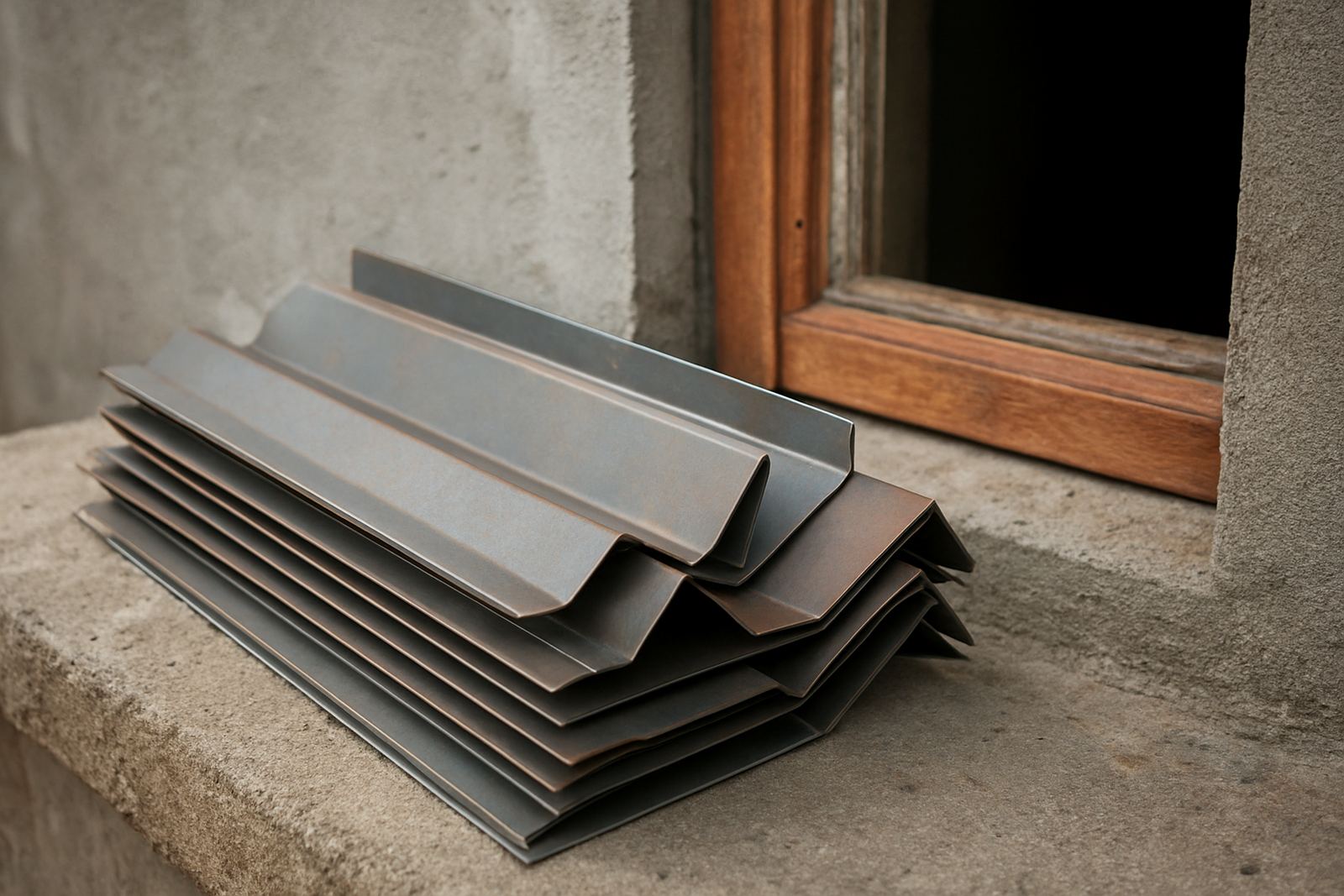
A drip flashing is a shaped metal trim that creates a clean break for water to fall away from a surface. Instead of letting rain run back under cladding, behind fascia boards or into a wall opening, the drip edge carries it outward and down. On homes, workshops, storage sheds and commercial buildings around Mossel Bay, that small fold in the sheet can make a big difference to damp spots, stained plaster and water entering the line of a window or doorway.
We make drip flashings for new work and for remedial jobs where older trims have rusted, lifted or were never set long enough past the face of the wall. On the coast, salt air and wind-driven rain test every edge, so the profile and overlap must be right. A flashing that is too short, or fixed with the wrong lap, can still leave water creeping back. Thats why site measuring matters before fabrication.
Sizes, folds and material options we supply
Drip flashings are usually made to measure, but there are common sizes we work with on site. The right size depends on the roof pitch, cladding thickness, wall build-up and how far the flashing must project past the face. For neat results, we cut, fold and finish each piece to suit the actual opening or edge, not only a rough drawing.
- Material thickness commonly from 0.4 mm to 0.8 mm, depending on use
- Lengths supplied to suit the job, often 2.4 m to 3.6 m per piece
- Leg sizes from 20 mm to 100 mm and more, depending on the detail
- Profiles for roof edges, wall heads, window and door tops, and parapet returns
- Finish options include plain galvanised steel or colour coated sheet for a neater match
For exposed coastal sites in Hartenbos, Great Brak River and Wilderness, we normally look at corrosion resistance carefully. In sheltered interior work, a standard finish may be enough, but on sea-facing buildings the metal choice and fixing method need proper attention.
Where drip flashings suit best
These trims are used anywhere rain needs to be directed away from a vulnerable edge. That includes roof terminations, wall heads, parapet tops, window and door lintel lines, cladding joints and transitions where steel meets masonry. They are also useful over small openings on workshop buildings and carports where water can creep back under the sheet if the edge is left too short.
In the southern Cape, sudden rain and strong wind can drive water uphill under loose edges if the detailing is poor. Drip flashings help reduce that risk when they are installed with the right fall and overlap. They are a practical detail for timber framed structures, steel frame buildings and mixed builds where different materials meet. On older properties, we also use them during roof leak repairs to replace bent or corroded trims that no longer throw water clear.
- Residential houses and flats
- Workshops and light industrial sheds
- Carports and entrance roofs
- Boundary wall caps and parapet tops
- Cladding transitions and roof terminations
Installation details and what the job needs on site
Installing a drip flashing is a straightforward job when the measurements are correct, but the fixing detail must be neat. The flashing should sit with enough projection to create a clear drip line, and the lap must be set so water cannot travel back by capillary action. We install with the right fixings for the substrate, whether that is timber battens, steel purlins or masonry. Sealant is used where needed, but the metal shape should do most of the work.
Our team does not need power or gas for every flashing job, although a workshop fold and cut process may use powered shears, folders and drill equipment before delivery. On site, a basic installation may only need hand tools and fixings. For larger jobs in Mossel Bay, George or Sedgefield, we can deliver pre-made sections and complete the fitment during a planned visit. If access is tight, we measure carefully first so the pieces go up with minimal cutting on the roof.
- Site measuring before fabrication
- Cutting and folding to suit the opening or roof edge
- Fixing with suitable screws or concealed clips where practical
- Sealing at joins, corners and ends where required
- Checking fall, overlap and drip projection before sign-off
Care, inspection and service life in coastal weather
Drip flashings are low maintenance, but they should still be checked from time to time, especially in salty air and after high winds. Look for lifted fixings, sealant that has split, rust spots on cut edges, and bends where ladders or debris may have knocked the trim. If the flashing is holding water instead of shedding it, the edge may have been damaged or installed too flat.
We recommend a routine inspection at least once a year on exposed buildings, and sooner if there has been a storm or a leak complaint. A small repair now can stop damage to plaster, ceiling boards or stored goods below. On many jobs, a quick replacement piece is all that is needed rather than a full roof intervention. That saves time and keeps disruption low, which matters on occupied sites and small businesses.
What to check before you order drip flashings
To get the flashings right first time, please check the following before ordering. If any of these details are not clear, we can measure on site in Mossel Bay or nearby areas and confirm the sizes for you. It is better to spend a few extra minutes on the detail than to end up with a short return or a flashing that does not clear the wall properly.
- Exact location of the flashing, such as roof edge, window head or wall cap
- Length of each piece and the total run required
- Material choice, such as galvanised or colour coated steel
- Required projection past the wall face or fascia line
- Corner returns, joints and any special bends needed
- Whether the job is new work, a repair, or a replacement over an existing edge
J&E Sheet Metal, based in Gouriqua Park, Mossel Bay, works across Mossel Bay, Hartenbos, Great Brak River, George, Wilderness and Sedgefield. For drip flashings, custom sheet metal and related roof details, we keep the process practical and local, from measuring through to installation.
Key facts
| Product type | Custom drip flashings for walls, openings and roof edges |
|---|---|
| Common material | Galvanised steel or colour coated sheet metal |
| Thickness range | 0.4 mm to 0.8 mm, depending on application |
| Typical lengths | Cut to measure, often 2.4 m to 3.6 m sections |
| Use areas | Roof edges, windows, doors, parapets, cladding terminations |
| Service area | Mossel Bay, Hartenbos, Great Brak River, George, Wilderness, Sedgefield |