How downpipes work with your gutter system
A downpipe is the vertical section that takes water from the gutter and sends it down in a controlled way. Without the right size and fall, water backs up in heavy rain, overflows at the eaves, or splashes against walls and paving. In a coastal area like Mossel Bay, that extra moisture can leave stains, affect plaster and speed up rust on unprotected steel.
We supply downpipes for new builds, roof upgrades and gutter replacement work. They can be made to suit box gutters, ogee gutters and custom sheet metal systems, with the outlet positioned where it is easiest to route water to a soakaway, stormwater line or garden drain. On larger roofs, we often pair them with oversized gutters so the whole line can keep up during a summer downpour.
Good downpipes are not just about taking water away. They also need to sit neatly against the wall, clear windows and door frames, and leave enough space for maintenance. On some sites the route must be planned around boundary walls, paving levels and municipal drainage rules, so the pipe ends where it should and not where it causes trouble.
Square and round options for different buildings
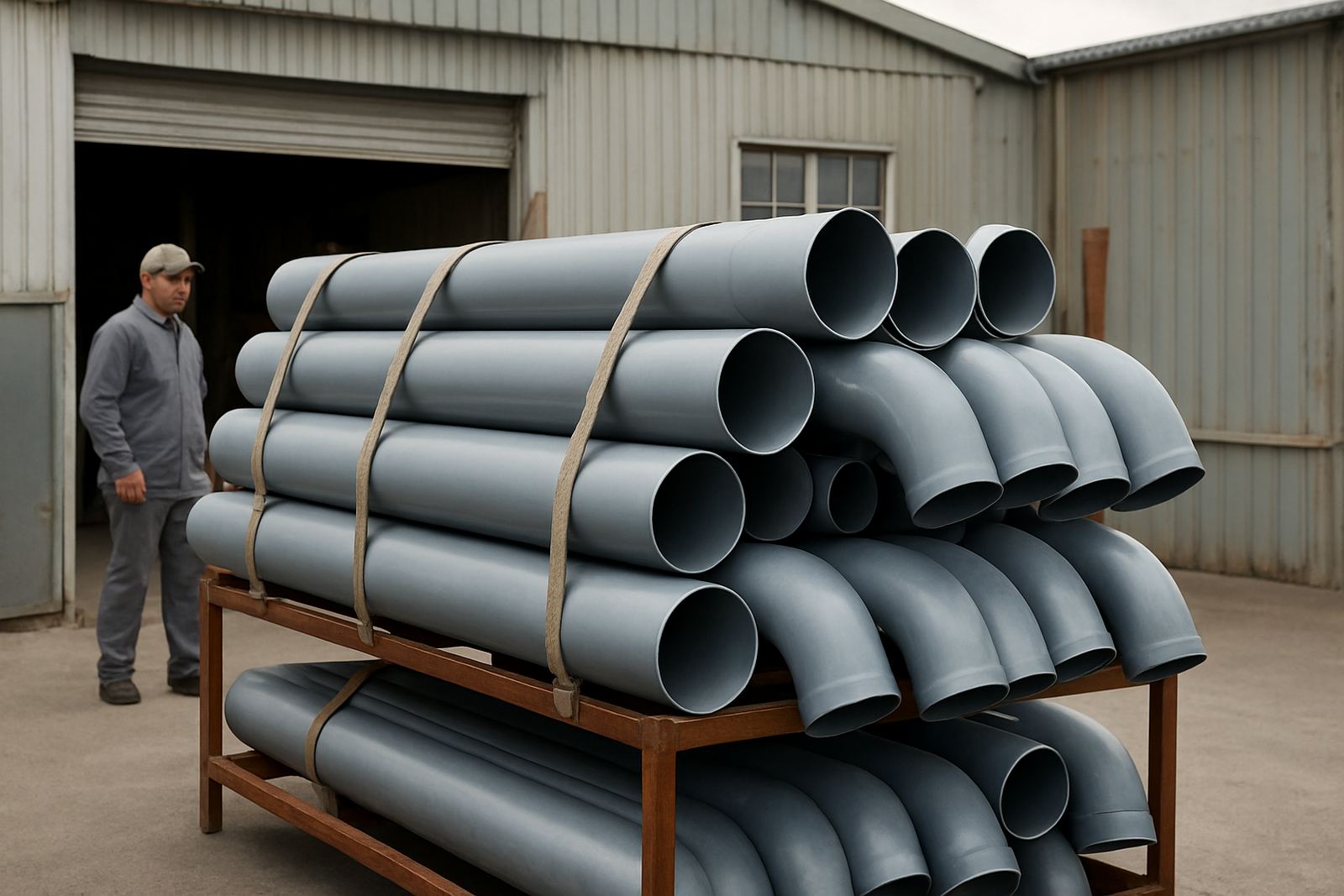
We make both square and round downpipes, depending on the look of the building and the volume of water the roof has to handle. Square downpipes are often used on steel buildings, workshops and modern homes because they sit neatly against cladding and match straight-line profiles. Round downpipes are often chosen where a softer finish is preferred or where an existing system already uses circular fittings.
Typical sizes include 75 mm, 90 mm and 100 mm round pipe, and square profiles such as 75 x 75 mm, 100 x 75 mm and 100 x 100 mm. For larger industrial or commercial roofs, we can fabricate bigger sections if the gutter run and roof pitch need it. The correct size depends on roof area, rainfall exposure, gutter width and the number of outlets on the run.
- Square downpipes suit steel frame buildings, carports and rectangular gutters.
- Round downpipes are common on houses, boundary walls and retrofit jobs.
- Larger outlets help on long roof runs or where leaves and windblown debris are a concern.
- Matching brackets, offsets and shoes can be made to suit the pipe route.
Finish options can be matched to the roof or wall cladding where required. In coastal air, a neat finish matters because exposed edges and poor joins tend to show wear sooner.
Where downpipes suit best in Mossel Bay and beyond
Downpipes are used on almost any building that needs proper roof drainage. In Mossel Bay and Gouriqua Park, they are common on family homes, flat roof additions, garages, carports, holiday units and workshop buildings. We also supply them for properties in Hartenbos, Great Brak River, George, Wilderness and Sedgefield where the building mix changes from light residential roofs to larger steel structures.
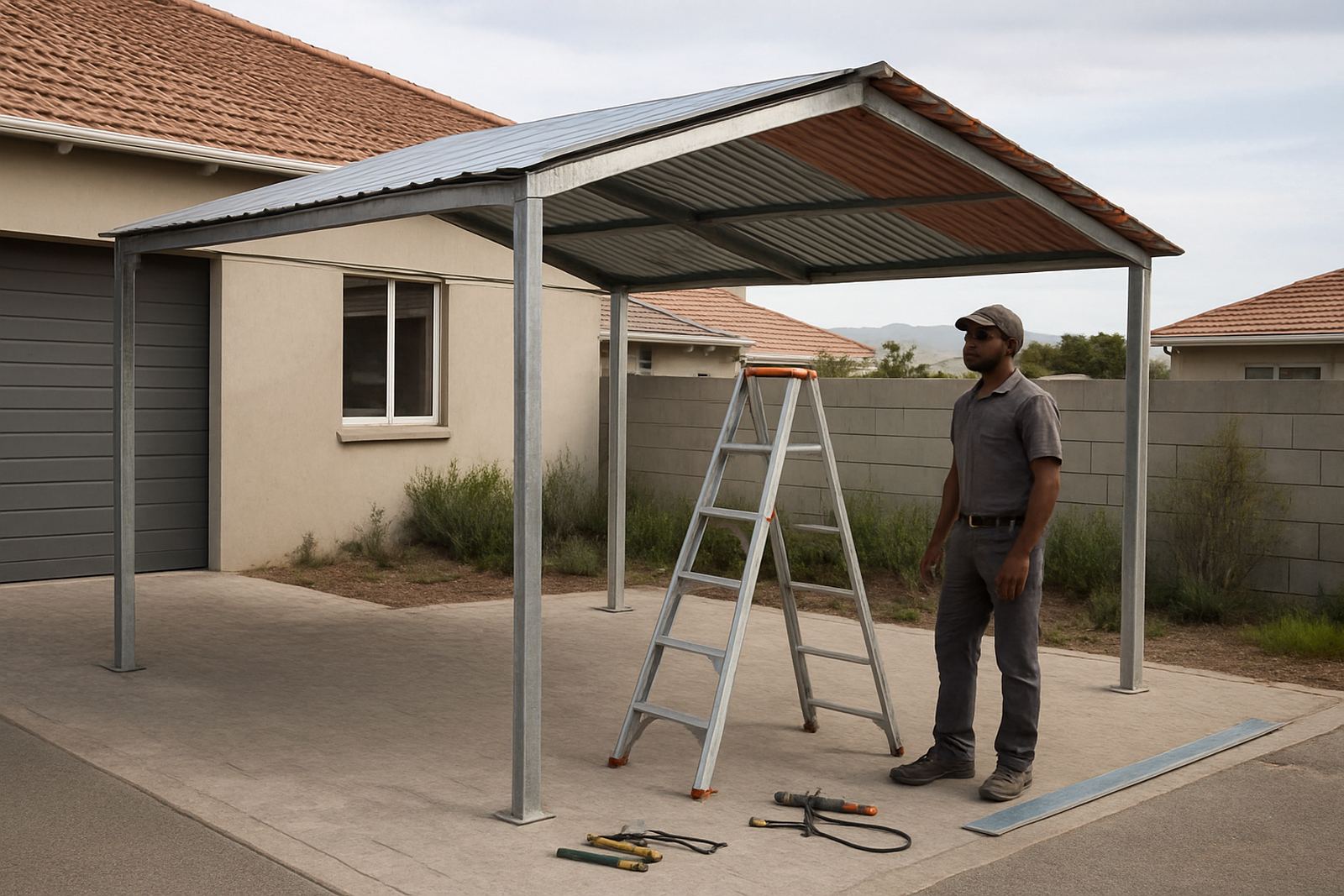
For carports, a downpipe is often placed at the edge that carries the main runoff, so puddling does not form near parking bays. For steel buildings, the pipe may drop from a box gutter or eaves gutter and run to a planned discharge point. On farm sheds or storage units, the aim is usually simple and practical, keep the water off the slab and away from stock areas.
Where there are paving levels, retaining walls or narrow side passages, we measure carefully before fabrication. That avoids a pipe that lands too close to a walkway or blocks access to a gate. It also helps the installer choose the best offset and fixings from the start.
Fabrication, installation and site requirements
Downpipes are fabricated from sheet metal to the required length and profile, then fitted with the right clips, bends and outlets. Installation is usually straightforward, but the route must be planned properly so water can discharge cleanly and the pipe is fixed at enough points to stay straight. On taller walls or steel buildings, the fixing line matters because wind can rattle loose pipework if it is not secured well.
Most downpipe work does not need electricity or gas on site, unless it forms part of a larger sheet metal or roofing package where cutting, fastening or structural work is being done. We can work from site measurements and build the pipe to suit the actual wall height, roof edge and outlet position. That saves time and usually gives a better fit than trying to force a standard size onto an awkward wall.
- Measure roof height, outlet position and wall clearance before ordering.
- Check whether the pipe must run straight down or step around a feature wall.
- Confirm if the discharge goes into a drain, splash block or ground level outlet.
- Allow for access around the pipe for future cleaning and repairs.
If a building has solar equipment, awnings or security bars, we take those into account too. A downpipe should never be fitted so close that normal maintenance becomes difficult.
Care, servicing and signs of wear
Downpipes last longer when the gutters above them are kept clear. Leaves, roof dust, nesting material and windblown grit can block the inlet and make water back up. In coastal towns, salt in the air can also shorten the life of unprotected metal if scratches or cut edges are left untreated. A simple inspection every few months helps catch small problems early.
Look out for water marks on walls, damp at the base of the pipe, drips at joints and overflow during moderate rain. These signs can mean the outlet is blocked, the pipe is loose, or the sizing is not keeping up with the roof area. If the pipe has dents from garden tools, vehicles or ladders, the water path can narrow and debris can collect faster.
We can inspect downpipes as part of a maintenance visit and advise whether a repair, replacement or additional outlet is the better option. On older buildings, it may be worth changing the downpipe together with the gutter section so the whole line works properly and not just the visible part.
What to check before you order
When ordering downpipes, the main details are the roof type, gutter size, pipe size and discharge point. If any one of those is wrong, the pipe may not line up with the outlet or may not carry enough water when the weather turns. It helps to have roof measurements, photos of the wall and a note of where the pipe should end.
Also check whether the project needs square or round pipe, whether the finish must match an existing system, and whether bends are needed to clear windows, beams or paving. If you are replacing old pipework, bring a sample or clear photo of the existing section, because older buildings often have odd sizes that are not obvious at first glance.
- Roof area and pitch
- Gutter profile and outlet size
- Required pipe shape and length
- Number of bends, clips and wall brackets
- Discharge point and drain connection
- Any nearby obstacles such as beams, windows or gates
J&E Sheet Metal works from Gouriqua Park in Mossel Bay and supplies downpipes across the southern Cape. If you need a new run, a replacement section or a matched set for a bigger roofing job, we can measure, fabricate and fit it to suit the site.
Key facts
| Profiles | Square and round downpipes |
|---|---|
| Common sizes | 75 mm, 90 mm, 100 mm and custom sizes on request |
| Typical materials | Sheet metal sections matched to the roof and gutter system |
| Use cases | Houses, carports, workshops, sheds and steel buildings |
| Fixing method | Wall brackets, clips, bends and outlets to suit the route |
| Service area | Mossel Bay, Hartenbos, Great Brak River, George, Wilderness and Sedgefield |