Why carport drainage matters from day one
A carport roof looks simple, but the drainage plan starts the moment the frame is measured. If the sheet fall is wrong, water can sit near the low edge, spill over the side or run back toward the entrance where vehicles park. That leaves puddles around tyres and muddy patches in gravel yards, especially on sites in Gouriqua Park, Hartenbos and the tighter residential roads around Mossel Bay.
For a home or small business, the aim is plain: catch the water, move it quickly, and release it where it will not pool against paving or soak the foundations. In coastal air, standing water also leaves salt marks on steelwork and roof sheets, so the small drainage details protect more than just the driveway.
The slope that lets water move, not sit
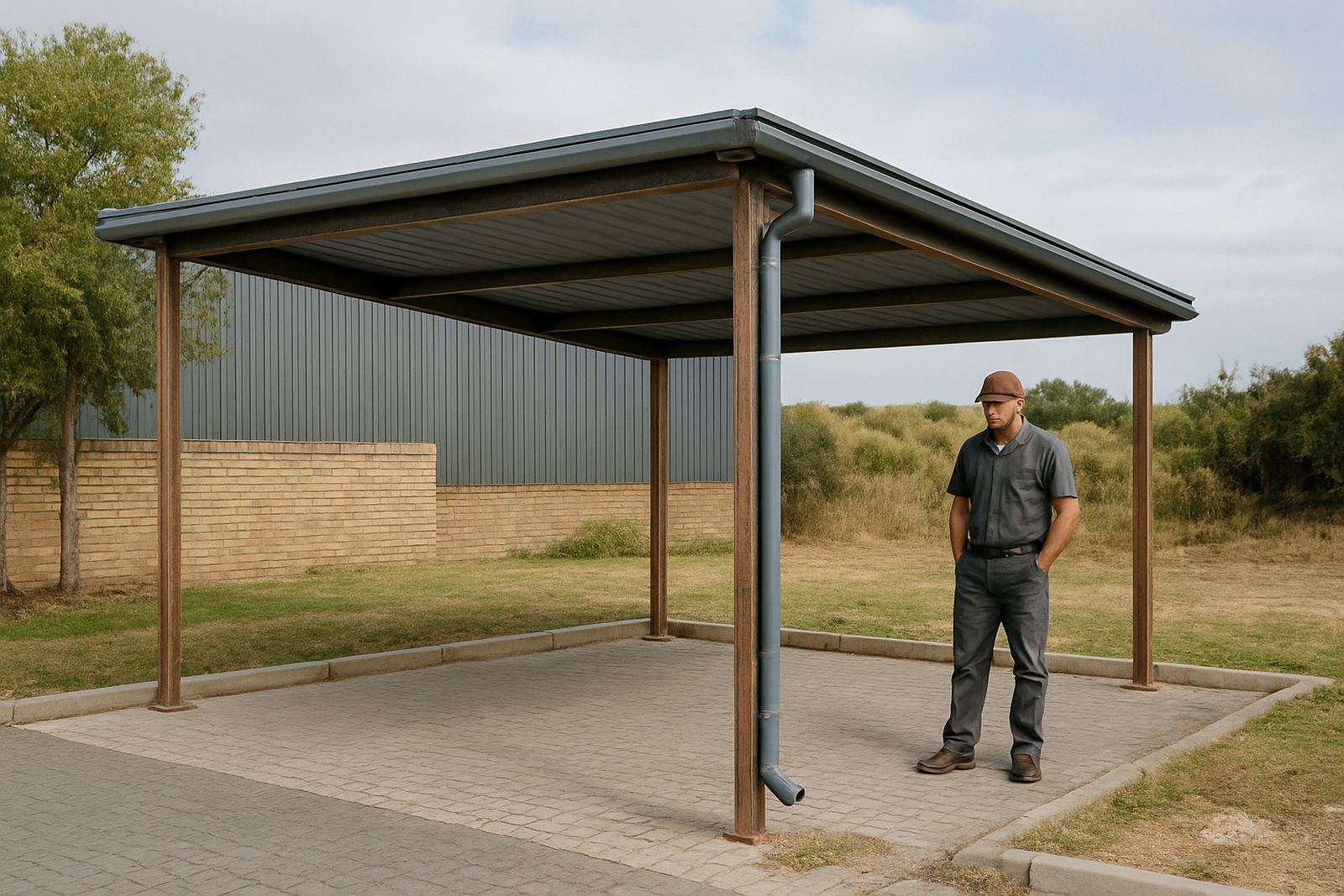
Roof pitch is the first control point. A carport does not need a dramatic slope, but it must have enough fall for the sheet profile being used. Too little pitch and the water hesitates at the overlap. Too much fall and the roof can look awkward or catch wind differently. The right angle depends on the span, the sheet type and where the downpipe or gutter will sit.
When we measure a site, we check where water naturally wants to go. That includes the driveway gradient, the position of gates, and whether the client parks one vehicle or two. A carport that faces the prevailing wind in George or Wilderness may need tighter detailing at the edge so rain does not blow back under the roof.
- Match the pitch to the sheet profile and roof span.
- Keep the low point aligned with the gutter or drip edge.
- Check that the final runoff does not face a parking bay.
Gutters that are sized for local downpours
A narrow gutter on a carport is asking for overflow. During a proper southern Cape shower, roof water can arrive quickly and a small gutter will spill long before the rain eases. Once that happens, the overflow lands where cars stand and where paving joints are easiest to damage. A correctly sized gutter and the right number of outlets keep the system moving.
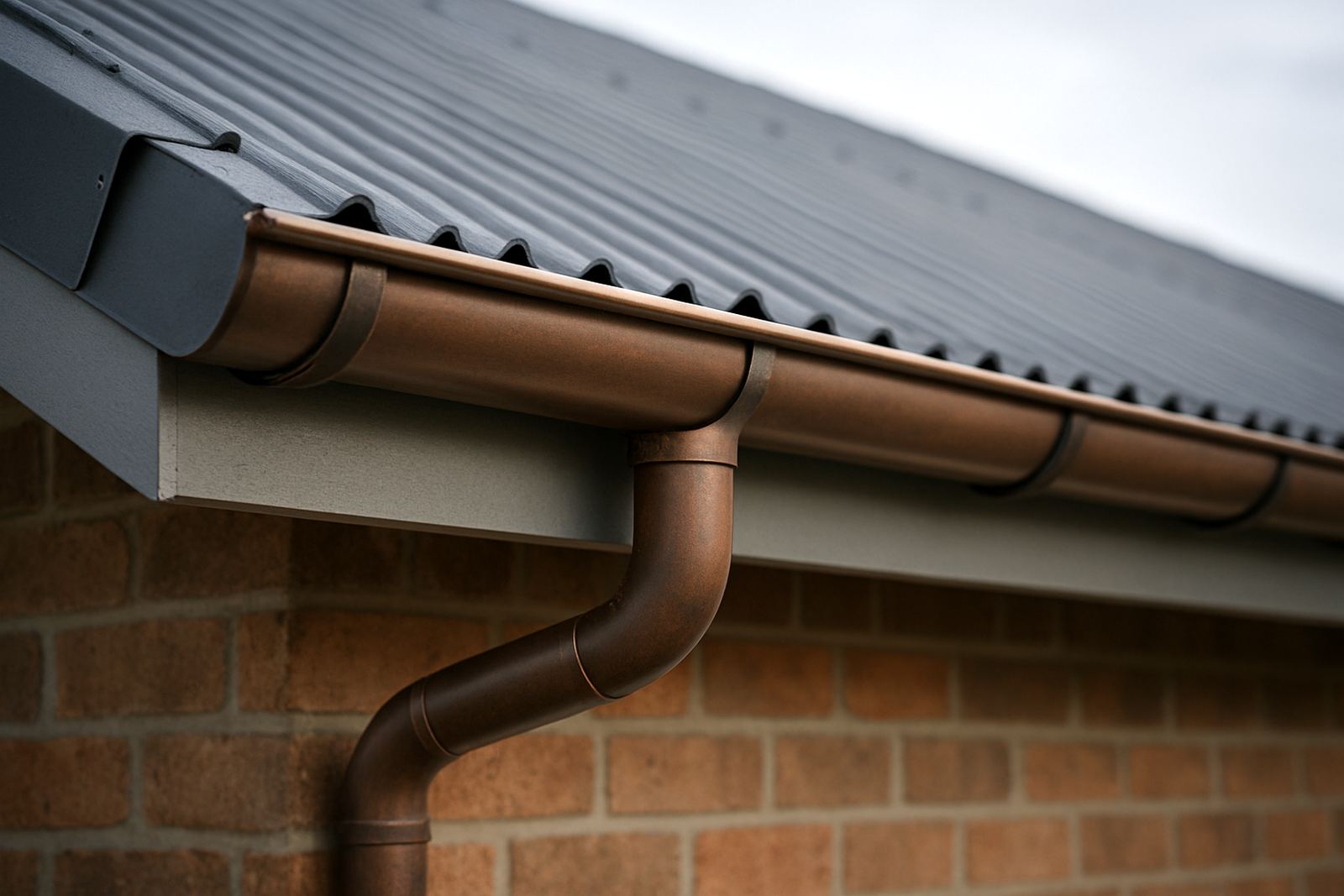
We normally look at roof width, sheet length and the likely rain load for the area before fabricating the gutter. On a coastal property, brackets and fixings also need attention because salt air works on metal fittings over time. If the gutter is too shallow, or the outlet sits too high, leaves and fine dirt collect and block the run. Then the carport starts holding water after only a short storm.
- Use a gutter size that suits the roof area, not just the look of the carport.
- Place brackets close enough to prevent sagging once water collects.
- Allow for access so the gutter can be cleaned after windy weeks.
Downpipes and discharge points that keep the floor dry
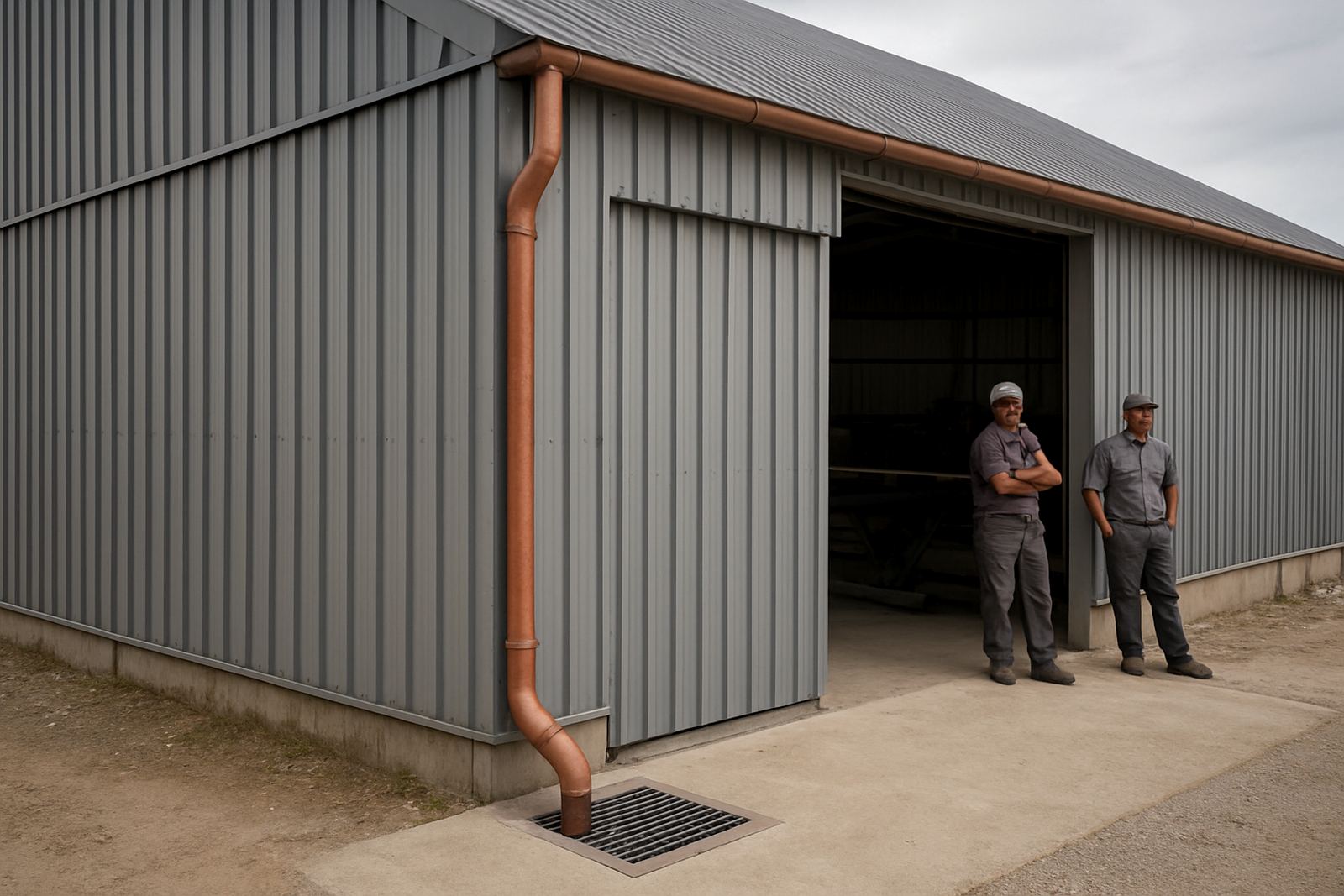
Even a well-made gutter will fail if the downpipe dumps water beside the parking space. The discharge point should send water into a drain line, soakaway or channel where it can move away safely. If that is ignored, the carport stays neat overhead but the ground below becomes slippery and wet after every shower.
On some properties the best answer is a short downpipe with a neat extension to a controlled outlet. On others, especially where the surface is paved, the drain point needs to tie into existing stormwater routes. Municipal rules and site conditions matter here, because water should not be pushed onto a neighbour's boundary or under a wall footing. A good installer plans that before the first sheet goes up.
- Keep discharge away from doors, steps and vehicle tyres.
- Do not let water splash onto painted walls or steel posts.
- Check that the outlet is clear of stones, sand and garden debris.
Flashings, overlaps and the small details people miss
Most carport leaks do not start in the gutter. They start at the sheet overlaps, the wall junction or the edge where a flashing was cut a bit short. In the southern Cape, wind can drive rain under a poor overlap, then the water runs down the steel and drips right where the car is parked. That is why the finish around the roof edge matters as much as the frame itself.
Custom flashings close the gaps around beams and support posts, while proper overlaps stop backflow under the sheet ends. The fixings must be tight and correctly spaced, but not crushed so hard that the sheet distorts. Once the roof begins to move with heat and cold, a weak joint opens up. A careful eye at installation time saves a lot of trouble later on.
How we handle carport drainage in Mossel Bay and nearby towns
Every site has its own shape. A small domestic carport in Great Brak River needs different drainage from a larger workshop carport in George or a guest property in Sedgefield. We start with site measuring, then set the frame, sheet fall and gutter line to suit the parking layout. That way the water moves off the roof and the bay stays usable after rain.
For homes close to the coast, we also think about maintenance. Salt, wind and dust all shorten the life of gutters and fixings if they are left unchecked. A simple inspection before winter and after a few hard storms can stop a blocked outlet from becoming a leak. If a gutter section is bent, or a downpipe has pulled loose, it is usually cheaper to repair it early than deal with staining and pooling later. We see that often on properties where the carport was added first and the drainage was left as an afterthought.
J&E Sheet Metal works from Gouriqua Park in Mossel Bay, with projects across Hartenbos, Wilderness and the wider southern Cape. Our team handles carport installation, gutter replacement, roof leak repairs and maintenance inspections, so the drainage and the structure are planned together rather than patched later.