When an open yard starts costing you money
Most yard operators only feel the pain once the damage starts. Rust on steel stock, wet packaging, sun-baked sealants, mud at the loading bay, and forklifts running through puddles after a winter storm. In Mossel Bay and the southern Cape, salt in the air and strong wind can shorten the life of materials fast if storage is left open. A proper covered yard setup helps keep turnover moving and reduces the small losses that add up every month.
We work with businesses that need practical cover for palletised goods, pipe, timber, building materials, hire equipment, spare parts and maintenance stores. The right layout depends on how often vehicles enter, how high the stock is stacked, and whether you need open-sided cover for airflow or enclosed sections for more sensitive items.
Typical storage-yard structures we build
Storage yards rarely need a one-size-fits-all building. Most sites do better with a mix of covered bays, lean-tos and clear traffic space. Our team fabricates and installs steel structures that suit the ground conditions, bay widths and roof pitch required for drainage and wind control.
- Lean-tos along existing walls for added covered length without blocking the main yard.
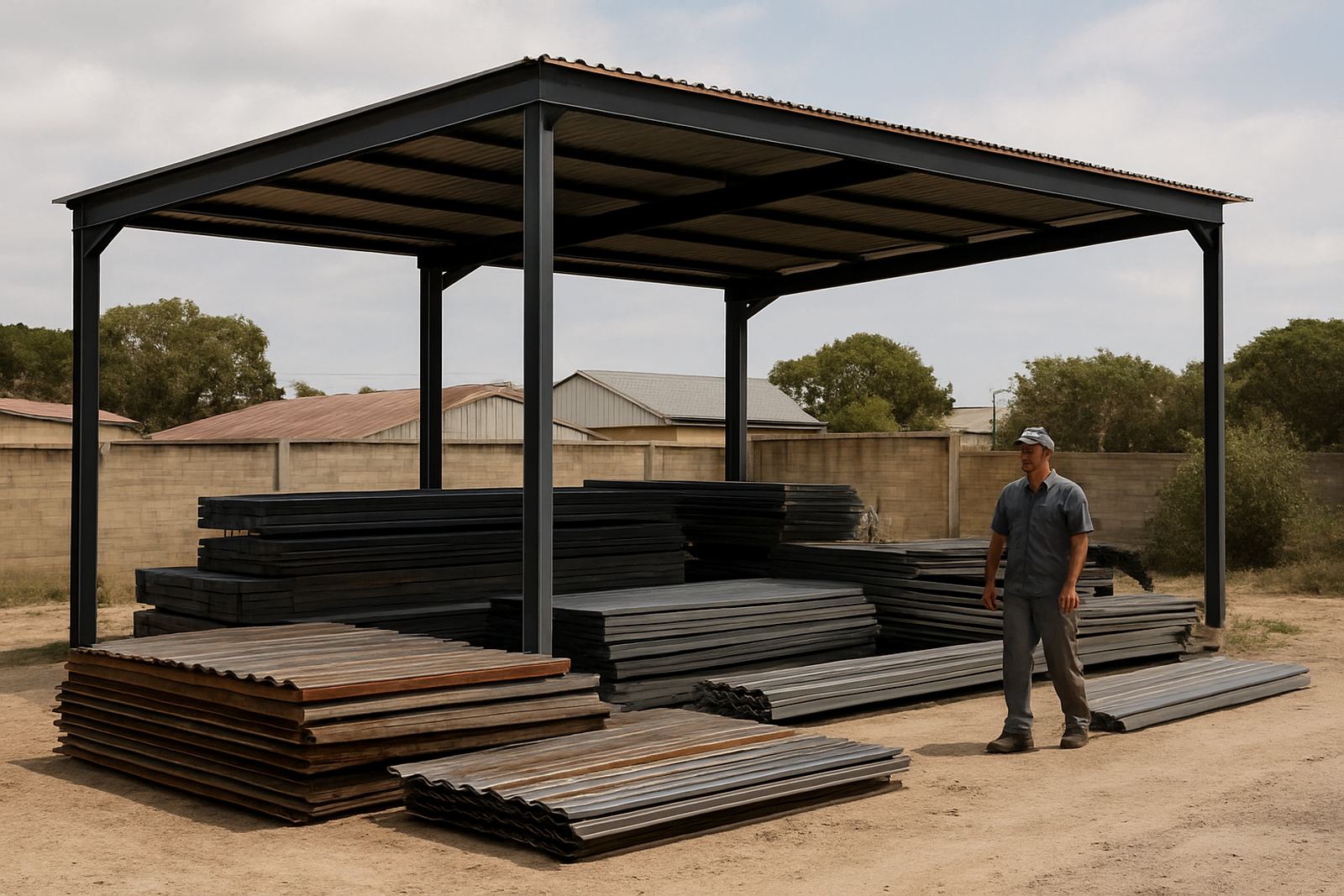
- Free-standing steel frame covers for bulk stock, tools and equipment.
- Gutter systems and downpipes sized for heavy rainfall so water does not dump onto loading areas.
- Custom flashings around joins, wall edges and roof ends to reduce leaks and wind lift.
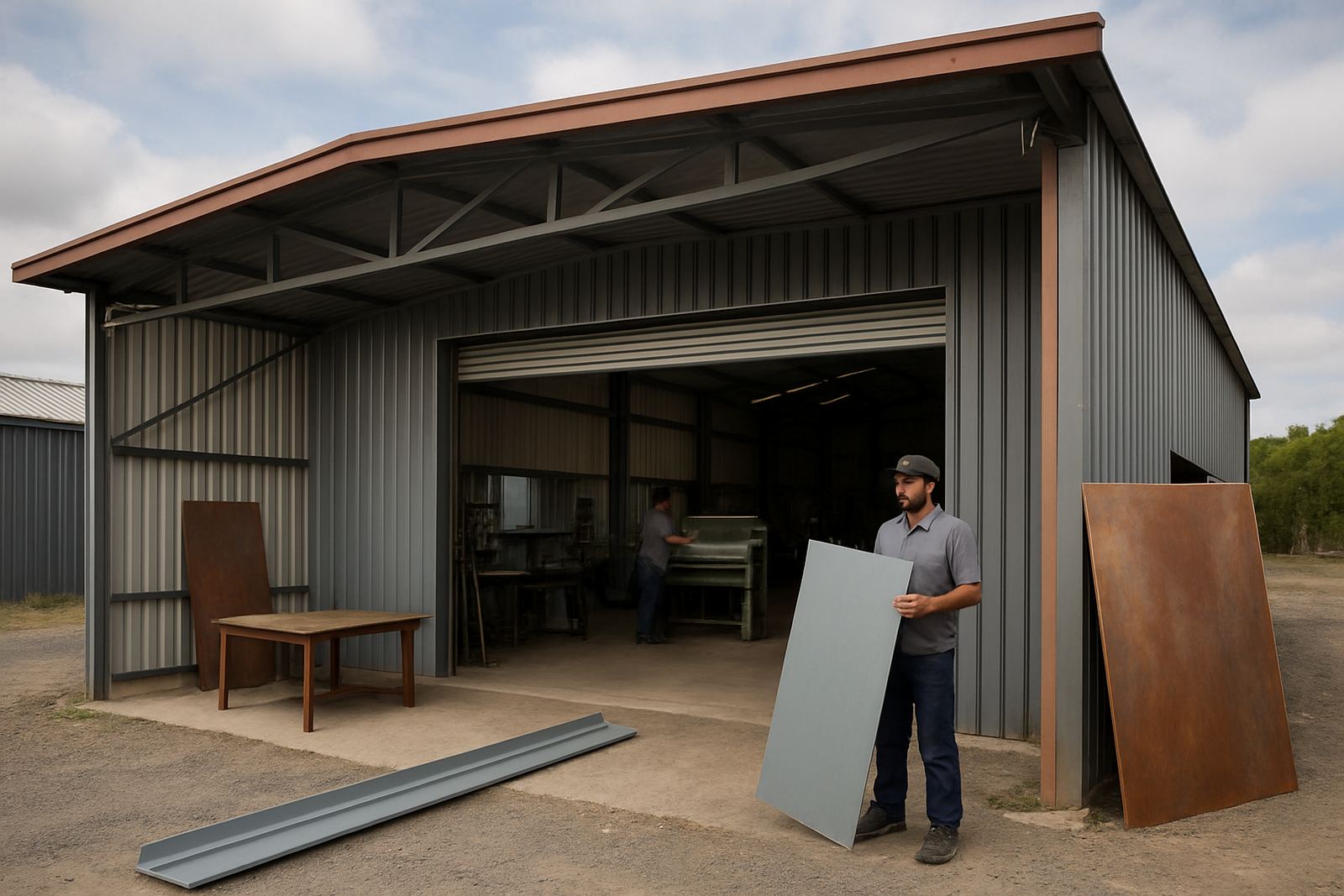
- Roof sheet and wall cladding installation for cleaner, drier storage zones.
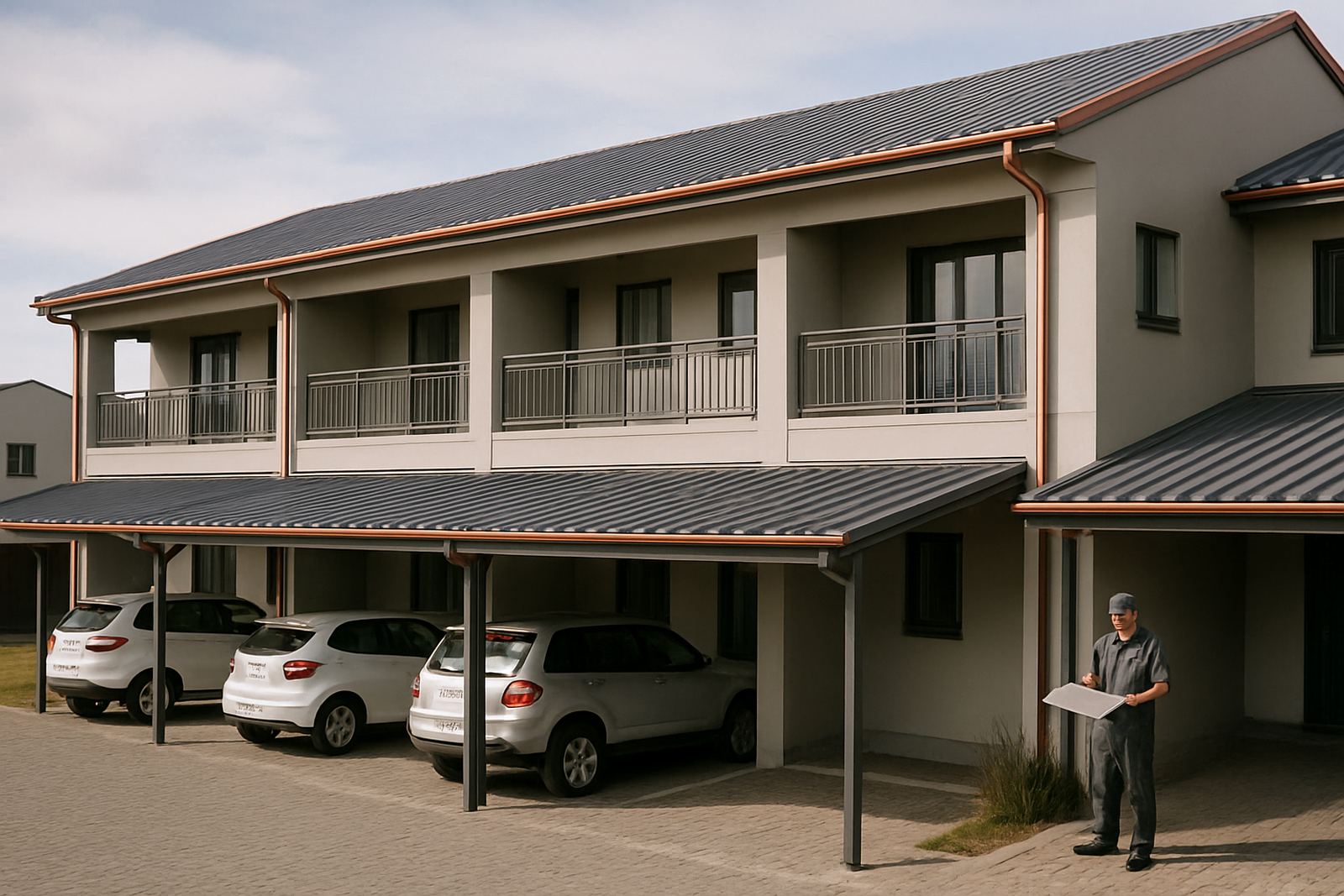
- Carport-style covers for fleet vehicles, trailers and service bakkies.
For coastal sites, we also look at fastening details, sheet overlap and ventilation. A storage roof that traps moisture can cause more trouble than an open yard, so the build has to suit the materials being stored.
Planning the yard around movement, access and drainage
A good storage yard should work with the way your team moves, not against it. Before fabrication starts, we look at where trucks enter, where forklifts turn, where stock is received, and where stormwater naturally runs after rain. That planning step matters in places like Hartenbos, Great Brak River and George where ground levels and runoff can change from one part of the site to the next.
The main aim is to keep traffic clear and dry. If drainage is ignored, water sits under racks and around posts, then you get corrosion, soft ground and unsafe conditions for staff. On smaller sites a simple fall away from the building and correctly placed gutters may be enough. On larger yards, a combination of gutters, surface falls and channels is usually needed.
- Keep the receiving area close to the main covered bay.
- Allow enough headroom for forklifts, tipper bodies and loaded bakkies.
- Leave space for gutter discharge and maintenance access.
- Plan for future growth, so the structure can be extended later.
Materials and equipment that suit yard operations
Storage yards take a beating from sun, wind, dust and constant movement. That means the structure has to be practical from day one. We fabricate steel frames for span width, then match the cladding and roofing to the use case. In some yards the best answer is open-sided cover for ventilation. In others, wall cladding on one or two sides helps with dust, spray and weather protection.
Common equipment housed under these structures includes pallet stacks, steel sections, workbenches, compressors, pumps, ladders, pipe bundles, spare tyres and light machinery. If the site stores items that should not sit in damp air, we can advise on roof pitch, ridge detail and side protection so the building does not sweat inside on cold mornings.
For maintenance-heavy yards, it also helps to include safe access for repair crews. A poorly placed roof edge or gutter can make a simple inspection awkward. That usually means more time on a ladder and more risk, which nobody wants.
Common mistakes that cause leaks, rust and downtime
We are often called after a yard has already been patched three or four times. The same issues come up again and again. The structure was built too low for the vehicles. The gutters were too small for a sudden downpour. The roof sheets were fixed without enough allowance for wind. Or the site was levelled for convenience but not for water movement. These problems are expensive because they affect storage, not just the building itself.
Another common issue is trying to cover everything without thinking about the workflow. If delivery trucks have to reverse around posts or swing too tightly under the roof, damage becomes regular. A yard should not force drivers into awkward turns. It is better to leave some space and keep the critical covered area in the right place.
For coastal towns like Mossel Bay, even small details matter. A weak fix or poorly sealed overlap can start rusting quicker than expected, especially where moisture hangs around after sea mist.
Budget ranges for storage-yard work in Rand
Costs depend on span, height, steel weight, roofing choice and whether the structure is attached to an existing wall or built free-standing. Simple lean-tos and small covered bays are usually the lowest-cost option, while larger yard structures with full cladding, gutters and more complex steelwork sit higher. We always recommend budgeting for drainage too, because a cheap roof with poor water handling is not really cheap.
As a working guide, smaller yard covers may start from around R85 000 to R180 000 depending on size and finish. Mid-size storage structures with proper steel framing, roofing and gutters often fall between R180 000 and R450 000. Larger yard setups for heavier use, multiple bays or extra wall cladding can run from R450 000 upwards. Site conditions, access for delivery and foundation work can shift the final figure quite a bit.
If you are comparing quotes, check that each one includes measuring, fabrication, installation, guttering and any flashings needed for the join details. Missing those items is where many budget overruns begin.
What we provide for storage yards in the southern Cape
We handle site measuring, fabrication and installation for storage-yard structures from our base in Gouriqua Park, Mossel Bay. Our work covers Mossel Bay, Hartenbos, Great Brak River, George, Wilderness and Sedgefield, and we understand the weather pressures that come with the coast and inland wind corridors. Whether the need is a covered loading strip, a lean-to against an existing building, or drainage upgrades around a busy yard, we build for day-to-day use rather than showroom conditions.
Typical jobs include roof sheet installation, wall cladding installation, custom flashings, gutter fabrication, gutter replacement, roof leak repairs and maintenance inspections. If the yard needs a new steel frame or a carport-style cover for fleet vehicles, we can include that in the same scope. For storage operations, the aim is simple: keep goods dry, keep movement safe, and cut down on maintenance interruptions.