Twin-unit gutter replacement in Dana Bay
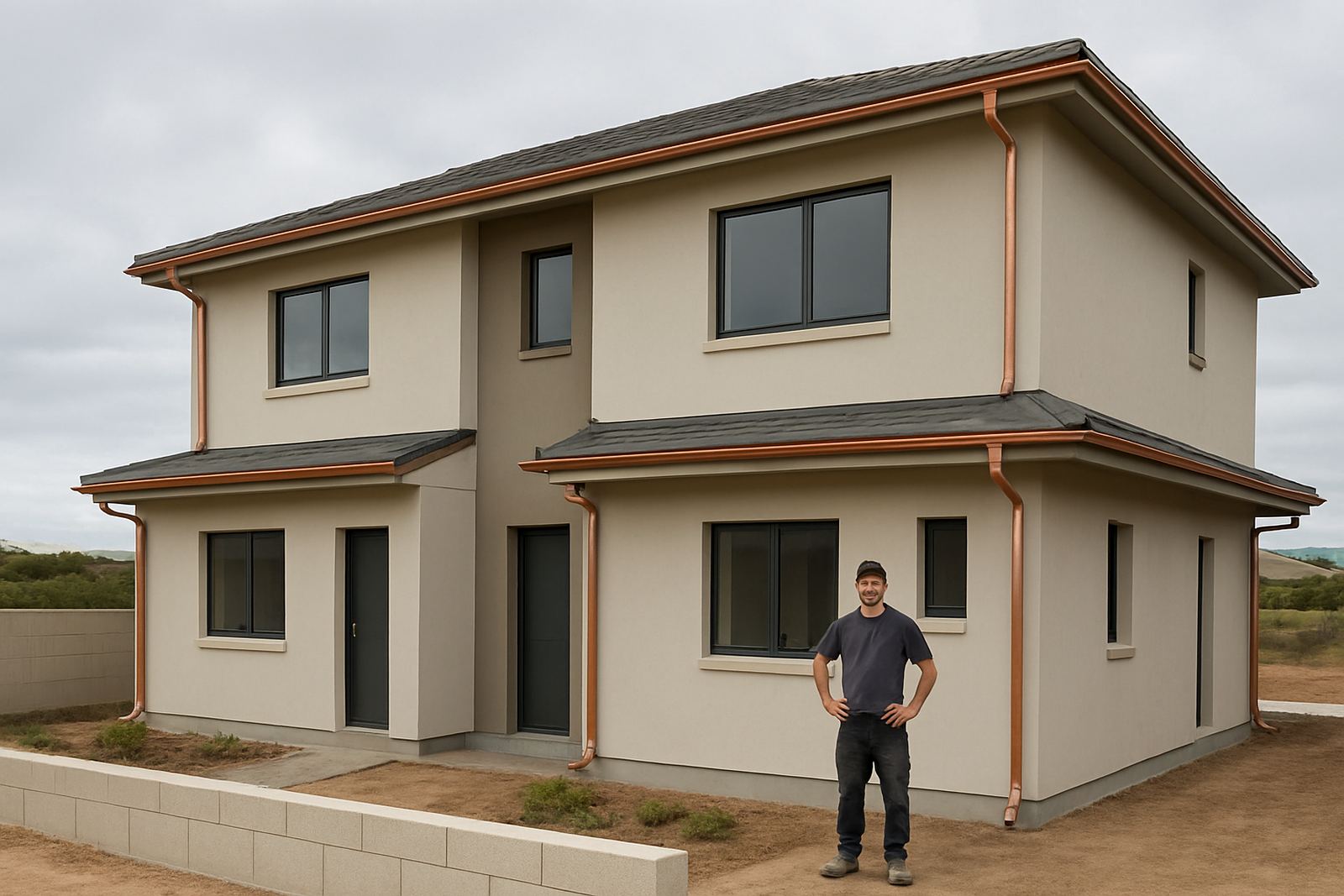
We were called out to a twin-unit residential property in Dana Bay, Mossel Bay, where the existing gutters were past their best. The owner wanted a practical replacement for both units, with corners that matched the roof layout properly and downpipes that could move rainwater away from the walls and paving.
The duplex sits close to the coast, so salt air and wind were part of the job from the start. The old gutters showed wear at the joints and around the mitres, and there were signs of overflow during heavier winter rain. On this type of property, small leaks can run down walls and leave damp patches fast, so the brief was to remove the tired system and fit a cleaner, better-fitted replacement.
We measured both units on site, checked the fall lines and confirmed the positions for outlets before any fabrication started. That saved time later and made sure the two sides of the duplex would work as one proper drainage setup, not a patchwork of parts.
What the client needed from the new system
The property owner wanted a replacement that would last better in a coastal area and not need constant attention. The main concern was water running where it should not, especially at the corners and at the shared sections between the two homes.
The brief covered a few practical points:
- Replace the full gutter run on both units
- Make custom corners to suit the exact roof geometry
- Fit new downpipes in the correct positions for drainage
- Keep the look tidy on a residential duplex
- Use sheet metal work that handles Mossel Bay weather and wind
Because the two units share a similar roof profile but not identical detailing, the corners needed to be made to measure. Standard pieces would not have given the same fit, and on a duplex that often means more joints and more future leaks.
Survey, measurements and on-site constraints
Before fabrication, our team carried out a full site measure at the property in Dana Bay. We checked roof edges, fascia condition, fall direction and the best places for outlets so the new gutters would drain evenly. We also took note of access around the building, since residential work in a tight driveway can limit scaffold and material handling.
The coastal setting meant a few extra considerations. Wind can lift loose sheet, salt air can shorten the life of poor fixings, and winter rain can expose any weak point quickly. The existing system also had to be removed carefully so we did not damage the roof edge or leave the owner with a temporary water issue while the work was in progress.
We planned the job so the replacement could happen in a short window, with the least possible disruption to the residents. That meant measuring accurately first, then fabricating the corners and downpipe sections in the workshop before returning to site for fitting.
Fabrication and installation details
We fabricated the new guttering and related pieces in our workshop at Gouriqua Park, Mossel Bay. The work included custom corners, outlet sections and downpipe lengths matched to the building. Each section was checked for line and fit before it went out to site.
On installation, the old gutters were removed, the roof edge cleaned, and the new runs fixed with the correct fall so water moves to the outlets without pooling. We replaced the outlet points and fitted downpipes sized for the roof area, which helps during heavy downpours when the first flush of rain carries dust and debris.
The workmanship on a job like this comes down to the small things, like the way the corner joints sit and whether the brackets hold true over time. A neat line is not just cosmetic, it helps the gutter perform as it should.
- Custom-made corners for the duplex roof layout
- New gutters fabricated to site measurements
- Downpipes positioned to move water clear of walls and paving
- Fixings selected for long-term coastal exposure
- Full replacement carried out without altering the roof structure
Timeline and site coordination
The project ran over 2 weeks from the first measure to final handover. The first stage was the site visit and assessment, followed by workshop fabrication. After that we scheduled the removal and installation to suit the residents and weather window.
For a residential duplex, timing matters. You do not want open roof edges hanging around, and you also do not want the new work rushed while the weather is turning. We kept the sequence tight and made sure each step was ready before the next one started.
Leandri van Wyk coordinated the workflow, Carla April handled the estimating side, and the installation team on site kept the work moving cleanly. The result was a controlled replacement rather than a stop-start repair job.
Result on the day and after the next rain
Once the new system was in place, the gutter line sat straighter and the drainage path was clearer. The client now has a dual-unit setup with proper corners, fewer joints and downpipes that take rain away from the building instead of dumping it near the base.
For the owner, the most immediate benefit was peace of mind. During the next heavy rain, the property had a system that could handle the flow better and did not show the same signs of overflow at the corners. The finish also suited the house better, which matters on a residential property where the gutters are visible from the street.
From our side, the job confirmed that a properly measured replacement is usually the best answer for older coastal gutters. It costs less in trouble later than trying to keep patching tired sections and loose mitres.
What we would repeat on a similar duplex
If we were doing a similar gutter replacement again in Dana Bay or elsewhere in the southern Cape, we would follow the same approach. Measure carefully, fabricate the corners to suit the exact roof layout, and confirm the downpipe positions before making the first cut. That is the difference between a quick patch and a replacement that lasts.
We would also continue to factor in the local conditions from the start. In Mossel Bay, Hartenbos and along the coast, a gutter system has to deal with wind, salt, summer dust and winter rainfall. If the fall is wrong or the joints are weak, the problems come back fast.
For residential clients, that means one practical rule: do the small measurements properly and the rest of the job follows. It saves time, reduces call-backs, and keeps the drainage doing its work where it should.
- Always measure corner angles on site, not by guesswork
- Match downpipe positions to the roof load and drainage path
- Check access before fabrication so the install day runs smoothly
- Use fixings and brackets suited to coastal exposure
Key facts
| Project | Dana Bay Duplex Gutters |
|---|---|
| Client type | Private residential duplex |
| Town | Dana Bay, Mossel Bay |
| Scope | Full gutter replacement with custom corners and downpipes |
| Timeline | 2 weeks |
| Team involved | Johan Petrus Botha, Leandri van Wyk, Carla April, Mziwoxolo Ndamase, Ruan Goliath, Siphesihle Mbatha |