Working Around a Live Depot in Gouritz
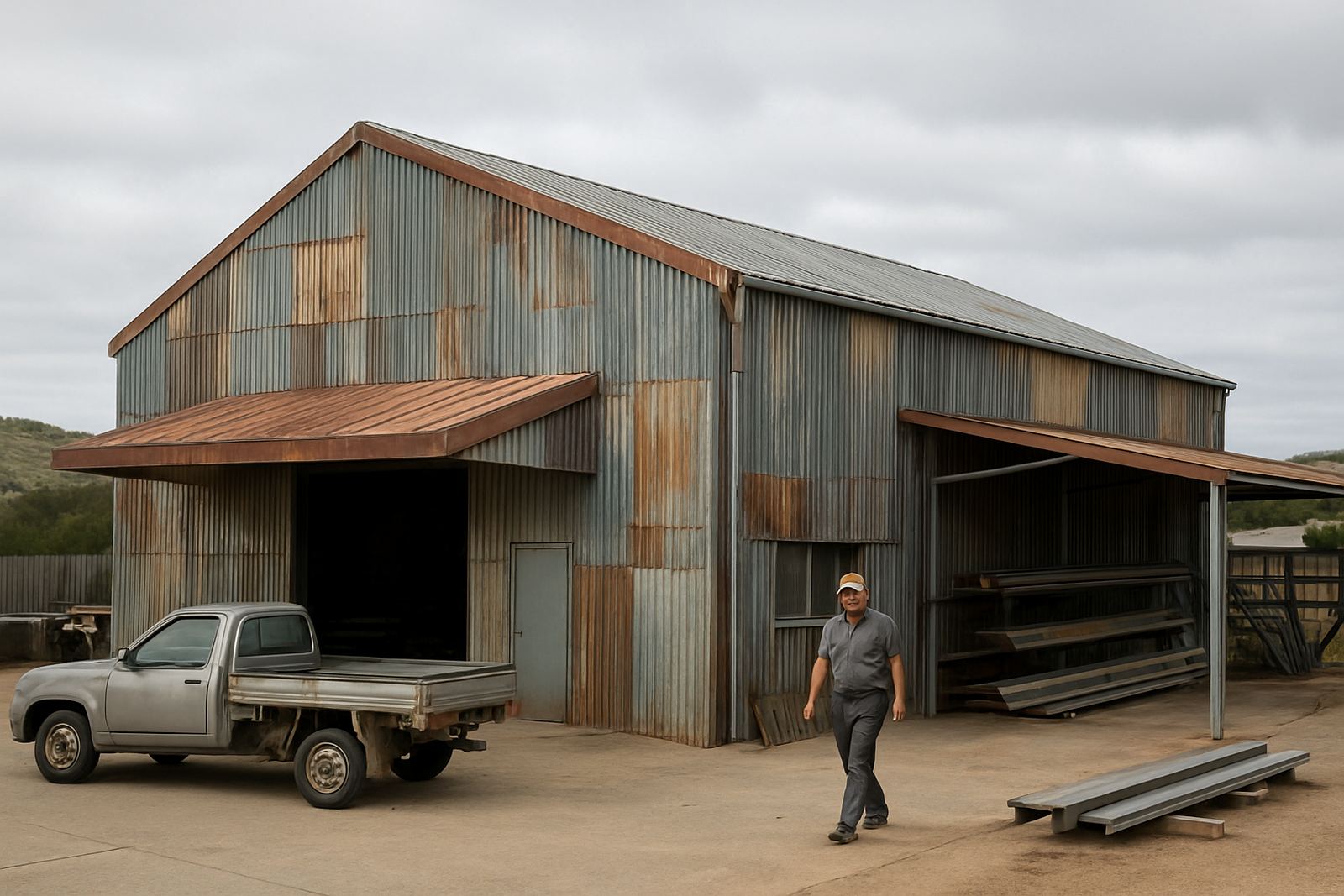
The client was a municipal-style utility depot in the Gouritz area, used every day for storage, vehicle movement and routine maintenance. The main problem was tired roof sheeting, failed flashings and localised water entry around joints and penetrations, especially after wet and windy weather. We were asked to fix the problem without shutting the site down, so the work had to be planned around deliveries, staff movement and machinery.
Because the depot sits close to the coast, the original metalwork had taken a fair amount of punishment from salt air and strong gusts. Some sheets had lifted slightly at the laps, sealant had broken down and a few gutters were not carrying water properly during heavy rain. The brief was simple enough on paper, but the conditions needed a careful, practical approach so the repairs would last and not just patch the leak for one season.
Site Checks, Measurements and Repair Planning
We started with a site measure and an inspection of the roof zones that were giving trouble. That let us pin down the exact sheet lengths, lap details and flashing profiles needed before any fabrication started. We also checked the gutters, downpipes and termination points so the repairs could deal with runoff properly and not push water into another weak spot.
- Measured damaged roof areas and checked sheet overlap at all joints
- Marked out failed flashings around edges, ridges and service points
- Inspected gutters for sagging, corrosion and poor falls
- Identified fixings that had loosened or rusted through
- Planned the work in sections so depot access stayed open
The inspection showed that the site needed more than a quick sealant pass. We needed new custom flashing pieces, replacement fixings in selected areas and a proper clean up of the water path off the roof. That kind of preparation matters on coastal jobs because if one small section is missed, wind-driven rain will find it fast.
Custom Flashings and Sheet Repairs
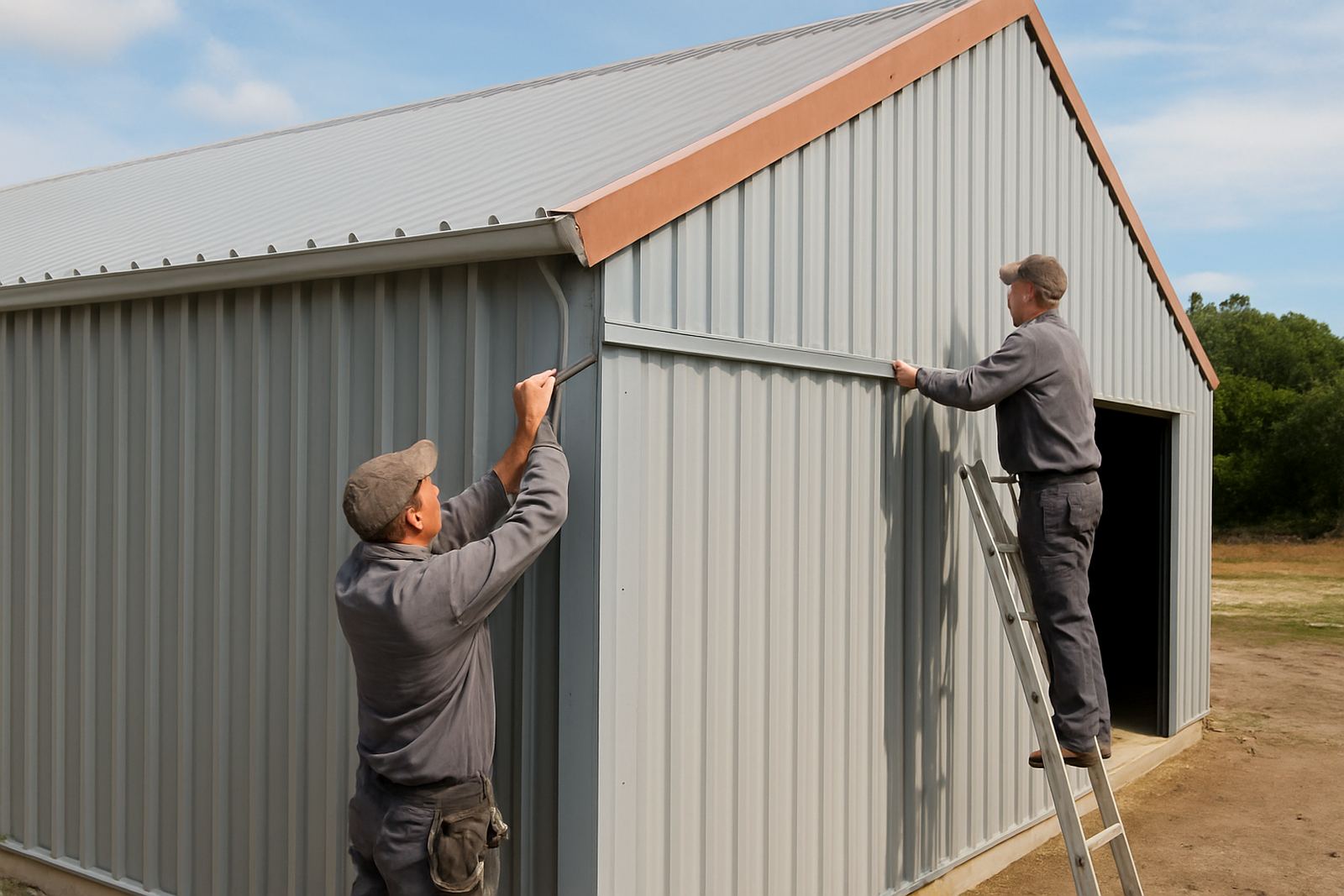
In the workshop we fabricated custom flashings to suit the existing roof edges and service penetrations. These were made to match the site dimensions rather than forcing standard lengths into odd spaces. On the roof, we replaced damaged fasteners, re-secured loose sheets and repaired the areas where water had been tracking back under the laps.
We also treated the repair zones with the right sealing method for metal-to-metal joints, then checked every overlap for correct seating. Where sheets had minor distortion, we straightened and re-fixed them rather than swapping out more material than necessary. That kept the job controlled and reduced the amount of disruption at the depot.
- Custom flashings made to site measurements
- Re-fixing of loose sheeting with new fasteners where needed
- Sealing at vulnerable laps and penetrations
- Local sheet replacement on badly worn sections
- Edge repairs to stop wind lift at exposed points
Gutter Work and Rainwater Control
The gutter system was part of the problem, not just the roof skin. A few runs had poor falls and some sections were carrying water too slowly during heavy rain. We carried out gutter fabrication and replacement where needed, then cleaned out debris and checked the outlets for unrestricted flow. On a working depot, blocked gutters can be just as disruptive as a roof leak because water ends up where people drive and store stock.
We made sure the repaired gutters could handle the stormwater without overflowing at the joins. The downpipe connections were tightened up and the discharge points checked so water moved away from the building. In Mossel Bay and the southern Cape, that attention to drainage is worth doing properly because summer wind and winter rain can both test the same weak point. The result was a neater roof edge and better water control across the whole run.
Programme, Access and Safety on a Busy Site
The job ran over two weeks, with the first week focused on inspection, measuring and workshop fabrication, and the second week on roof repairs, gutter work and final checks. That sequence allowed us to keep the site moving while still completing the urgent work in a sensible order. For a depot, the timing has to work around daily use and not the other way round.
We coordinated closely with the site supervisor and the operations team so the work zones stayed clear when needed. Access points were managed in stages, and the team kept the area clean as sections were completed. That reduced trip hazards and kept the depot functional while the repairs were underway.
- Week 1: site measure, inspection and fabrication
- Week 2: sheet repairs, flashings, gutters and final checks
- Work was staged to keep access open for depot traffic
- Clean-up was done as each section was finished
What Changed After the Repairs
Once the repairs were complete, the main difference was that the leaks stopped and the roof edges were taking wind and rain properly again. The depot team no longer had to move stock away from wet patches after a storm, and the improved gutter flow reduced water pooling near the building line. The repaired sections also looked tidier, which is important on a working site where maintenance has to be easy to monitor.
If we were to do the job again, we would follow the same approach: measure carefully first, fabricate to suit the exact site and then stage the repairs so operations can carry on. That is the practical way to handle a depot in a coastal area. It saves time later and gives the client a result that holds up better under real conditions, not just on the day of handover.
Key facts
| Project type | Sheeting, flashing and gutter repairs at a working utility depot |
|---|---|
| Location | Gouritz, southern Cape |
| Programme | 2 weeks from site measure to final checks |
| Works supplied | Custom flashings, sheet repairs, gutter replacement and leak repairs |
| Access control | Staged work to keep depot operations open |
| Conditions | Coastal exposure, wind lift and heavy rain runoff |