Why the client needed a proper service canopy in Hartenbos
The property needed a covered service area that could handle vehicle movement, routine wash-downs and work carried out in the open without water pooling at the entry points. In Hartenbos, the weather can turn quickly and coastal humidity works its way into ordinary steel if the drainage and finish are not thought through from the start.
The brief was simple on paper but practical in the field. The owner wanted a canopy that would keep the service area dry, protect equipment parked under cover, and move rainwater safely into a controlled drainage line. There was also limited working space around the building, so the structure had to fit cleanly against existing walls and avoid interfering with vehicle turning circles.
We were asked to supply the steel structure, roof sheets, flashings and gutters, then coordinate installation so the site could keep operating. It was a typical southern Cape requirement: strong enough for daily use, tidy enough for a commercial yard, and detailed to cope with load shedding delays and weather stoppages without causing rework.
Site constraints and measurements that shaped the design
Before fabrication, our team carried out site measuring and checked the slope, drainage points and wall lines. The biggest constraint was not height, it was water. The client needed runoff to move away from the working area and not sheet across the hardstand where vehicles enter and exit.
We also had to work around existing structures and the fact that the site is exposed to coastal wind. That meant the canopy frame needed good anchoring, the roof pitch had to be set correctly and the gutters had to be sized for fast runoff during heavy rain. We kept the design practical for maintenance too, because a canopy that is hard to clean or inspect becomes a problem later.
- Measured the available footprint and set out fixing points to suit the existing structure
- Checked roof fall to improve drainage and reduce standing water
- Allowed for vehicle clearance and service access under the canopy
- Specified corrosion aware detailing for a coastal environment
What we supplied and installed for the canopy
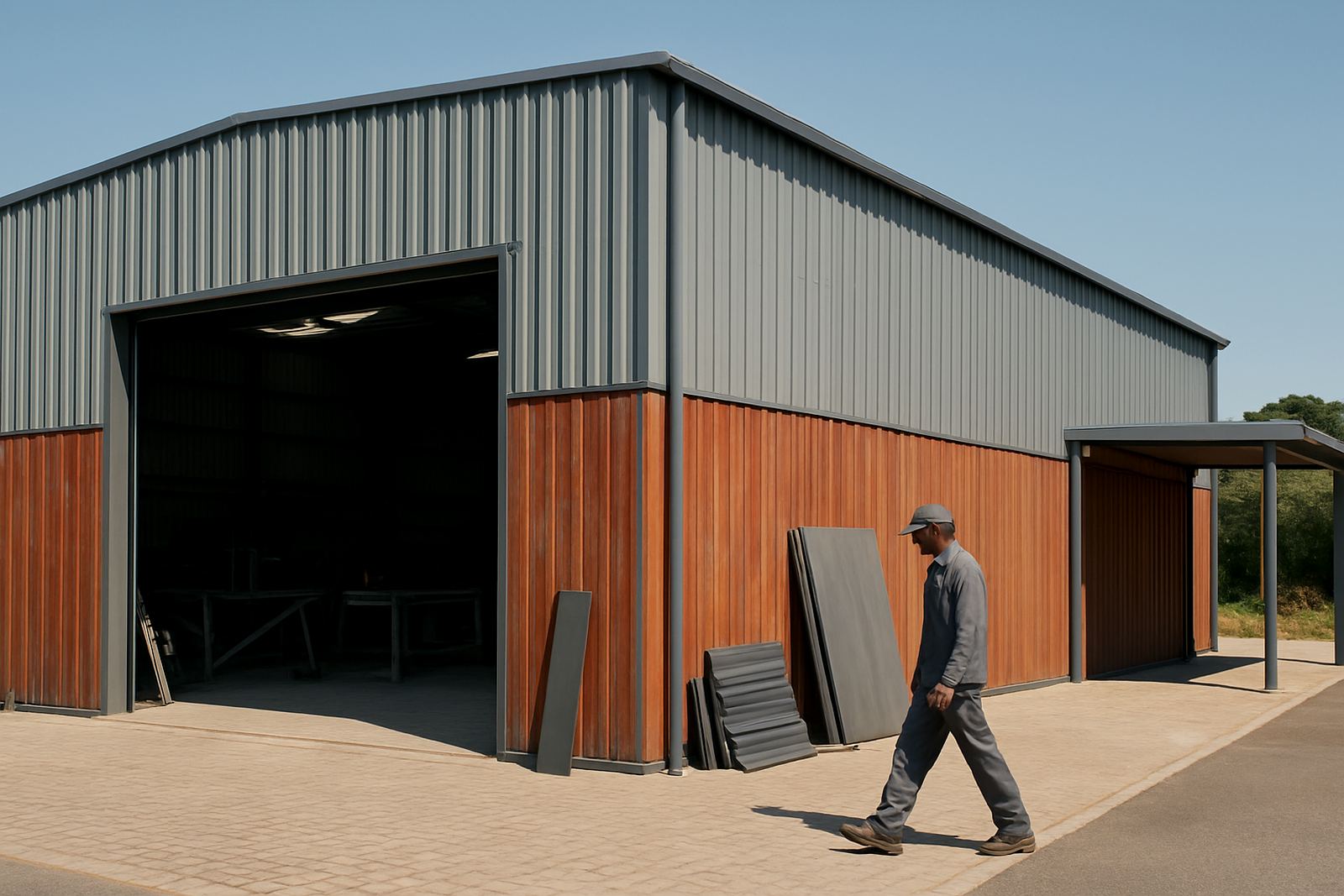
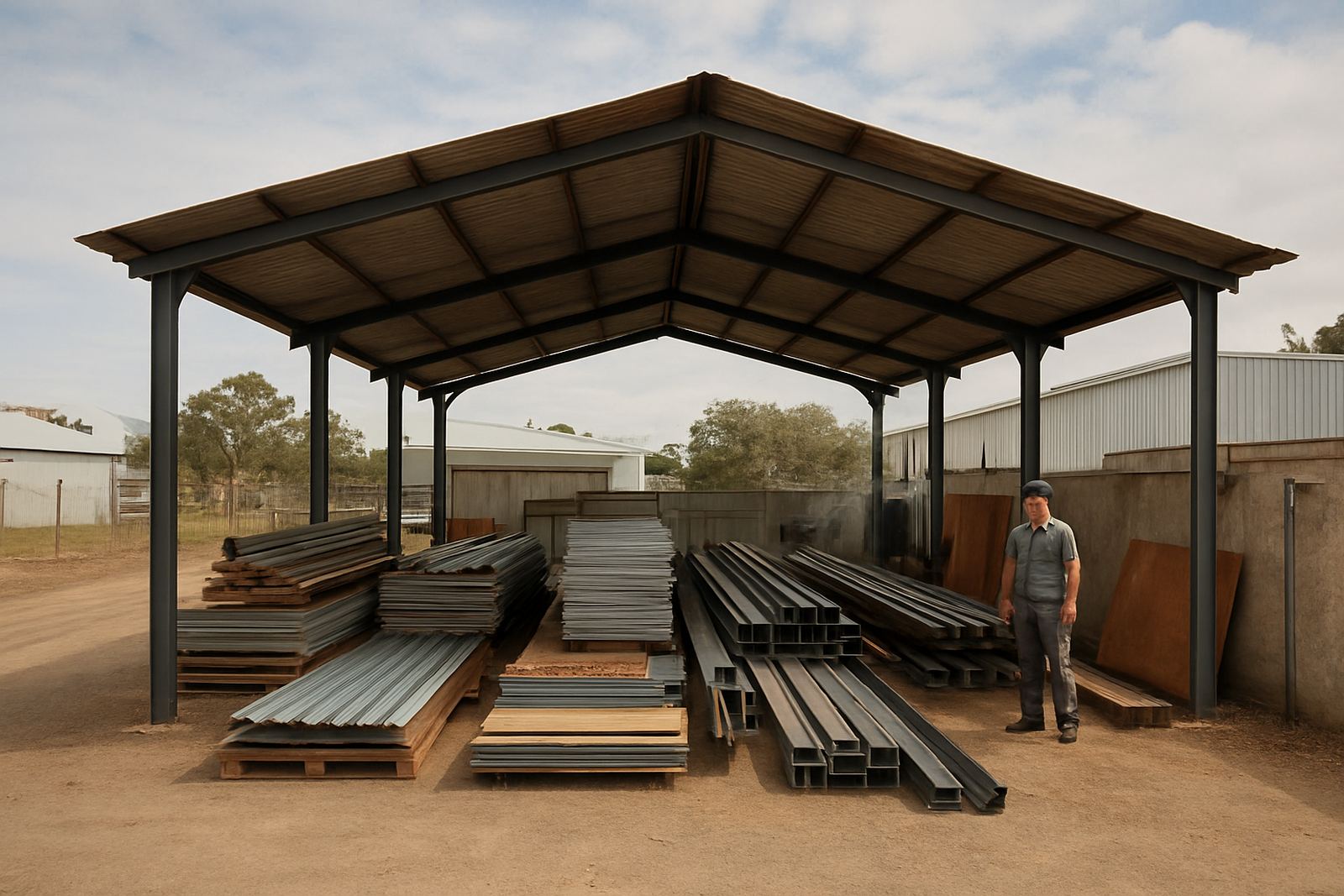
We fabricated the steel frame components in our workshop and prepared the roof drainage items to suit the exact site dimensions. The structure was built for a service environment, so the work included practical details that are often missed when a canopy is treated as a simple cover only.
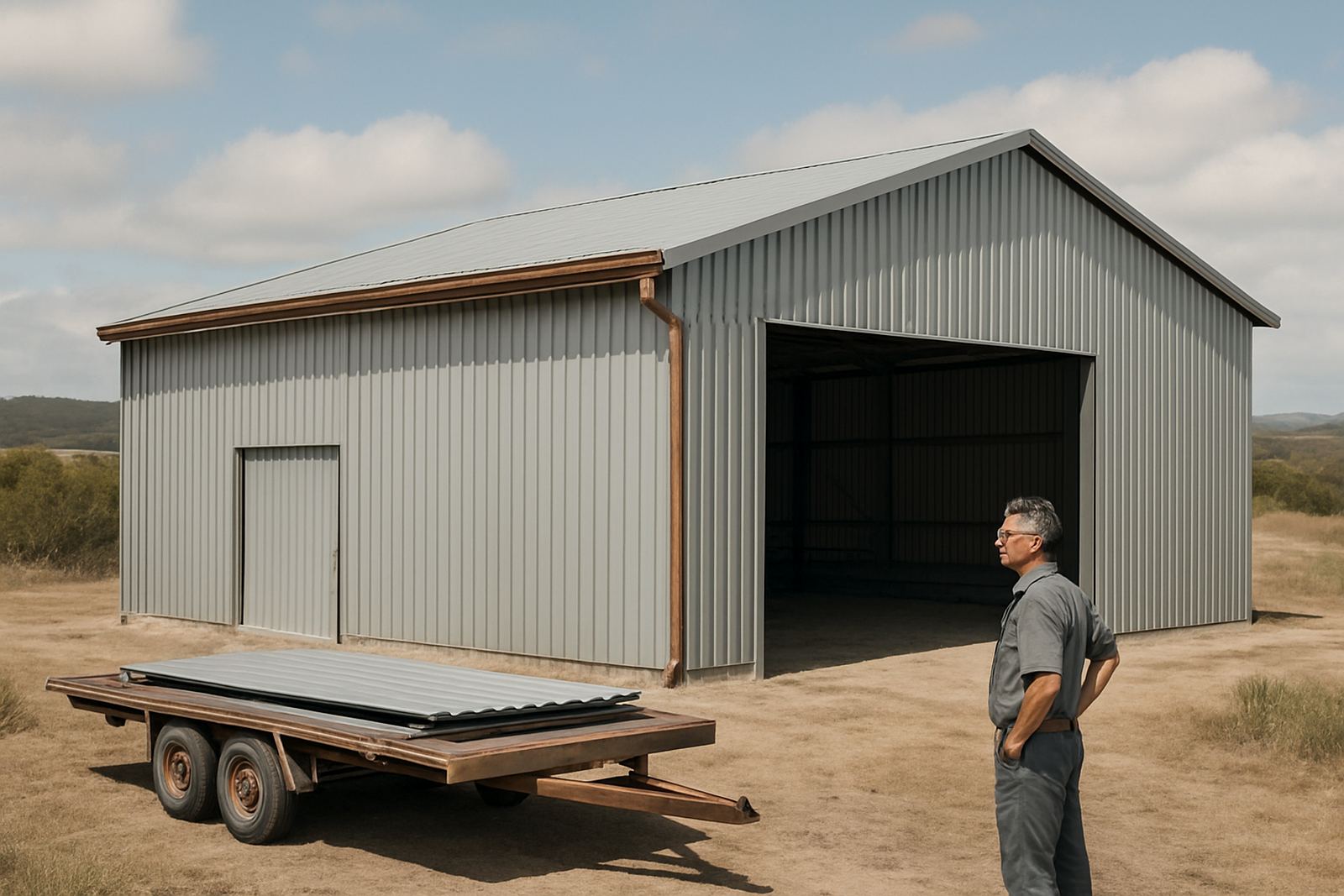
The supply package included the main steel frame, roof sheeting, custom flashings, gutters and downpipes. We also installed the canopy so the roof line met the existing building neatly and the drainage worked as a system, not as separate parts. The flashings were cut to follow the wall junctions and reduce the chance of wind driven water getting behind the sheets.
- Steel frame erection with site aligned fixing points
- Roof sheet installation with suitable fall for runoff
- Custom flashings at wall junctions and edges
- Gutter fabrication and fitting for controlled water discharge
- Downpipes positioned to keep stormwater away from traffic areas
How the build was phased over two weeks
The project ran over two weeks from final measurements to handover. The first part of the job covered workshop fabrication and prep work. That included cutting, forming and checking the frame members and drainage pieces before they left the workshop. The second part was site installation, where our team worked through the frame erection, sheet fixing, flashings and gutter fitment.
Because the site needed to remain usable, we planned the sequence so there was no unnecessary clutter left in the way. We also kept the installation practical around weather windows. In Mossel Bay and Hartenbos, a strong wind can change the day pretty quickly, so we prefer to fix roof sheets when the conditions are right rather than forcing the pace and risking poor alignment.
Johan Petrus Botha oversaw the project direction, with Leandri van Wyk coordinating operations and Carla April handling the estimating side. On site, Mziwoxolo Ndamase supervised the work, Ruan Goliath led workshop preparation and Siphesihle Mbatha handled roofing and cladding installation. That split kept the job organised and reduced delays.
Drainage details that made the difference
For a service canopy, drainage is never an afterthought. If the gutters are too small or the fall is wrong, the overflow ends up where people walk or where vehicles stop. We set the gutter line to carry heavy rain efficiently and made sure the outlet positions would not create puddling at the base of the structure.
We also paid attention to the junctions between the canopy and the existing building. These are common leak points in coastal work if the flashing is too short or not shaped properly. Our approach was to keep overlaps sensible, use clean bends and ensure the water path was clear from the roof surface into the gutters and downpipes.
- Gutters sized for fast runoff during summer storms
- Downpipes placed to avoid splashback at vehicle access points
- Flashings formed to reduce leak paths at wall joins
- Fixings checked for corrosion exposure and wind loading
Result on site and what we would repeat
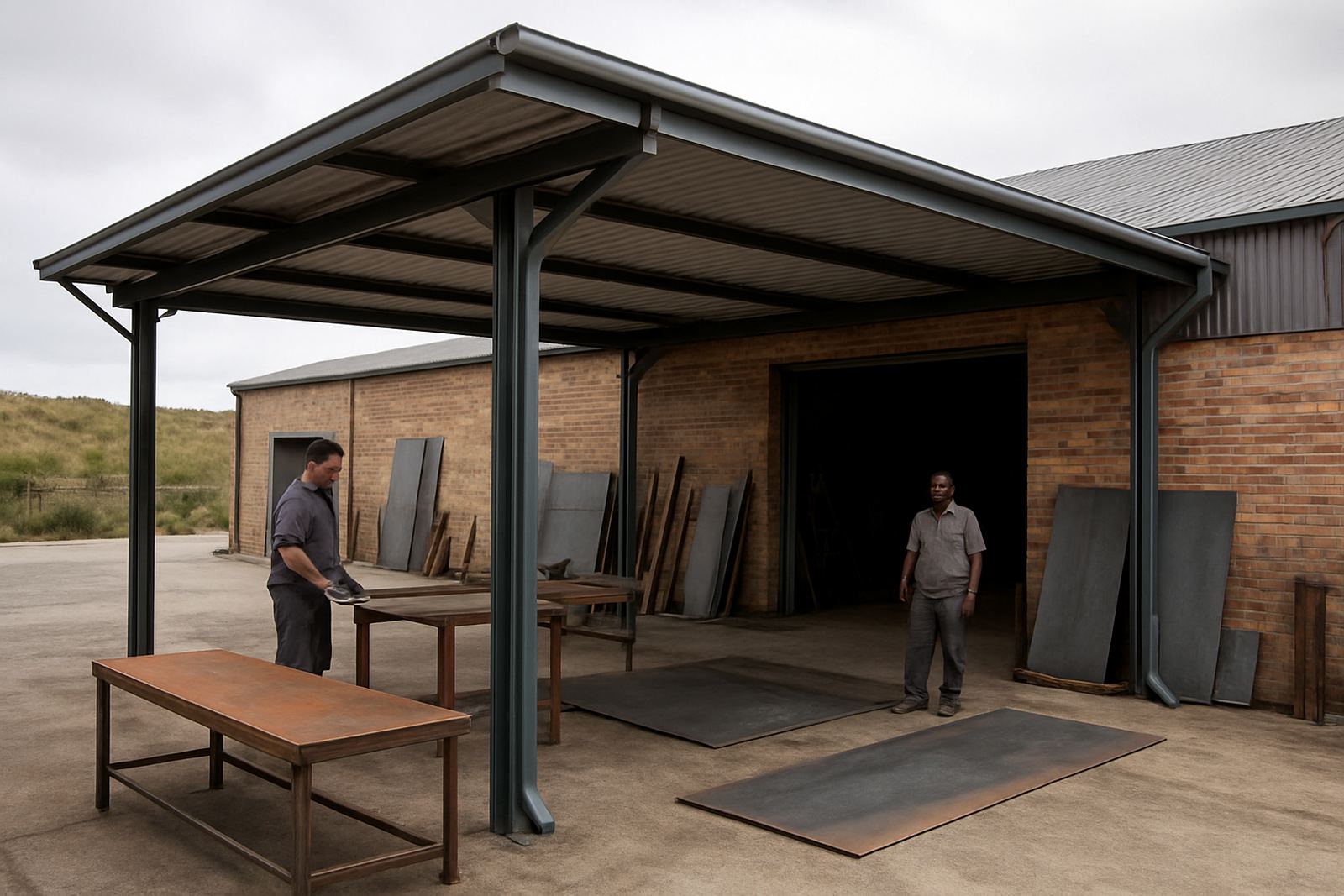
The finished canopy gave the client a dry, usable service area that now handles rainwater properly and looks like part of the property rather than an add on. Vehicles can move under cover, work can continue in wet weather and the drainage now directs water where it should go. That makes a real difference on a property that needs daily use, not just occasional cover.
If we were doing the same job again, we would use the same approach: measure first, detail the drainage carefully and keep the steelwork straightforward enough for future maintenance. We would also keep the installation sequence tight so the site can keep functioning while the work is underway. That is the kind of job that saves trouble later, especially in a salty coastal environment where poor detailing shows up fast.
For clients in Hartenbos, Mossel Bay, George or the wider southern Cape, this project is a good example of how a service canopy should be handled from the start. It is not only about getting a roof over an area. It is about making sure the roof, gutters and flashings all work together and hold up in local conditions.
Key facts
| Project | Steel service canopy and roof drainage solution |
|---|---|
| Location | Hartenbos, southern Cape |
| Client type | Vehicle property owner |
| Timeline | 2 weeks |
| Main works | Steel frame erection, roof sheet installation, custom flashings, gutter fabrication and fitment |
| Key detail | Designed for coastal weather, vehicle access and controlled stormwater runoff |