When a gutter needs replacing
We are often called out when gutters are sagging, leaking at joints, pulling away from the fascia or overflowing in the first proper rain. In coastal areas like Mossel Bay and Hartenbos, salt air speeds up corrosion and old fasteners can loosen as the roof expands and contracts. If the gutter is too small for the roof area, water will overshoot at the corners and outlets even if the gutter itself still looks decent.
Replacement is the right call when repairs are becoming too frequent, when sections are dented by wind or ladder damage, or when outlets have been patched more than once. On steel buildings, correct gutter fall and outlet size matter just as much as the sheet profile itself, otherwise water backs up at the eaves and the roof edge starts taking strain.
- Rust holes, split seams or failed end caps
- Repeated overflow during medium to heavy rain
- Loose brackets, bad falls or standing water
- Cracked joints near corners and downpipe outlets
- Outlets that are too small for the roof catchment
What the replacement job includes
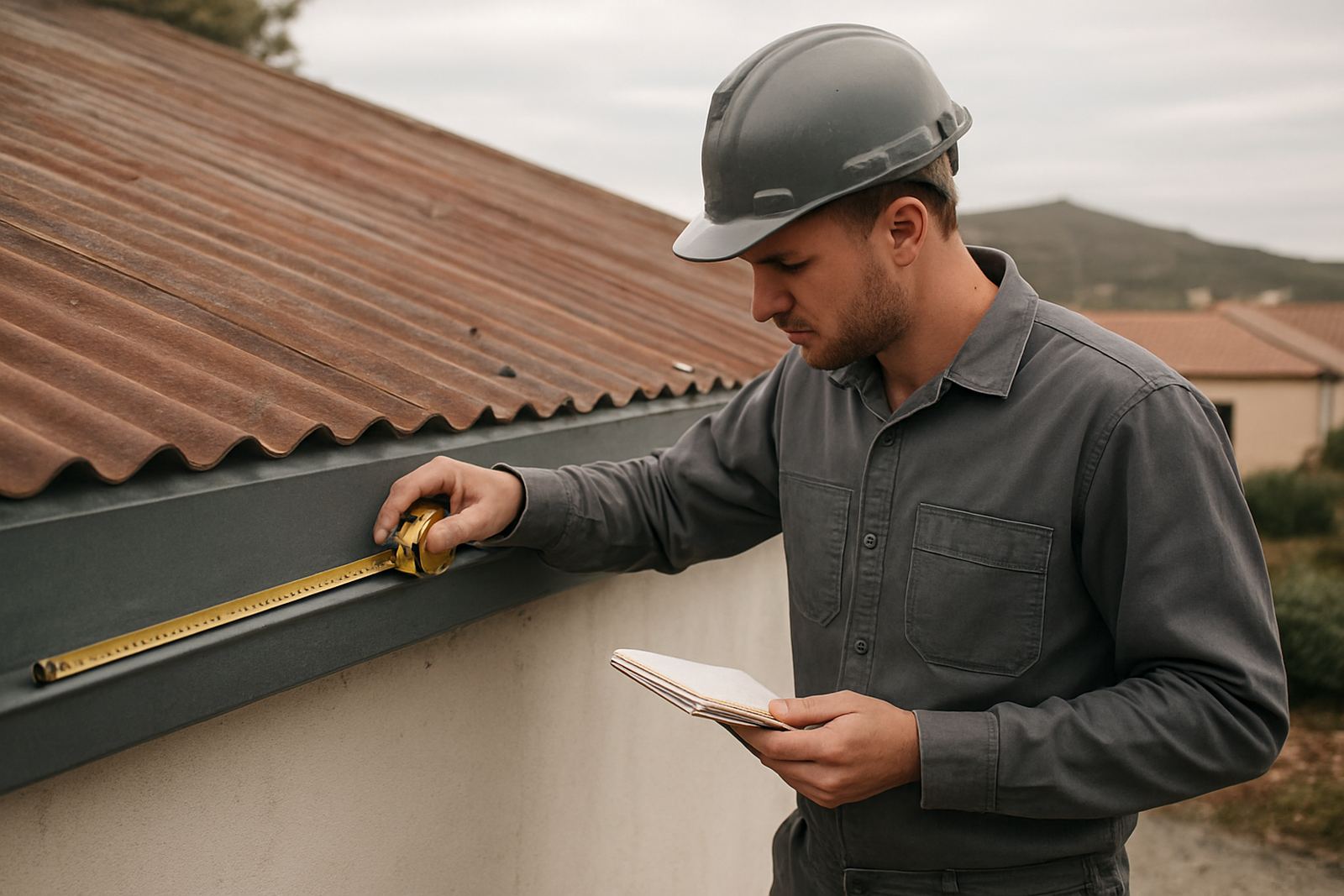
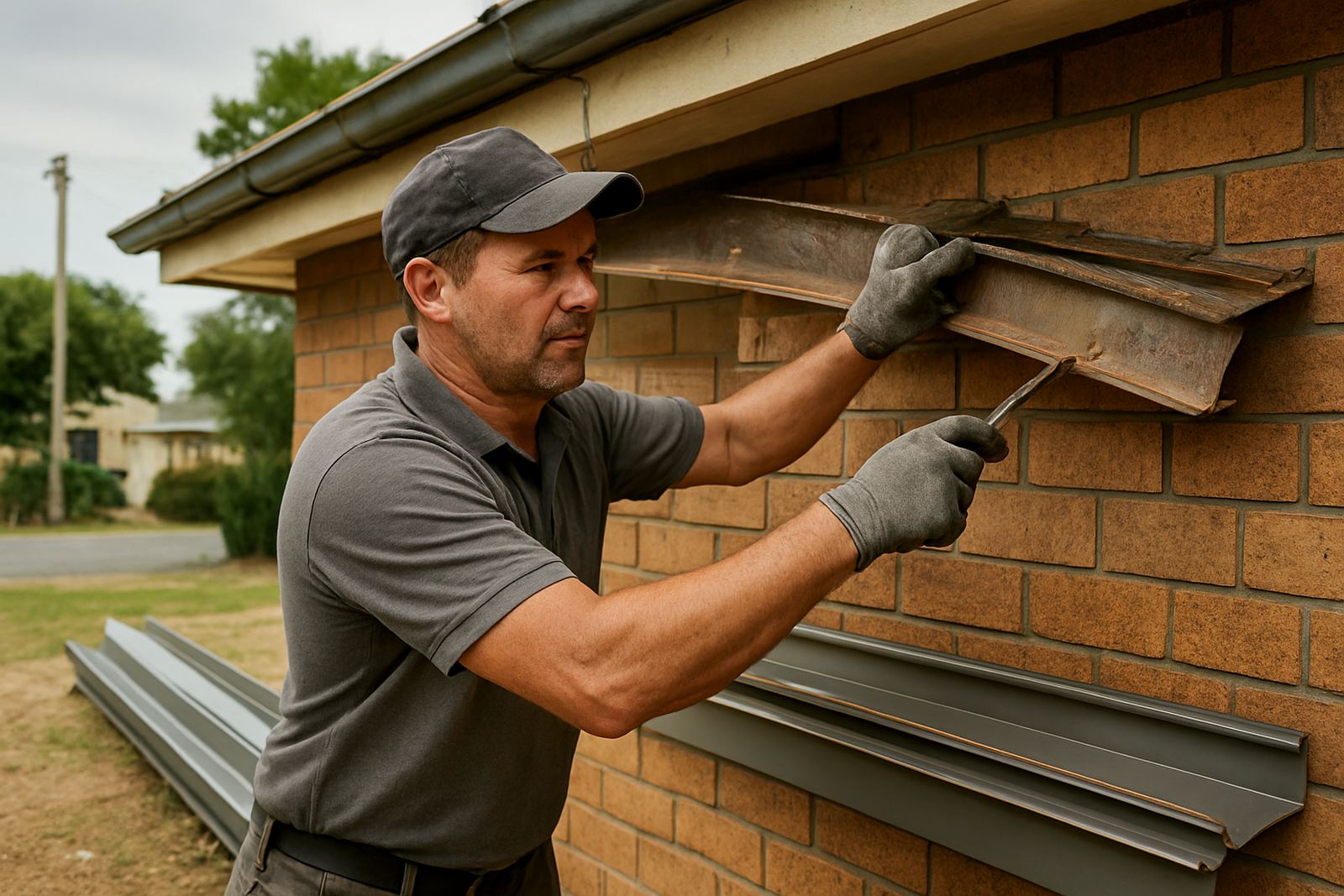
Our gutter replacement service covers removal of the old guttering, checking the fascia line, measuring fall and installing the new gutter system with the correct brackets, outlets and end closures. Where needed, we also repair short sections of rotten fascia or damaged fixing points before the new gutter goes on. The aim is not only to stop the leak but to move water cleanly away from the building and paving.
We work with practical sizes for local rain conditions, and we match the gutter section to the roof area and outlet positions. On longer runs we allow for proper expansion and contraction, which is important on sunny western side elevations and on roofs that get hot fast after morning cloud clears. A poorly fixed gutter might look fine for a week or two, then it starts to bow or pull, so the details matter.
- Removal and disposal of damaged gutter sections
- Measure, set and check gutter fall before installation
- Supply and fit new gutters, outlets and brackets
- Seal corners, joins and end caps
- Test flow with water after installation
Our process from inspection to final water test
We start with a site measure and inspection, either for a home in Great Brak River or a larger steel structure in George or Sedgefield. We look at the roof pitch, outlet positions, downpipe route and any signs of water staining. If the building has existing stormwater issues, we flag them before work starts because a new gutter will not fix a blocked soakaway or a bad discharge point.
Once the scope is clear, our team removes the old components carefully so the roof edge is not damaged. New brackets are set at even centres, with tighter spacing where the run is longer or wind exposure is higher. After installation we run water through the system, check each outlet and confirm there is no ponding. If needed, we adjust a section on site rather than leaving it to fail later. Johan Petrus Botha and the site team keep an eye on practical details, because a neat fit is one thing but drainage has to work in real weather.
- Site measure and assessment
- Removal of old gutter and faulty fixings
- Fabrication or supply of new gutter sections
- Installation of outlets and downpipe connections
- Final flow test and clean up of the work area
Turnaround times and scheduling
Small replacement jobs can often be completed in one day, depending on access and how much of the old gutter has to come off. Larger runs, or jobs that include fascia repairs, extra outlets or working around steel roof edges, may take two to three days. For buildings in busy areas like Mossel Bay central or Hartenbos, we plan access early so the job does not hold up tenants or daily operations.
Weather plays a part too. In the southern Cape we watch the forecast because wind and rain can make a roof edge unsafe and can affect sealant cure times. If the weather turns, we would rather return on the next workable day than rush a half-finished fix. That approach saves repeat callouts and avoids the kind of leak that shows up the first night after a front passes through.
- Simple domestic gutter swaps: often within 1 day
- Long commercial runs: 2 to 3 days
- Work planned around rain, wind and roof access
- Local service across Mossel Bay, George and nearby towns
Pricing that suits the building and the problem
We price gutter replacement on actual site conditions, not on guesswork. The main factors are gutter length, profile size, access height, number of outlets, whether downpipes need changing, and whether fascia repairs are needed. A short domestic run with easy ladder access is priced differently from a high steel building with long eaves and multiple discharge points.
Before starting, we confirm the scope so there are no surprises. If we find that only one side needs replacing, we do not push for a full replacement unless the rest of the system is also failing. If the roof catchment is too large for the existing gutter, we will explain the bigger outlet or wider section needed so the new work is not under-sized from day one. That way the price reflects the real fix, not a temporary patch.
- Pricing based on measured lengths and site access
- Allowance for new outlets, brackets and sealants
- Separate pricing where fascia repairs are needed
- Clear scope before work starts
Maintenance intervals that keep gutters working
In coastal towns, gutters should be checked at least twice a year, and more often if the property sits under trees or near blowing sand. After the first heavy winter rain, it is worth checking for overflow marks, loose joints and downpipes that are not flowing freely. On commercial and industrial roofs, we recommend maintenance inspections before winter and again before the windy summer period.
Blocked gutters do not always show up as a dramatic leak. Sometimes the signs are softer, like damp fascia boards, moss at the edge, or puddling beside the wall after a storm. A quick inspection can catch a loose outlet before it causes staining or wall damage. If you have load-shedding backup equipment or plant rooms near the discharge area, keeping stormwater moving away is even more important because water around those spaces creates avoidable risk.
- Inspect gutters before winter and after heavy wind
- Clear leaves, silt and roof grit from outlets
- Check brackets, end caps and seal points
- Look for stains, sagging or overflow after rain
Key facts
| Service area | Mossel Bay, Gouriqua Park, Hartenbos, Great Brak River, George, Wilderness and Sedgefield |
|---|---|
| Typical gutter sizes | 125 mm, 150 mm and larger custom sections where the roof catchment needs it |
| Outlet options | Round or rectangular outlets matched to the roof area and downpipe route |
| Materials | Prepainted steel or zinc-coated sheet, selected for coastal exposure and site conditions |
| Work included | Removal, new fixings, brackets, sealing, outlet fitting and water testing |
| Maintenance interval | Twice yearly for coastal homes, more often for tree cover or commercial roofs |