What an apron flashing does at the roof edge
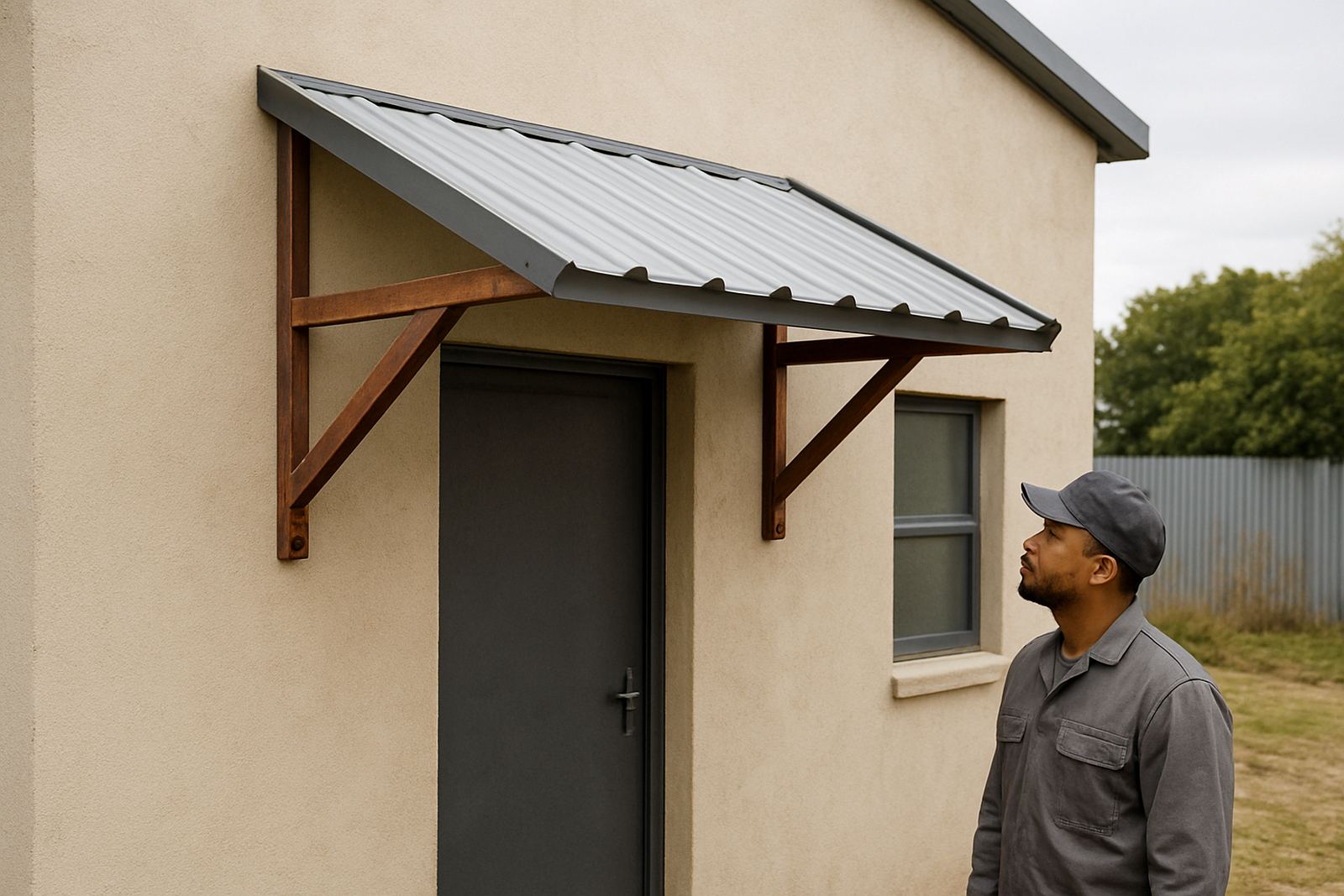
An apron flashing is the strip that sits against the wall and runs down over the roof sheet. Its job is to direct rainwater away from the junction so water cannot track back under the sheets or into the timber or steel structure below. In coastal towns like Mossel Bay, that matters because driving rain, sea air and strong winds can force water into small gaps very quickly.
We make apron flashings for new work and for replacement on older roofs that have started leaking at the wall line. They suit tiled roofs, sheeted roofs and steel cladding where the roof finishes against a vertical wall. On industrial or farm buildings, the same detail is used to protect long roof runs, parapet walls and shed ends. A well fitted apron flashing also helps reduce staining on painted walls and corrosion around the fixing line.
Sizes, materials and finish options
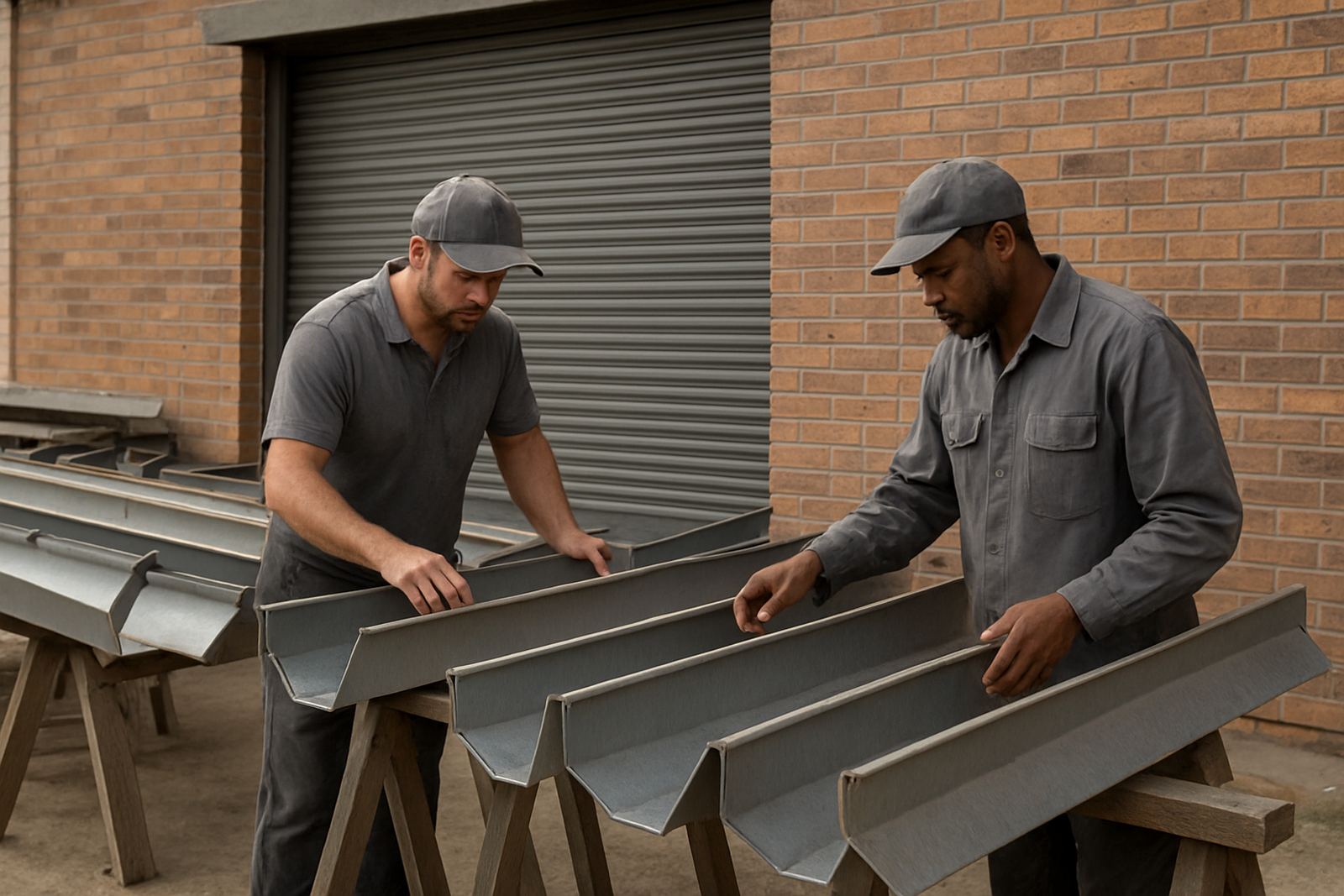
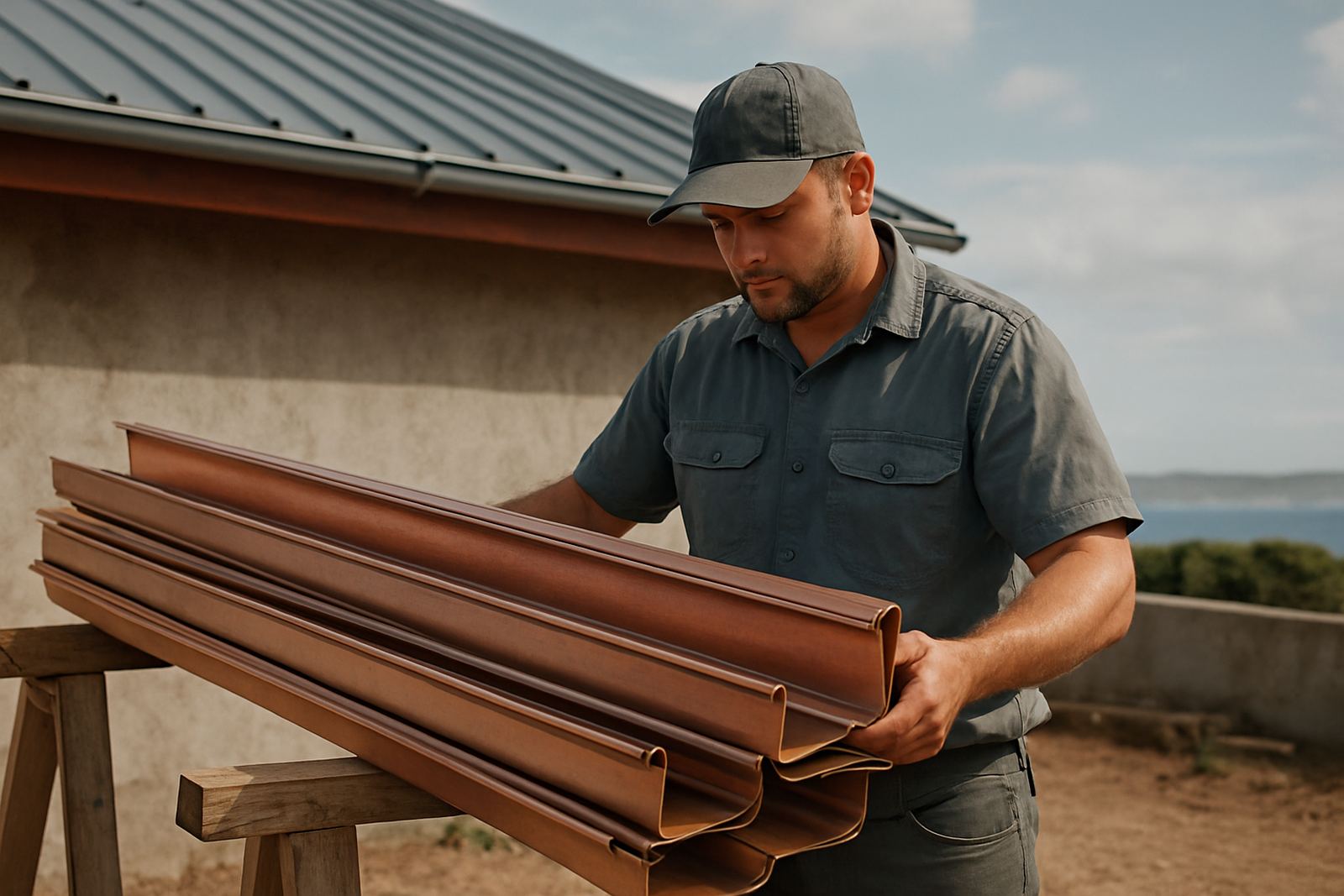
Apron flashings are normally made to suit the wall height, roof pitch and sheet profile on site. The most common lengths are 2,4 m and 3,0 m, but we can fabricate shorter pieces for tight sections or longer runs with joined overlaps where needed. Width is set by the roof pitch and how far the flashing must cover up the wall and down the roof, so one size does not suit every building.
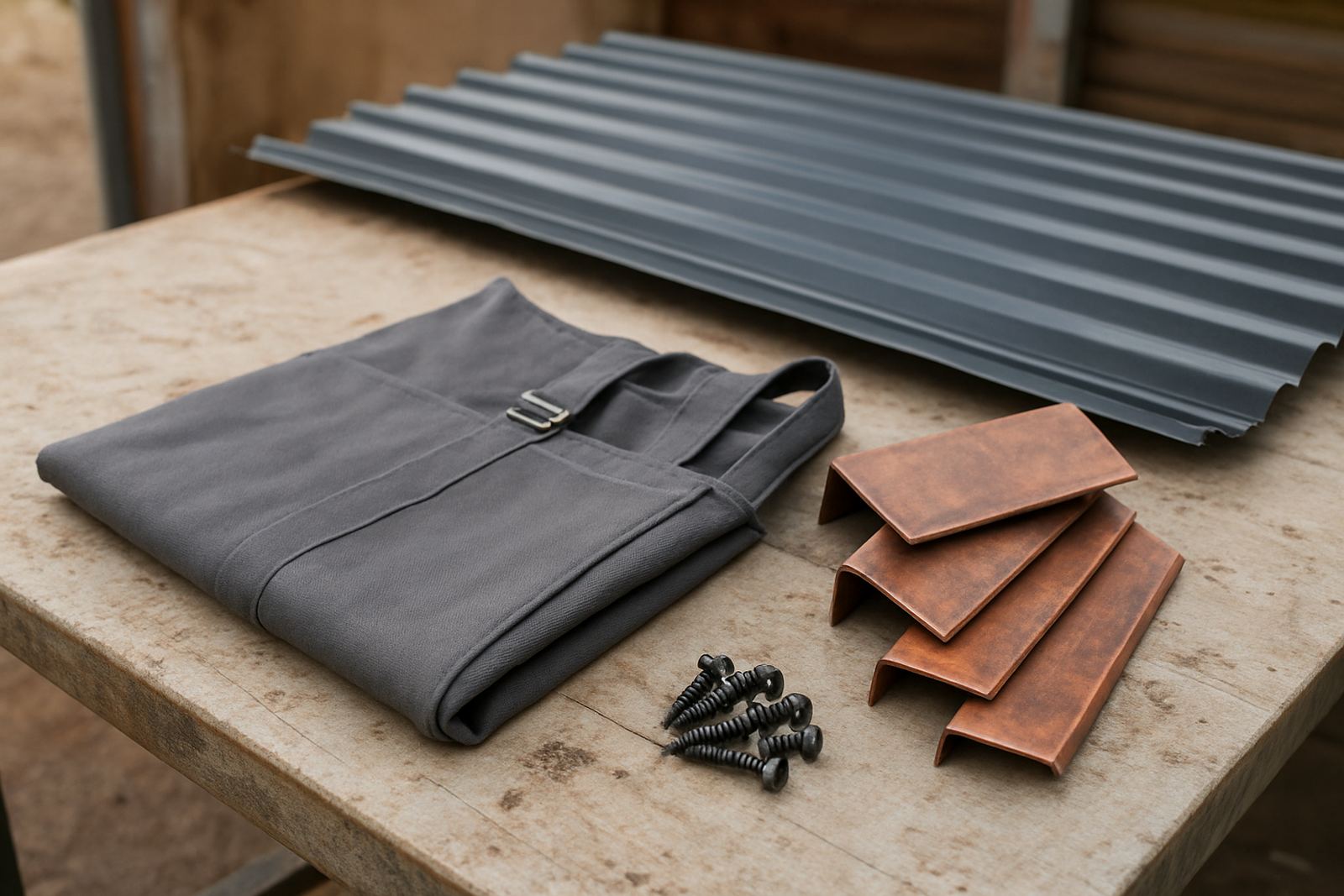
Typical options include painted sheet metal, galvanised steel and heavier gauge material for exposed coastal sites. Where the flashing must match other roof sheets or wall cladding, we bend it to the same profile and set the drip edge to suit the slope. If the wall is rough plaster, brick or fibre cement, we allow for the surface and the fixing method so the top leg sits properly without gaps.
- Lengths made to site measurements
- Widths set for roof pitch and wall cover
- Plain galvanised or painted finish
- Options for straight, stepped or profiled returns
- Made for sheet roofs, cladding and parapets
Where apron flashings suit best
These flashings are used anywhere a roof finishes against a wall or raised edge. That includes house walls, store rooms, backyard sheds, carport tie-ins and steel structures with attached offices or lean-to sections. In the southern Cape, they are common on homes in Mossel Bay, Hartenbos and Great Brak River where sea wind can push rain upward under weak overlaps.
They are also a practical answer on farm buildings and light industrial sheds around George, Wilderness and Sedgefield. If a building has different roof heights or a new addition joined to an older section, an apron flashing helps bridge that change cleanly. It is a small detail but if it is wrong, the leak can be constant. If it is right, the roof line stays dry and easier to maintain.
Measuring and ordering the right flashing
Before we make the flashing, we check the wall height, roof pitch, sheet profile and any obstructions such as brackets, pipes or raised parapet edges. The biggest mistake is ordering only by length and forgetting the actual cover needed on both the wall and roof side. We can measure on site in Mossel Bay and nearby towns, which helps avoid waste and awkward joints.
When you place an order, it helps to know the roof material, colour if it must match, and whether the flashing is for new work or a repair. If the roof has already been laid, bring the sheet profile details or clear photos of the junction. If the job is in a coastal spot with high moisture or salt exposure, tell us that too, because the metal thickness and finish matter more than people expect.
- Overall length of each run
- Roof pitch and roof sheet profile
- Wall type and wall finish
- Colour match or plain finish
- Whether it is new work or a leak repair
Installation on site and power or gas needs
We install apron flashings with the correct overlap, fixings and sealant so the water sheds forward and not back into the joint. On sheet roofs, the flashing must sit neatly over the top of the roof sheet and be secured without distorting the profile. On masonry walls, the top edge may need a chased-in detail, cover strip or weatherproof seal depending on the construction. That small detail makes a big difference during heavy rain.
For most installations, the work can be done with standard site tools and no special power supply from the client side. If we are replacing flashings during roof repairs, we will usually need access to the roof area, safe ladder points and clear working space. On some jobs, especially long runs or thick steel sections, cutting and forming may happen in the workshop, which saves time on site. No gas connection is needed from the customer, unless there is a separate welding or repair task agreed for the structure.
Care after installation and when servicing is due
Apron flashings do not need much attention, but they should be checked after strong wind, hail or any roof work nearby. Look for lifted edges, cracked sealant, loose fixings, rust spots or debris trapped against the wall line. In coastal air, even a small scratch can start to corrode if it is left open.
We recommend maintenance inspections on buildings that take a lot of weather, especially carports, store rooms and sheds close to the sea. A quick clean of leaves, sand and nesting material helps the flashing do its job and keeps water moving away from the junction. If you spot damp marks inside the wall or drips after rain, do not wait too long. What starts as a small repair can become a bigger wall or roof issue, and then the cost rises faster than expected.
Why local fabrication matters in Mossel Bay
Local conditions change the way flashing should be made. Mossel Bay gets salt air, sudden rain and strong afternoon wind, while inland areas may deal with dust and heat cycling. A flashing that works fine in a dry town can still fail on the coast if the overlap is too short or the material is too light. We fabricate for the actual building and the local weather, not just for a drawing.
J&E Sheet Metal has been working from Gouriqua Park since 2013, with a team that handles measuring, fabrication and installation across Mossel Bay, Hartenbos, Great Brak River, George, Wilderness and Sedgefield. That helps when a job needs a quick site check or a matching replacement piece. If you need apron flashings for a home, store or shed, we can measure, make and fit them without fuss and with the right finish for the area.
Key facts
| Product | Apron flashings for wall-to-roof junctions |
|---|---|
| Use | Homes, stores, sheds, carports and steel structures |
| Common lengths | 2,4 m and 3,0 m, with custom lengths available |
| Material options | Galvanised steel or painted sheet metal |
| Installation | Measured on site and fitted to roof pitch and wall height |
| Service area | Mossel Bay, Hartenbos, Great Brak River, George, Wilderness and Sedgefield |