What barge flashings do on a roof edge
A barge flashing is the shaped metal trim fitted along the sloping edge of a gable roof. It covers the exposed edge of the roof sheets, helps guide water away from the timber or steelwork below, and gives the roofline a straighter, cleaner finish. On homes, workshops, outbuildings and light steel structures, this small piece does a lot of work in a windy coastal area.
In Mossel Bay and along the southern Cape, barge flashings help with the sort of weather that comes in sideways. Salt air, summer wind and driving rain all find weak spots at roof edges first. If the flashing is too short, too flat, or badly joined, water can work back under the sheets and stain ceilings, walls and fascia boards. A proper barge detail reduces that risk and keeps the edge looking tidy over time.
We fabricate flashings for new roofs and for replacement work where the old edge has bent, rusted or never quite sat right. On many jobs the difference is simple: the roof still needs to breathe and drain, but the edge must be closed off properly. That is where a well formed barge flashing comes in, no fuss, just the right fold and the right overlap.
Profiles, lengths and material choices
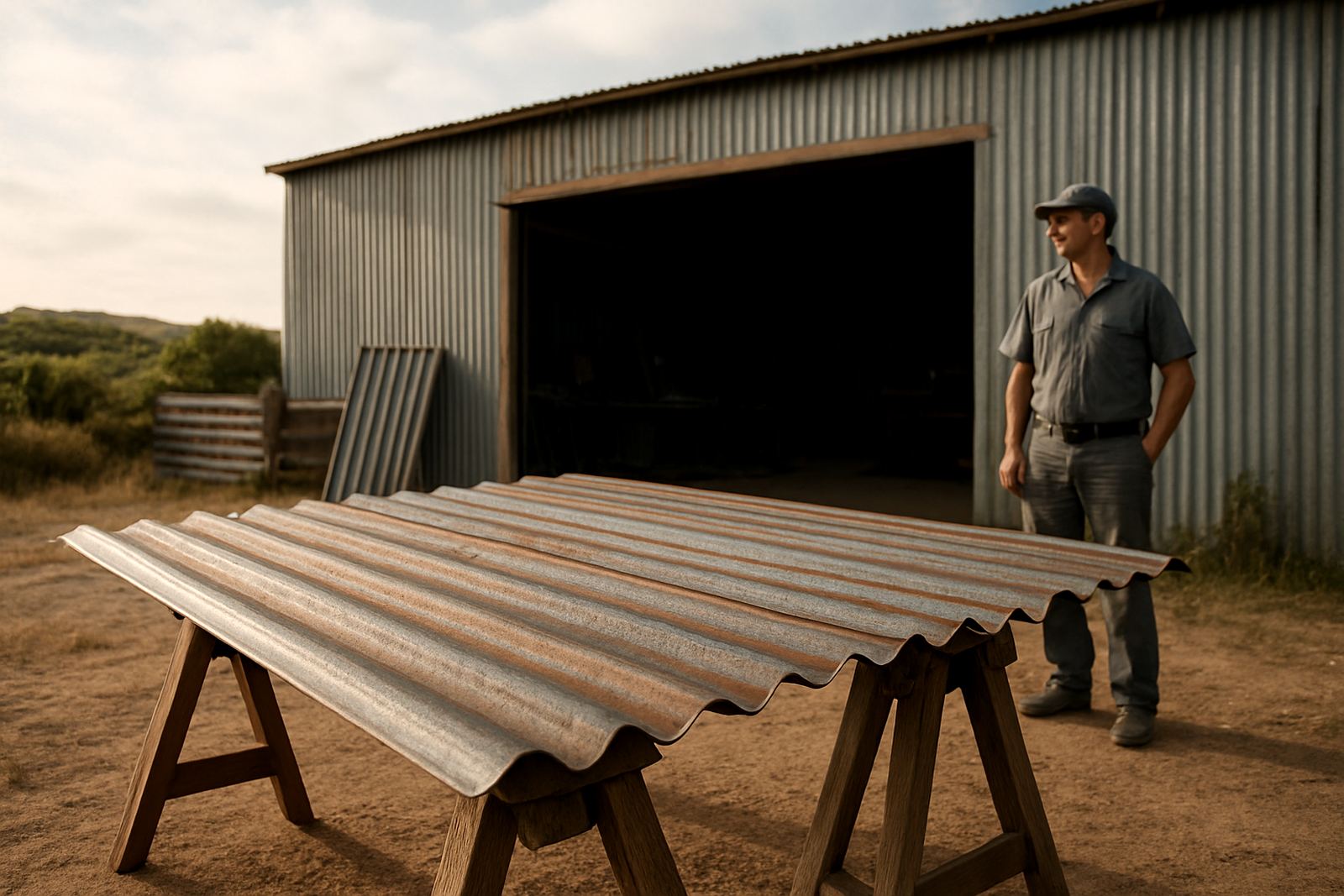
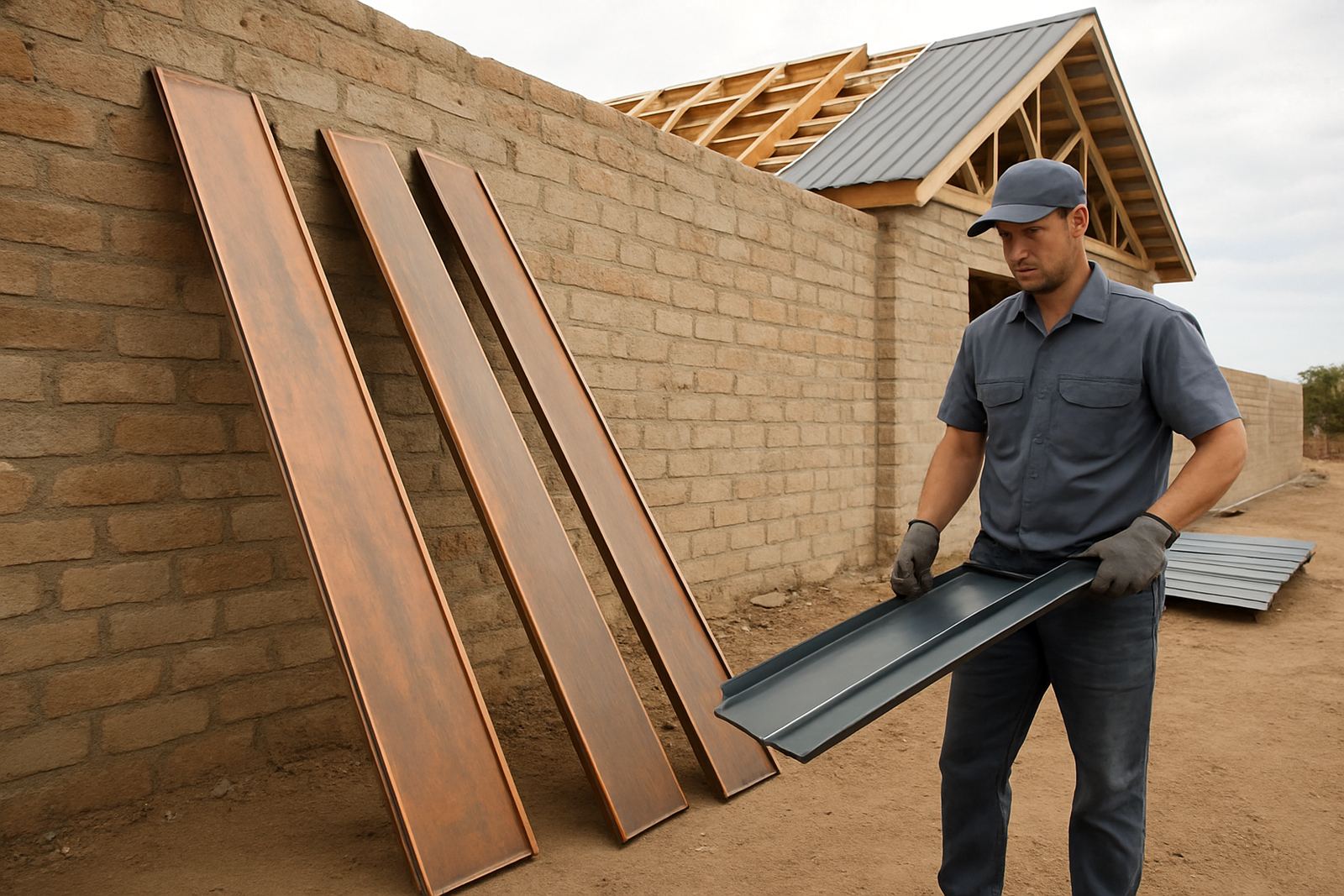
We make barge flashings to suit the roof pitch, sheet profile and fixing method. There is no single standard size that works for every building. A shallow pitch on a carport needs a different return and cover than a steeper gable on a workshop. We measure on site when needed, then form the flashing to the finished line so it sits neatly without forcing the sheet edge.
- Material options: pre-painted sheet metal or plain galvanised steel for later coating
- Common sheet thicknesses: 0.4 mm, 0.47 mm and 0.53 mm depending on use
- Typical lengths: cut to 2.4 m, 3 m or site specific lengths for fewer joins
- Cover widths: made to suit the roof sheet profile and verge build-up
- Return lips and drip details: formed to match the pitch and water run-off
For coastal properties, the finish matters as much as the shape. Salt air can shorten the life of poorly protected metal, so material choice should match the site and the budget. If the roof is near the sea, we normally talk through the fixing method, sealant points and the best way to reduce water traps at joins. It is better to get that right first time than to come back after the first winter.
Where barge flashings suit best
Barge flashings are used wherever a sloping roof edge is exposed at the gable. That includes homes, garages, garden rooms, carports, storage sheds, workshop buildings and steel framed structures. They are also useful on add-ons where a new roof meets an older wall line and the finish must bridge that junction cleanly.
In the southern Cape, we often see three common situations. First is a new roof where the builder has reached the gable edge and needs a made to measure finish. Second is a replacement job where the old edge has lifted in wind or corroded at the ends. Third is a maintenance call where the flashing is still there but the seal has failed and water is tracking back under the sheet. In all three cases, a proper barge flashing gives better protection and a better final line.
If the roof sits under trees, or close to a boundary wall where wind swirls, the edge takes more punishment. That can loosen small fixings, especially if the original installation was rushed. We can assess whether the flashing should be replaced as a full length or matched section by section. Sometimes a simple adjustment is enough, but only if the metal has not already distorted too far.
How we measure, make and fit them
Our process starts with site measuring, because barge flashings only work well when they match the roof edge exactly. We check the pitch, the sheet profile, the fascia or wall height, and the direction water is likely to move in heavy rain. If there is an existing flashing, we also look at the old fixings and any rust line or movement marks.
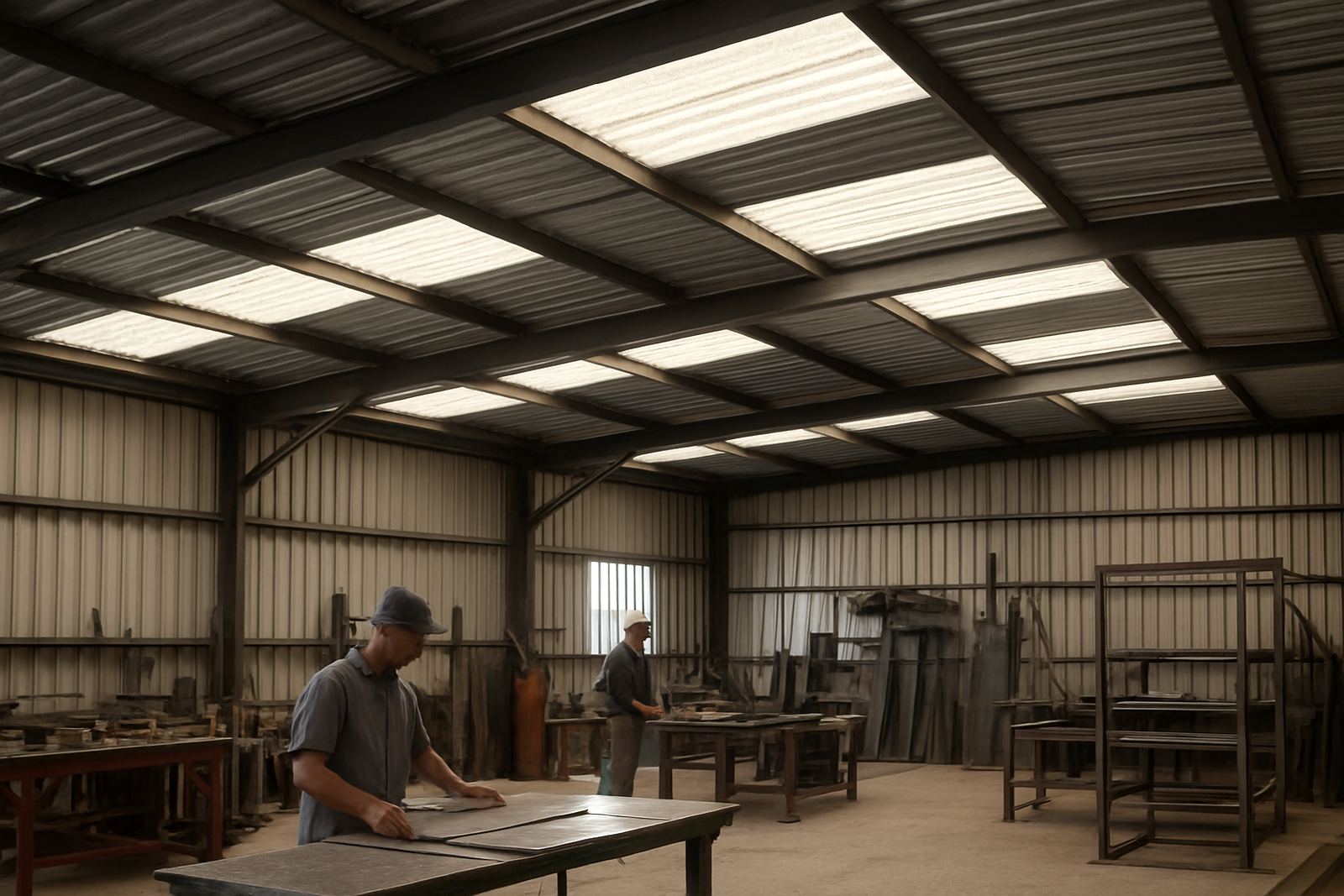
Once the dimensions are confirmed, we fabricate the flashing in our workshop in Gouriqua Park, Mossel Bay. Depending on the job, the installation may need basic hand tools, cordless screwdrivers, sealant and cutting equipment. For larger steel building work there may be an angle grinder or cutting torch on site, but for barge flashings alone the power need is usually light and controlled. If a job involves repair to old steel or a tie-in to a new frame, we plan the sequence so there is no unnecessary heat near finished paint or roofing material.
- Measure roof pitch and edge length before fabrication
- Check overlaps, end laps and any existing water marks
- Fix into sound timber or steel, not into softened or rusted material
- Seal joins where the profile and exposure call for it
- Allow for thermal movement on long runs, especially in summer heat
On busy sites we coordinate with the roofing crew so the barge pieces go on at the right stage. That matters on coastal jobs where wind can pick up in the afternoon and lift loose sheet ends. A good fit saves rework, and it helps the whole roof line sit square.
Care, servicing and when to replace them
Barge flashings do not need much attention, but they should be checked during regular roof maintenance. Look for lifted screws, cracked sealant, corrosion at cut edges, and any spots where the flashing has moved away from the roof sheet or wall. On coastal properties, a quick inspection every year is worth doing, especially after a wet winter or a spell of strong south easterly winds.
If the roof is being washed, avoid forcing water upward under the flashing. Gentle cleaning is enough. Remove leaves, sand and salt build-up from the edge, because debris holds moisture and can speed up rust where paint has worn thin. Where bird droppings or plant matter collect near the gable, the fixing line should be checked for early damage. Small issues are cheaper to correct before they spread into the roof sheeting or timber below.
Replacement is usually the sensible option when the metal has started to buckle, when the return lip no longer covers the edge, or when repeated resealing has not stopped leaks. A flashing that is bent out of shape after a wind event may still be serving a purpose, but once it has opened a gap it can let water in every time the weather turns. In those cases we can replace the full length or only the damaged section, depending on what the structure allows.
What to check before you order
Before you place an order, it helps to have the roof details ready. The more accurate the information, the better the fit and the less site trimming is needed. That is important on stepped roofs, mixed material roofs and older buildings where the gable may not be perfectly square. If possible, send photos from the ground and from close up at the edge.
- Roof pitch and approximate edge length
- Sheet profile type or a clear photo of the roof sheet
- Material preference, plain galvanised or painted finish
- Whether the flashing is for new work or replacement
- Exposure level, inland, suburban or coastal
- Any special fixing points, wall ends or fascia details
If the job is in Mossel Bay, Hartenbos, Great Brak River, George, Wilderness or Sedgefield, we can usually work from site photos and a measured call out if needed. For steel buildings and carports, we often combine barge flashings with other edge trims, gutters or roof sheet installation so the whole edge is sorted in one visit. That saves time and keeps the finish consistent across the build.
Key facts
| Product | Barge flashings for gable edge protection |
|---|---|
| Material options | Galvanised steel or pre-painted sheet metal |
| Typical thickness | 0.4 mm, 0.47 mm or 0.53 mm |
| Length options | 2.4 m, 3 m or made to measured length |
| Use areas | Homes, carports, workshops, sheds and steel structures |
| Service area | Mossel Bay and the southern Cape |