Corrugated sheets for everyday roofing work
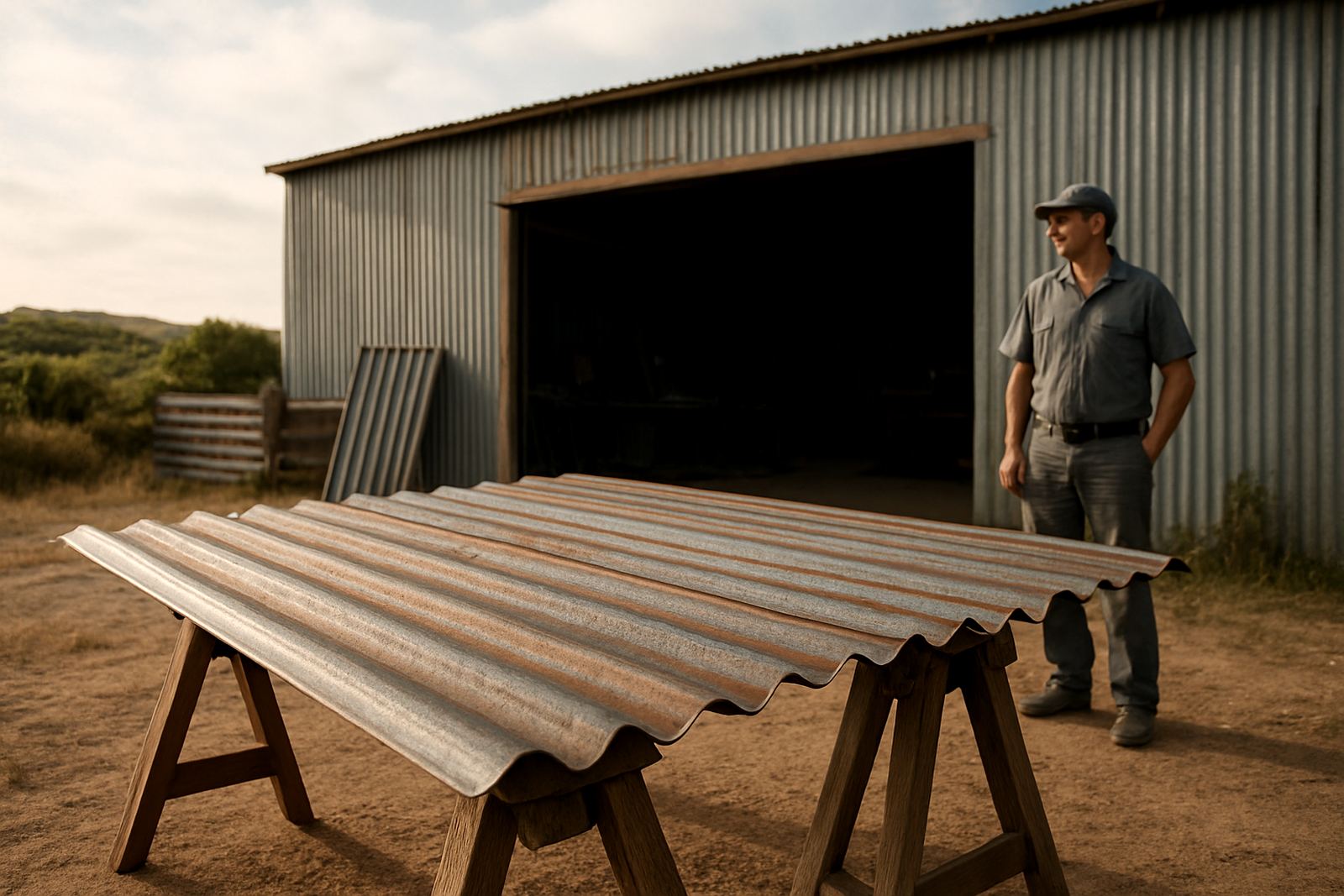
Corrugated sheets are profiled roof sheets with repeating ribs that shed water quickly and give good stiffness across the span. They are commonly used on houses, farm buildings, boundary structures, storage sheds, workshops and carports where a straightforward roof is needed and the frame must be kept practical. In coastal towns like Mossel Bay, Hartenbos and Great Brak River, the right sheet finish and fixing method matter because salt air and strong winds can shorten the life of poorly specified roofing.
We supply corrugated sheets for new work and replacement jobs, from small repair sections to full roof coverings. The profile is suited to pitched roofs and can also be used on wall cladding where a clean sheeted finish is required. For many rural sites it remains a sensible option because it is easy to move, quick to install, and can be matched to custom flashings, gutters and ridge details made to suit the building.
Sizes, thicknesses and finish options
When ordering corrugated sheets, the first thing to confirm is the cover width, overall length and sheet thickness. The required length is usually cut to suit the roof slope so there is less waste and fewer end laps. On longer roof runs, the sheet length must be checked against transport limits, handling on site and the slope angle. On smaller buildings, shorter sheets can be easier to fit and replace later.
- Common lengths: cut to order, usually from short repair pieces up to full roof runs
- Thickness options: selected to suit roof spans, fixing spacing and site exposure
- Profile: traditional corrugated form for sheds, houses and rural buildings
- Finish: plain sheet, coated finish or galvanised finish depending on the application
- Use with matching ridge caps, barge flashings and apron flashings
For coastal areas, a coated or suitably protected finish is often the better choice where the roof faces salt spray and wind driven moisture. If the building sits inland near George, Wilderness or Sedgefield, the exposure can still vary a lot depending on height, tree cover and how open the site is. We will check the roof shape, overhangs and water flow before confirming the cut list.
Where corrugated sheets work best
Corrugated sheets suit buildings where drainage, speed of installation and simple maintenance are important. They are often selected for farm stores, domestic garages, labour accommodation, boundary roofs, stables, garden sheds and general purpose covers. On residential sites, they can also be used for lean-to additions and carports where a lighter roof profile is preferred. The profile has a familiar look that fits older rural buildings as well as newer practical structures.
They are not only for low cost work. In the right specification, corrugated sheets can form part of a proper building envelope when they are fixed correctly to purlins or supporting members, sealed around penetrations and finished with the right flashings. That matters where wind lift can be an issue, especially on exposed properties in Mossel Bay or along the route towards Wilderness. A roof can look simple and still be planned properly.
- Residential roofs and additions
- Farm sheds and storage buildings
- Carports and covered parking
- Workshop roofs and side cladding
- Replacement sheets for damaged sections
Installation, tools and site requirements
Correct installation is as important as the sheet itself. Corrugated sheets must be fixed to sound framing at the right centres, using the correct fasteners and washers for the exposure conditions. Sheets should be laid square, with the side laps facing away from prevailing weather where possible, and end laps kept to the minimum required by the roof pitch. If the roof has low pitch or a long run, the lap detail and sealant use need extra care.
For most jobs, only normal site power and hand tools are required. No gas is needed for fitting the sheets themselves, although some custom flashings and workshop work may use powered cutting and forming equipment. On remote sites, basic access and a safe unloading area are important because corrugated sheet packs can be long and awkward to handle in wind. One loose sheet can become a safety risk very quickly.
- Check purlin spacing before ordering sheet thickness
- Allow for ridge, barge and apron flashings in the take-off
- Confirm roof pitch so the lap detail suits the slope
- Plan safe lifting, especially on windy coastal days
Keeping the roof in service for longer
Corrugated sheets need basic care to keep them working well. Dirt, leaves and standing water can shorten the life of the roof, so gutters should be cleared and the roof checked after heavy rain. In Mossel Bay and the nearby coastal belt, salty air can affect fixings and cut edges if they are not protected properly. A yearly inspection is a sensible habit, and after a storm it is worth checking for lifted edges, loose screws and damaged flashings.
If a section is dented, scratched or leaking around a penetration, small repairs are usually cheaper than waiting for the damage to spread. We handle roof leak repairs, gutter replacement and maintenance inspections, which helps when a roof is starting to age but does not need full replacement yet. Regular checks are especially useful on rental properties, holiday units and farms where issues can go unnoticed for too long.
What to check before you place an order
Before ordering corrugated sheets, have the roof dimensions, slope and fixing structure measured properly. You should know whether the sheets are for a new build or a replacement job, because matching an existing profile can save time and avoid awkward joins. It is also important to confirm whether the roof needs overhangs, drip edges or custom flashings at chimneys, walls and parapets. A small measuring error can cost more than the sheet itself.
It helps to keep the following details ready:
- Roof length and width in metres
- Pitch or slope of the roof
- Whether the job is coastal, inland or on a farm site
- Need for gutters, flashings or ridge caps
- Preferred finish for corrosion resistance
- Any access limits for delivery and unloading
If the roof is going onto a steel structure, carport or workshop frame, the support spacing should be checked before material is cut. That makes the order cleaner and reduces waste. Our team in Gouriqua Park, Mossel Bay works with sites across the southern Cape, from Hartenbos and Great Brak River through to George, Wilderness and Sedgefield.
Key facts
| Product type | Corrugated roof sheets for roofing and wall cladding |
|---|---|
| Typical use | Residential, rural, farm and light commercial buildings |
| Lengths | Cut to order to suit roof slope and transport needs |
| Thickness | Selected to suit span, exposure and fixing spacing |
| Finish | Plain, galvanised or coated depending on site conditions |
| Supply area | Mossel Bay, Hartenbos, Great Brak River, George, Wilderness and Sedgefield |