Built For Covered Parking And Light Utility Shelter
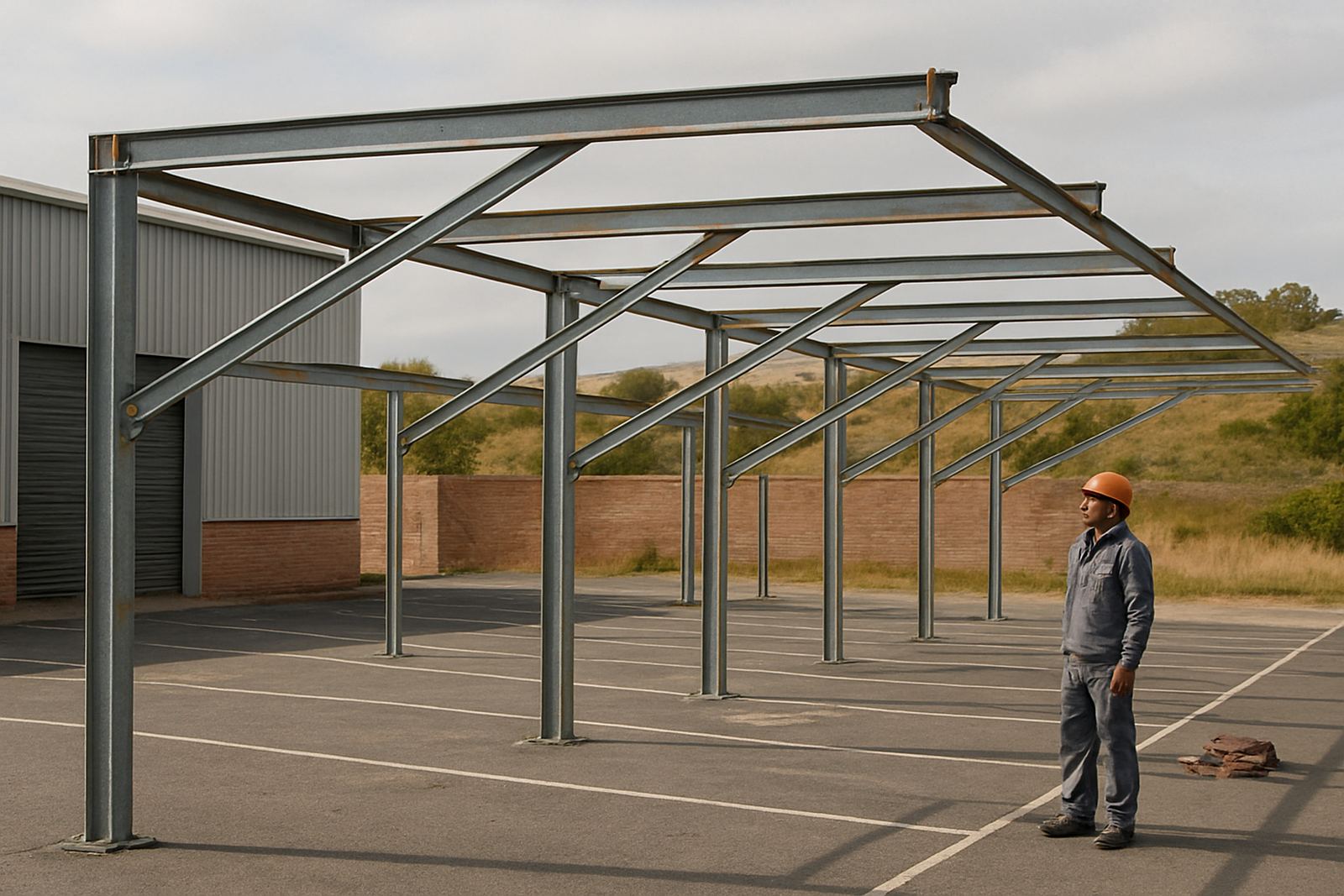
Shade port frames are the steel structure that carries the canopy over a parking bay, trailer space or small service area. At J&E Sheet Metal we fabricate the frame to the required span, height and fixing points, then prepare it for the chosen roof sheet or shade cover. The aim is simple: give reliable cover without taking up unnecessary yard space or creating a bulky structure that gets in the way of driveways and turning circles.
In Mossel Bay and the surrounding towns, shade ports have to cope with strong coastal winds, bright sun, salt in the air and regular wash-downs. We therefore size the members and anchors with site conditions in mind. A frame that works in a sheltered inland yard may not be suitable close to the coast or on a corner stand that takes gusts from more than one direction.
- Typical uses include single vehicle bays, double bays, tandem parking and small utility covers.
- Frames can be made for flat, sloped or slightly arched profiles depending on runoff needs.
- We can set the frame up for sheeted roof cover, wall edge trimming or open-side parking.
Common Sizes, Layouts And Frame Options
Shade port frames are usually made to match the available space, but there are common sizes that suit most homes and small businesses. A single bay often starts at about 3 m wide by 5.5 m long, while a double bay may run from 5.5 m to 6 m wide with a similar length. Taller vehicles, bakkies with canopy tops, small caravans or utility trailers may need extra clearance and a stronger upright arrangement.
We fabricate frames in mild steel sections selected for the span and loading, then prepare the steel for corrosion protection. Depending on the site, the frame may be free-standing with posts anchored into concrete, or tied back to an existing wall or slab edge. Some customers want a simple functional finish while others need side returns, extra head height or additional posts to suit vehicle doors and access paths. A good frame is measured properly first, because a few centimetres can make parking awkward.
- Span and bay spacing are set to suit the vehicle, not just a standard drawing.
- Options can include extra headroom, side overhang, and different post positions.
- Bracing is added where wind exposure or long spans call for more support.
Where Shade Port Frames Suit Best
These frames work well at homes, guest houses, workshops, schools, small businesses and storage yards. In Mossel Bay, Hartenbos, Great Brak River, George, Wilderness and Sedgefield we often see them used where there is a need for quick shelter without building a full garage or enclosed structure. They are also useful for staff parking, loading areas and light equipment storage.
On coastal properties, open parking spaces can suffer from sun fade, bird droppings and salt build-up on paint and trims. A shade port reduces that wear, and it can also help keep a vehicle cooler during summer. In utility yards, the same frame can protect drums, bins, tools or a small work area from direct weather exposure. If the site is near municipal boundaries or shared access points, we also look at setback lines and any body corporate or local approval requirements before fabrication starts.
- Good for exposed driveways, side yards and service entrances.
- Useful where a full brick garage is not practical or not wanted.
- Can be adapted for homes, commercial lots and light industrial sites.
Fabrication, Coating And Fixing Details
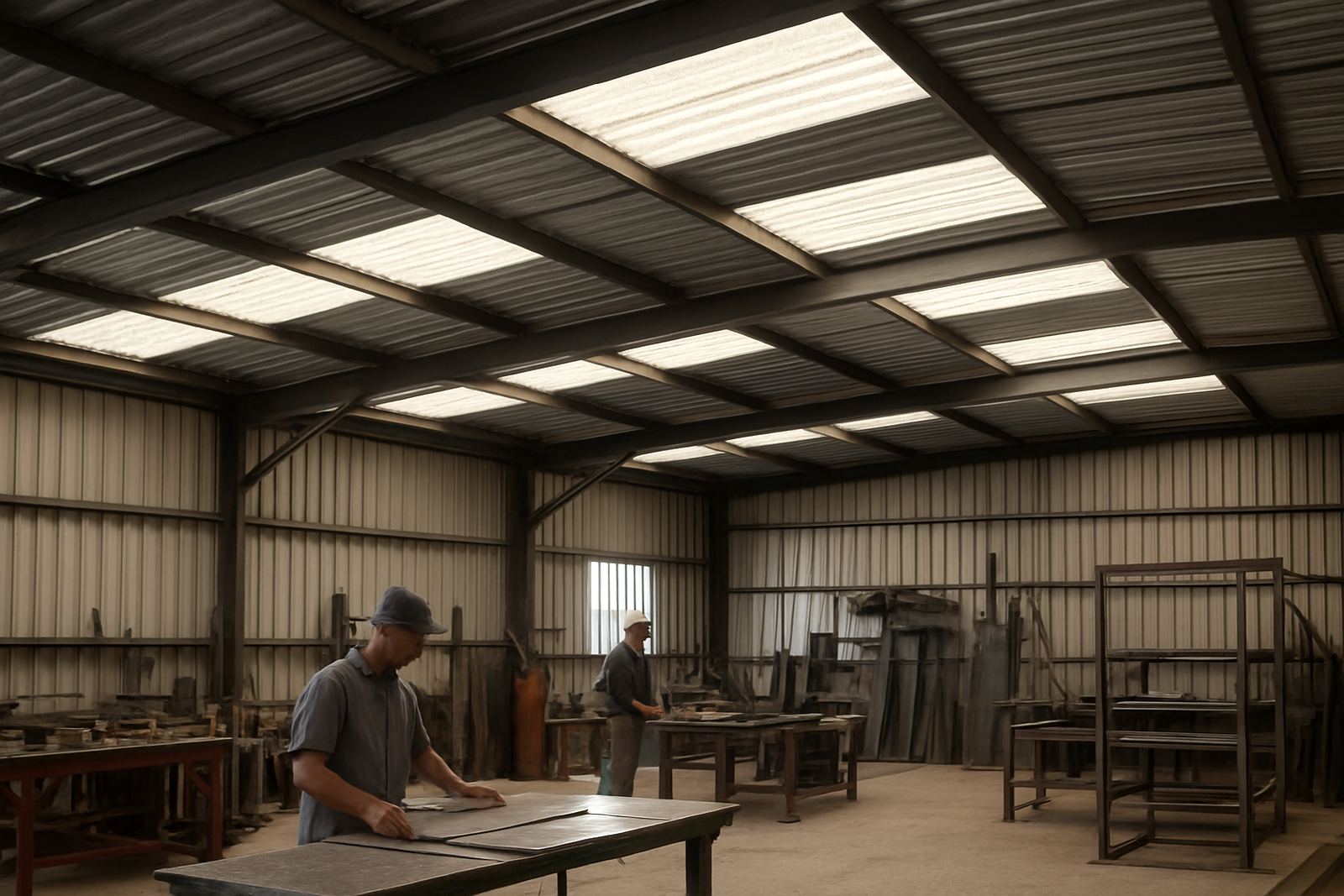
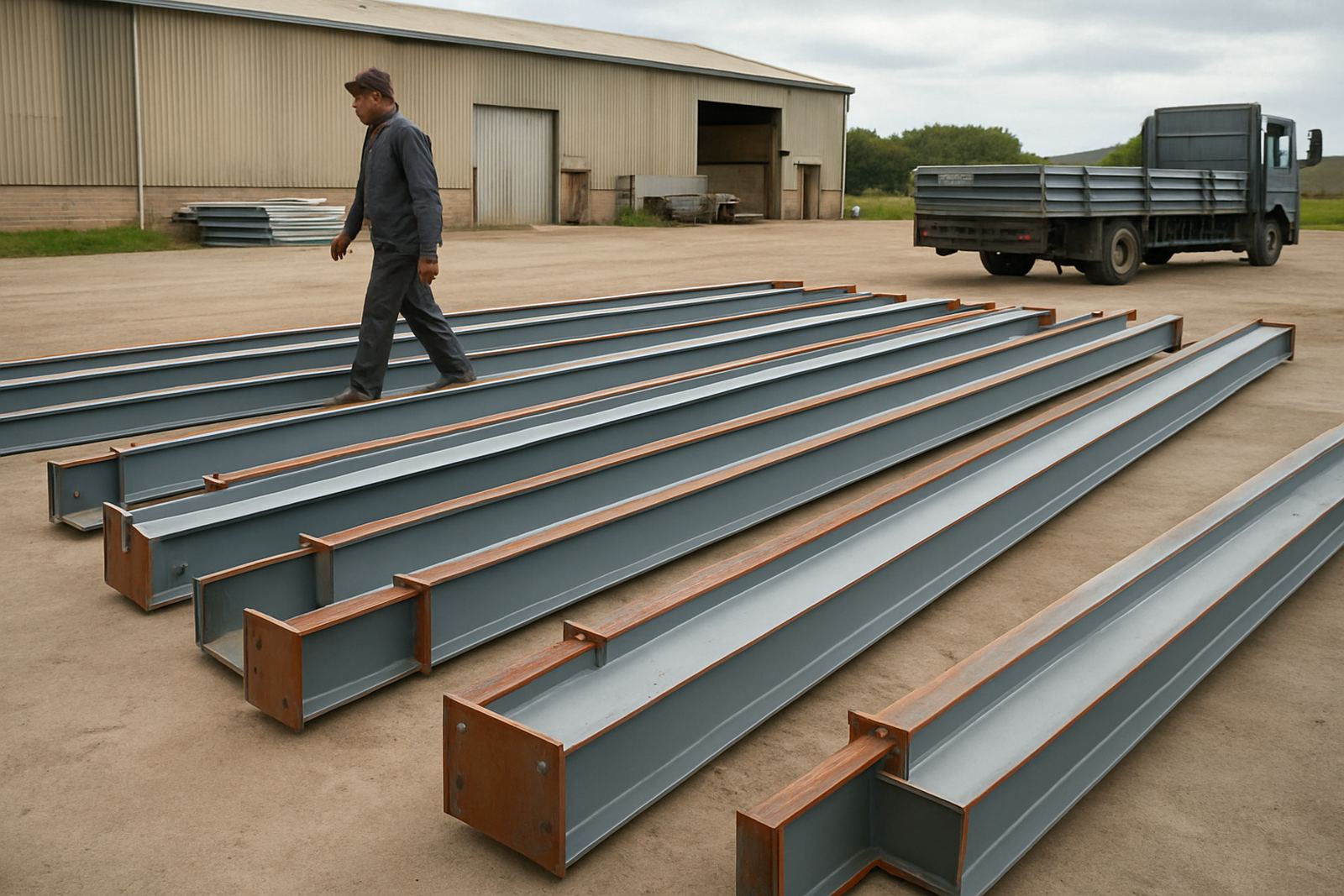
We manufacture the frame in our workshop and prepare it for installation on site. The work normally includes cutting, welding, checking squareness, drilling where required and arranging the fixing plates or base plates. For coastal use, the finish must be considered from the start, because a shade port is not only about shape, it is about how long the steel will last in damp air.
Frames can be supplied with a corrosion resistant coating system suited to the exposure level, then assembled and anchored on site. Where the structure is to take roof sheeting, we allow for the correct purlin spacing and fixing points. If the frame is only carrying a shade membrane or light cover, the fixing detail and tensioning points will be different. We also check drainage direction so rainwater does not spill into a doorway or across a walkway. Small details like this save later complaints and repair call-outs, especially when the weather changes quickly.
- Steel sections are selected for span, wind exposure and intended cover.
- Base plates, anchor bolts and gussets are used where needed.
- Fixing details are matched to the chosen roof sheet or cover type.
Installation Needs, Access And Site Preparation
Installation normally needs enough access for a bakkie, trailer or small delivery vehicle, depending on the size of the frame and cover. If the site is tight, we plan the build in sections so it can be handled safely. Most shade port frames are erected with standard hand tools and workshop equipment, but some sites need drilling into concrete, chemical anchors or new footings. Where a slab is already in place, we check thickness and edge condition before deciding on the fixing method.
No gas or electrical supply is usually required for the frame itself, although power may be needed on site for drilling, cutting adjustments or a small welding repair. If the project includes a cover sheet, gutter or side flashing, then we factor in the fixing points and runoff direction. We also look at working clearances near boundary walls, paving, overhead lines and trees. A neat site plan helps prevent last minute changes, and it keeps the installation day shorter for the client.
- Access is checked for delivery, lifting and safe positioning of posts.
- Existing slabs and footings are assessed before anchors are fitted.
- Temporary power may be useful on larger sites with onsite adjustments.
Care, Servicing And What To Check When Ordering
Shade port frames need basic care if they are going to last through coastal humidity and strong sun. A wash-down with clean water helps remove salt and dust, and a visual inspection after heavy wind is worthwhile. Look for loose fixings, movement at the base plates, rust marks around scratched areas and any cover panels that have started to lift or rattle. If the frame carries a roof sheet, gutters and flashings should also be checked so water does not run back onto the parked area.
When ordering, have the bay size, vehicle height and site layout ready. It also helps to know whether the frame must sit on an existing slab, be fixed into new concrete, or tie into a wall. Customers should confirm the type of cover, the preferred finish, and whether the installation sits in a high-wind zone or near the sea. We can then advise on member size, post spacing and any extras needed for long term use. A clear brief at the start avoids changes later and keeps the end result tidy.
- Check width, length and vehicle height before signing off the drawing.
- Confirm whether the site needs new footings or can use an existing slab.
- Tell us about wind exposure, coastal conditions and any runoff concerns.
Key facts
| Material | Mild steel frame sections sized to suit span and site conditions |
|---|---|
| Typical sizes | Single bay from about 3 m x 5.5 m, double bay from about 5.5 m to 6 m wide |
| Finish | Corrosion resistant coating option for coastal and inland use |
| Mounting | Base plate and anchor bolt fixing, or footings where required |
| Use | Covered parking, trailer shelter, utility cover and light storage |
| Service area | Mossel Bay, Hartenbos, Great Brak River, George, Wilderness and Sedgefield |