What side wall flashings do at an abutment
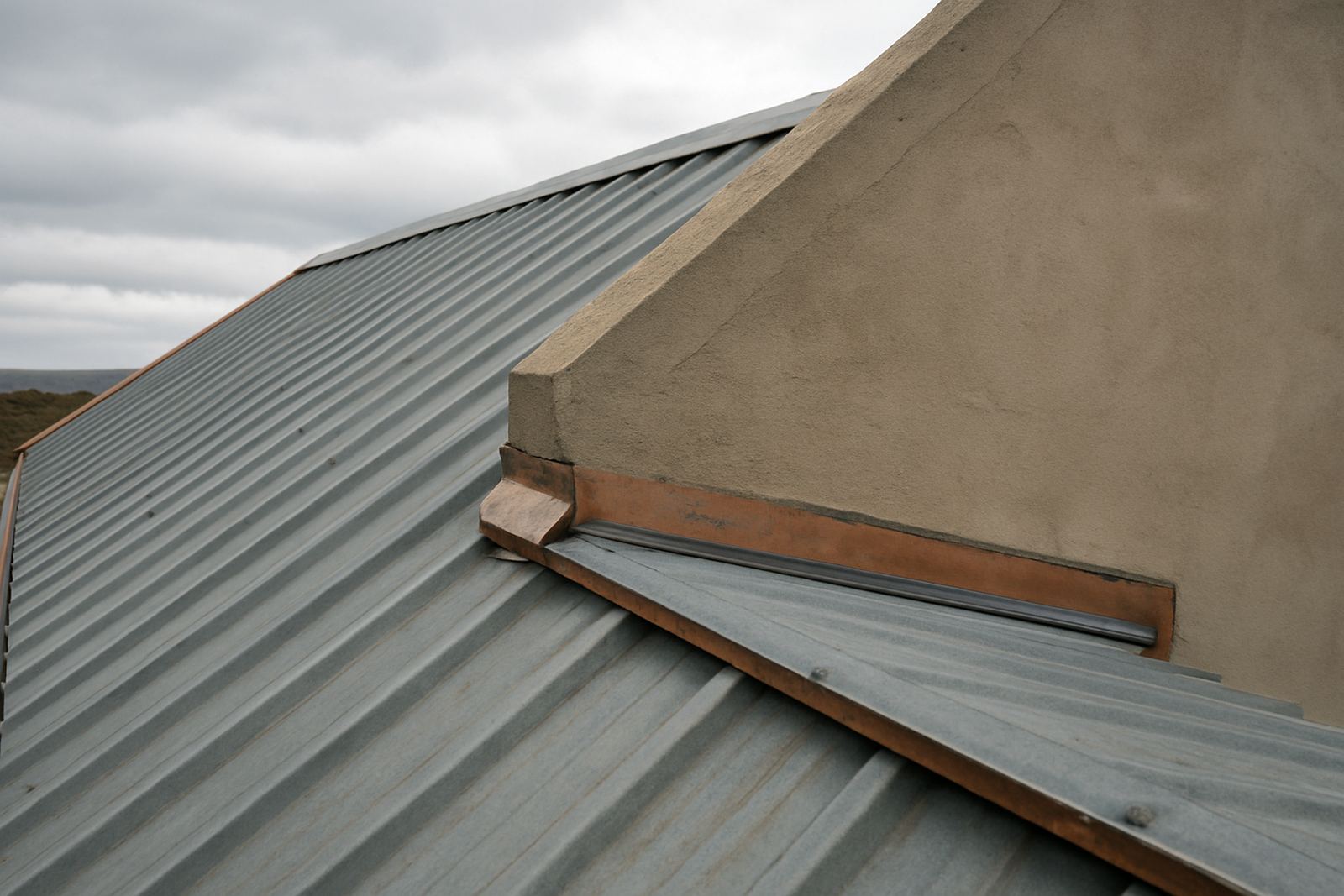
Side wall flashings are the folded metal pieces fitted along the side of a roof where it meets a brick wall, parapet, parapet capping or another vertical surface. Their job is simple but important, they seal the junction and direct water back onto the roof sheet or into the gutter, instead of letting it track into the wall cavity or along the timberwork.
On the coast, especially in Mossel Bay and Great Brak River, wind-driven rain can push hard into these junctions. If the flashing is short, loose or poorly set, you often get damp patches inside after a heavy front. We make each side wall flashing to suit the actual roof profile, not a one-size piece that has to be forced into place.
These flashings are used on both steel roofs and tiled roofs, and they can be matched to new work or used during repairs. For many buildings, a proper abutment flashing is the difference between a dry wall and repeat leak callouts.
Sizes, folds and finish options we supply
Side wall flashings are made to the measurements on site, because the wall height, roof pitch and sheet profile all affect the final shape. Typical material thickness is 0.47 mm or 0.58 mm coated steel, with lengths cut to suit the run. Where a longer run is needed, we join sections with overlap and sealant so the line stays watertight.
We can supply plain flashings, or flashings with a return fold, stop-end, cover flange or apron detail depending on the roof and wall finish. In exposed coastal areas, the finish needs to cope with salt in the air and constant moisture. A neat bend and correct lap usually matters more than extra sealant, and a poor fit will show up quickly.
- Standard lengths cut to site measurements
- Material thickness commonly 0.47 mm or 0.58 mm
- Colour-matched or plain finish available
- Custom bend angles to suit roof pitch
- Options for left and right hand sides
Where these flashings suit best
We fit side wall flashings on houses, boundary walls, storage sheds, farm buildings, factory roofs and carport structures. They suit any point where a sloping roof meets a vertical surface and the water path needs to be controlled. This includes side abutments, raised walls, stairwell covers, parapet returns and certain box gutter terminations.
In the southern Cape, we often install them on carports and lean-to roofs where the building line runs tight against a wall. They are also useful where existing flashings have lifted after years of wind or where cement plaster has cracked at the roof edge. If the junction is exposed to driving rain, it is worth checking before the next wet season, not after.
- Homes and boundary wall abutments
- Workshops and light industrial sheds
- Carports and lean-to roof sections
- Parapet and side wall transitions
- Repair work on older roofs with leaks
How we install and what power or gas is needed
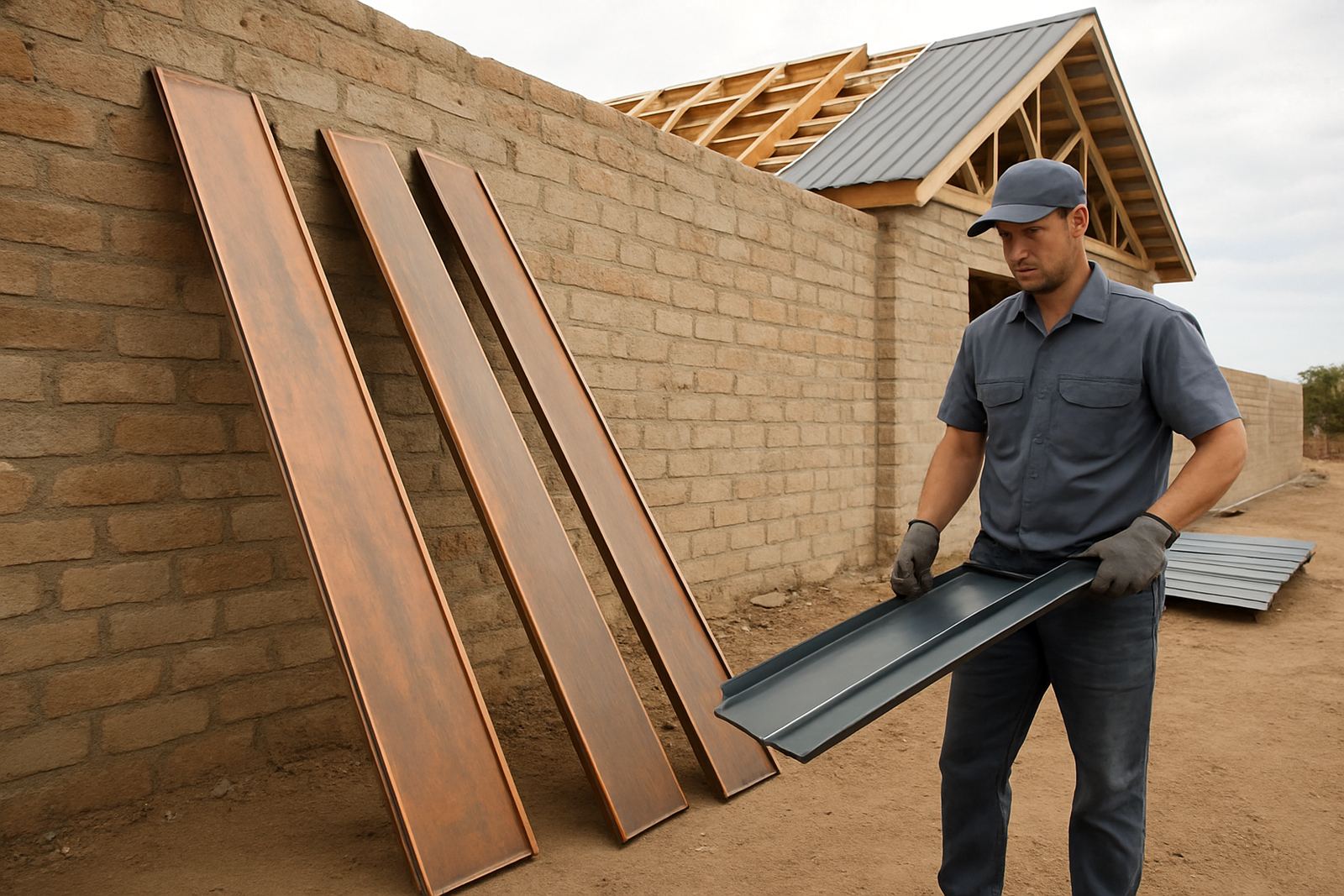
Installation starts with site measuring, because the wall line, roof slope and sheet profile all need to be checked before fabrication. We then cut and fold the flashing in our workshop, bring it to site and fix it with the correct fasteners and sealant. Where the roof sheets are already in place, we work carefully around the edges so the finished line sits tight and neat.
For normal side wall flashing work, no power or gas is needed from the client. We bring our own tools for cutting, folding, drilling and fastening. If the work forms part of larger roof repairs, we may need access to mains power for certain equipment, but we plan that before the job starts. On busy sites in George or Mossel Bay, access and parking can matter just as much as the material itself.
Good fixing points, correct lap direction and enough overlap are key. We also check that the roof sheet profile and wall finish allow water to run clear, because even a small reverse slope can cause problems later on.
What to check before you order
Before ordering side wall flashings, it helps to have a few details ready. The more accurate the measurements, the better the fit and the less trimming is needed on site. If you are replacing an old flashing, send photos of the existing junction and any leak marks, because that often shows where the water is entering.
- Roof type, for example IBR, corrugated or tiled
- Length of the wall run in metres
- Roof pitch and approximate wall height
- Whether the flashing is left hand or right hand
- Colour, coating or plain finish required
- Any existing gutters, parapets or obstacles nearby
If the wall has been plastered over the old flashing, we may need to lift sections carefully to get a proper seal. On some jobs the brickwork is uneven, so we allow for extra forming on site. A few extra millimetres at the measuring stage can save a lot of rework later, especially when the rain starts.
Care, inspections and when to replace
Side wall flashings need little day to day care, but they should be checked during routine roof inspections. Look for lifted laps, loose screws, cracked sealant, rust spots, staining on internal walls and any gaps where birds or dust are getting in. In coastal towns, salt build-up can shorten the life of untreated fixings, so regular inspection is worth it.
We suggest checking flashings after strong wind, major storms or roof maintenance work. If a flashing has been bent by someone walking on the roof, or if new leaks start near the wall line, it may need refitting rather than another layer of sealant. In many cases a straightforward replacement is cheaper than repeated patching.
Our team handles maintenance inspections, leak repairs and replacement work across Mossel Bay, Hartenbos, Wilderness, Sedgefield and nearby areas. If the flashing is damaged but the roof sheets are still sound, we can usually replace only the affected section and keep disruption to a minimum.
Key facts
| Product | Side wall flashings for roof abutments |
|---|---|
| Material | Coated steel, typically 0.47 mm or 0.58 mm |
| Length | Custom cut to site measurements |
| Use | Seals roof-to-wall junctions and directs water away |
| Installation | Fixed to measured roof and wall lines with correct laps and sealant |
| Service area | Mossel Bay, Hartenbos, Great Brak River, George, Wilderness, Sedgefield |