Why the footing does more than hold a post upright
A carport post footing is the base that transfers the weight of the roof, posts and any side loads into the ground. If that base is undersized or set poorly, the frame can start to move, the roof sheets can work loose, and the whole structure may lean over time.
In a coastal area like Mossel Bay, movement is not only about weight. Wind pressure, soft sandy patches, changes in soil moisture and corrosion around the base all play a part. A well made footing helps keep the posts square and the structure stable year after year, even when the weather turns nasty.
What usually goes wrong with weak footings
We often see carports where the posts were fixed into shallow concrete pads or anchored onto weak paving. That may look fine at first, but once the soil settles or the ground gets soaked, the post can shift. You then get twisted gutter lines, cracked paving and doors or gates catching nearby.
- Footings set too close to the surface
- Concrete poured into loose, un-compacted soil
- Posts fixed after the slab has already cracked
- Incorrect base plates or anchors for the load
- Rainwater running back into the footing area
These problems show up slowly. One post moves a few millimetres, then the roof line changes, and soon the whole structure needs repairs instead of a simple adjustment.
How we plan footings for southern Cape conditions
Footing size and depth should suit the carport size, roof pitch, soil type and local wind exposure. A light single-bay carport for a home in Hartenbos is not the same as a longer structure in an open yard near Great Brak River. We look at the site first, measure levels properly and check where the ground is firm enough to take the load.
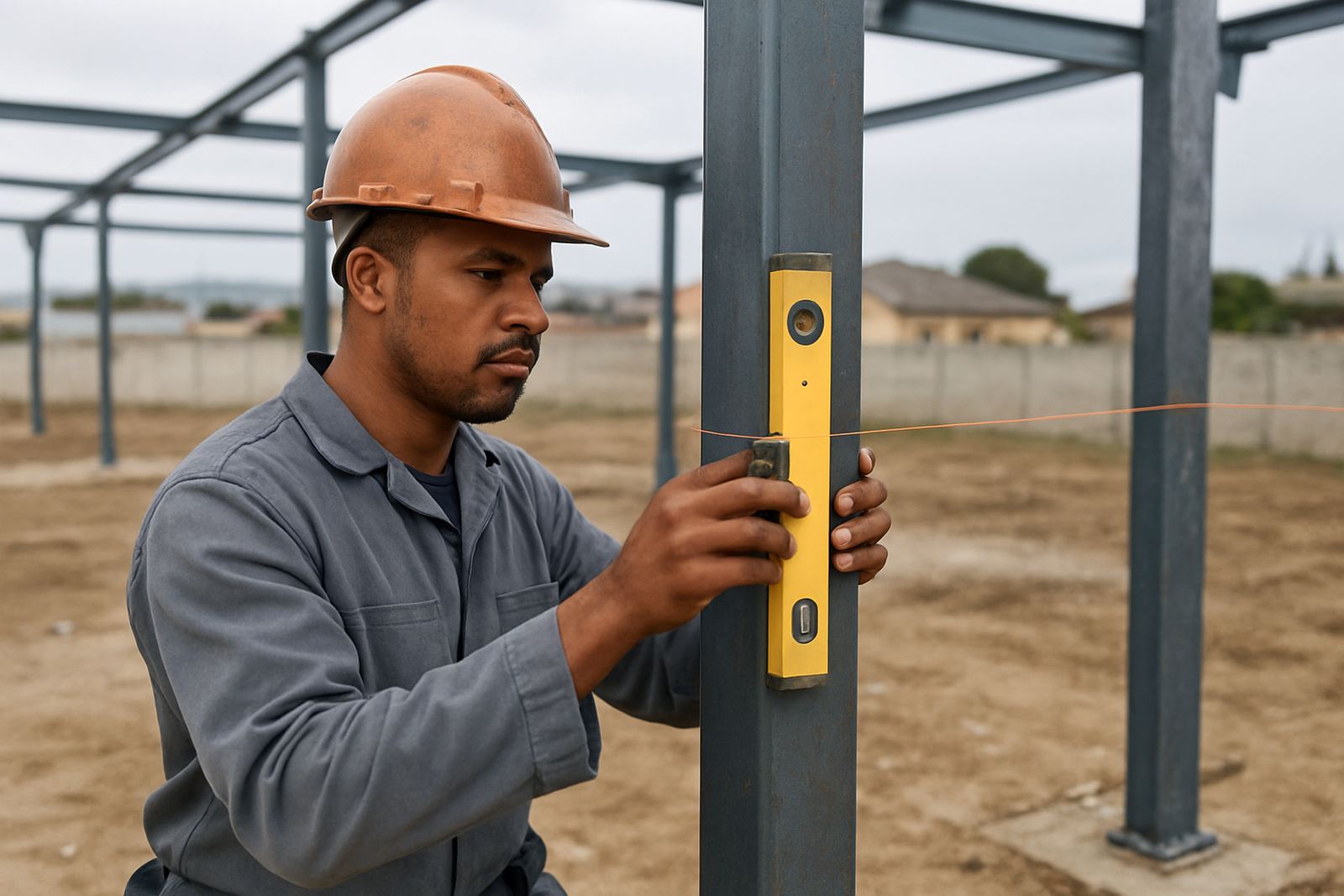
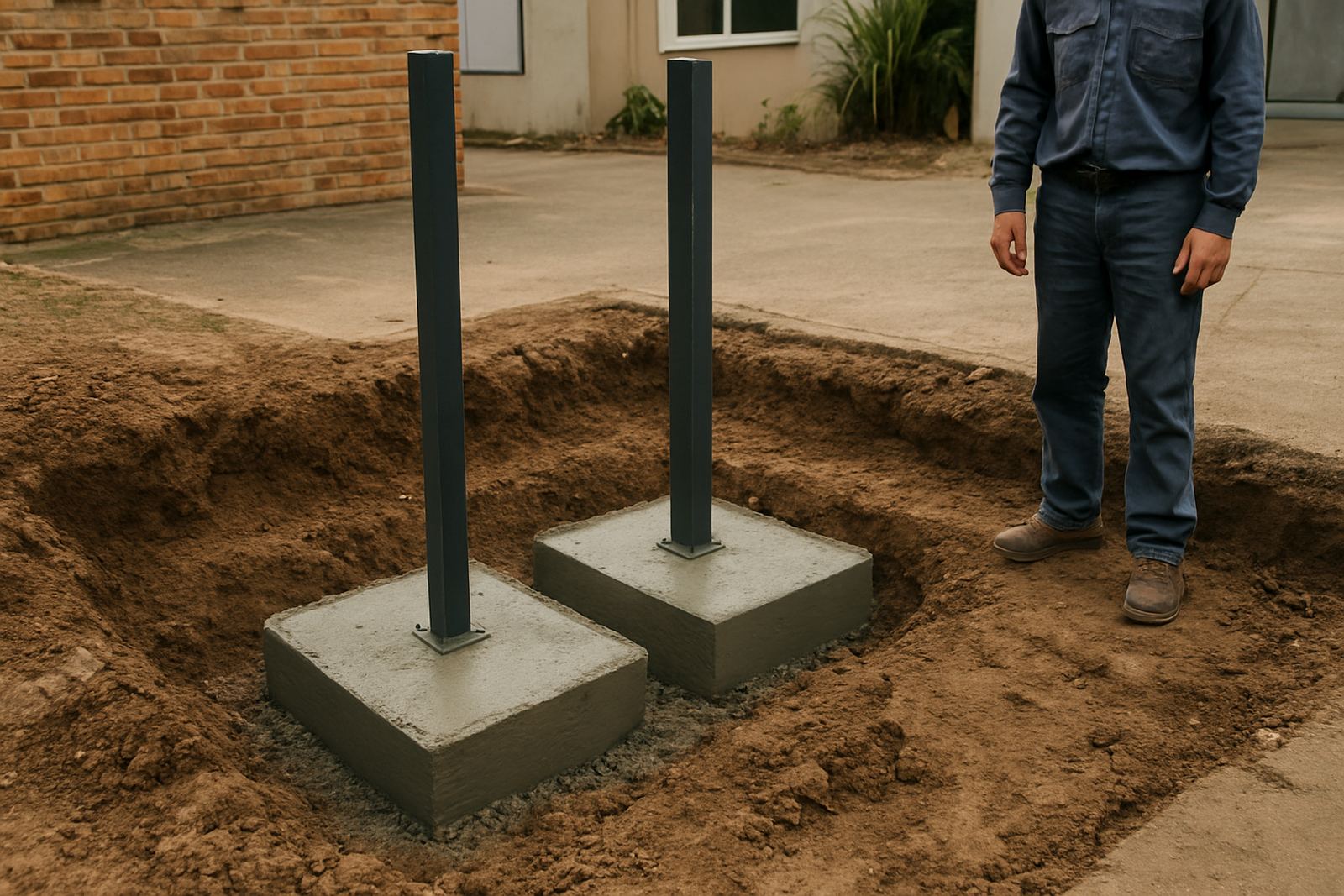
For many jobs, the footing is designed to sit below the topsoil and into a stronger layer. The concrete has to be mixed and placed correctly, with the post base aligned before it sets. If the site is on a slope or close to a driveway, the footing layout also needs to allow for vehicle clearance and water run-off.
Signs your existing carport footings need attention
If you already have a carport, there are a few warning signs worth checking. They do not always mean the structure is failing, but they should not be ignored.
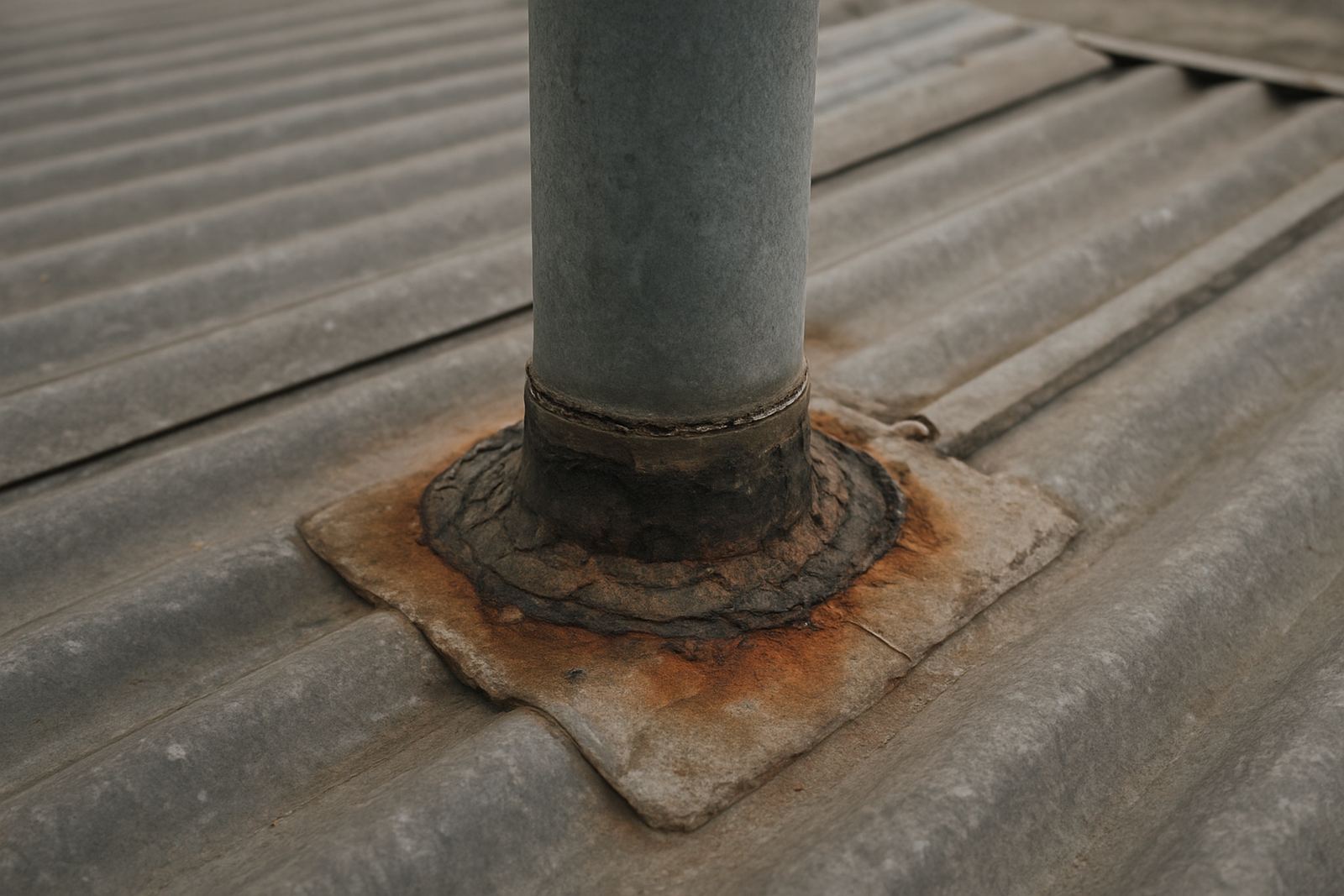
- Posts have visible rust at the base
- The roof line is no longer level
- Paving around the posts is cracking or lifting
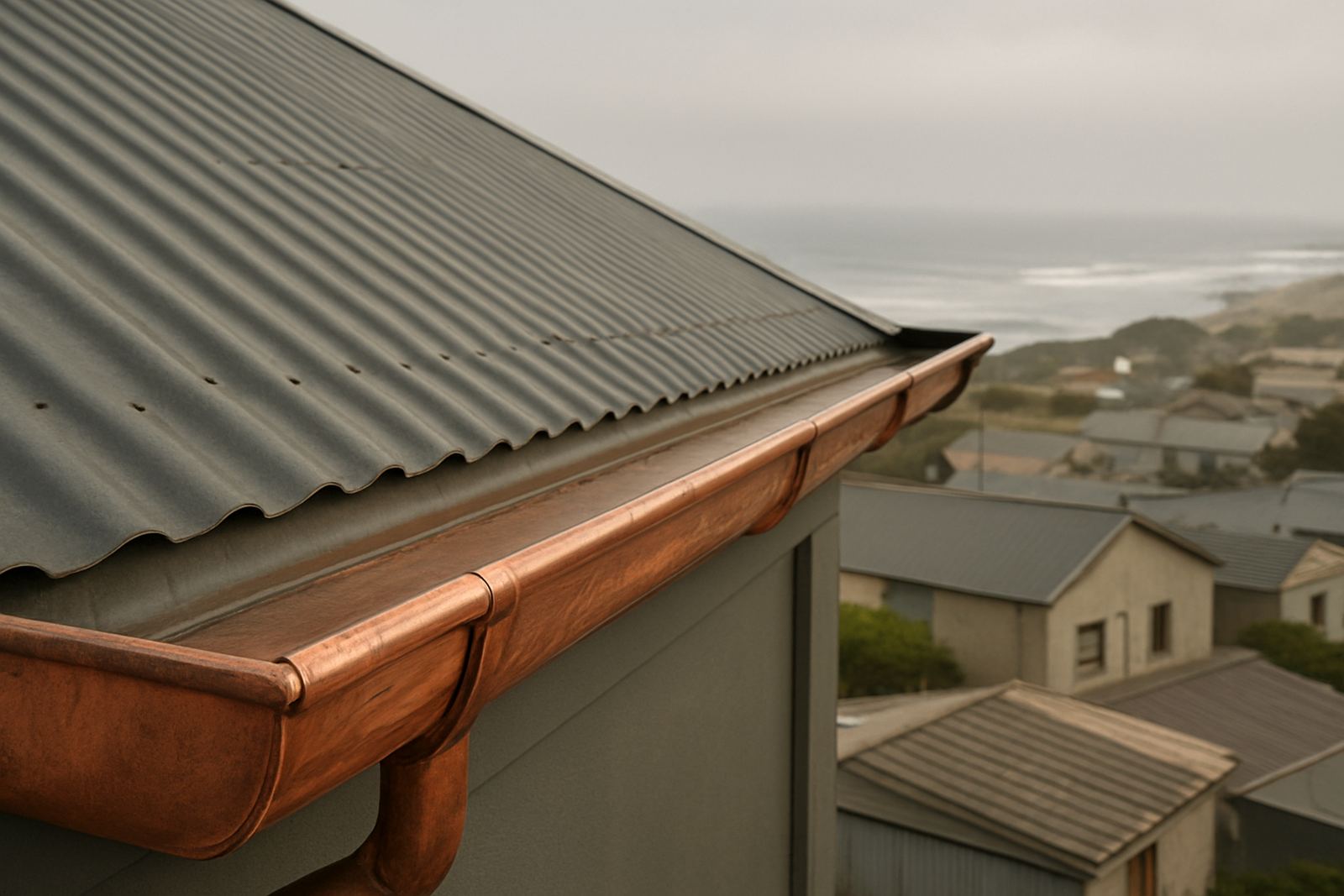
- Gutters are not draining properly after rain
- You can feel movement when wind pushes against the structure
When we inspect a carport, we look for both structural and moisture problems. A leaking gutter above a footing can wash out soil over time, so the issue may start at roof level and only show up later at ground level.
A practical Mossel Bay example
We recently looked at a carport in Mossel Bay where the owner had started with a decent steel frame, but the posts were set into shallow concrete only. After a few seasons of wind and repeated wet patches near the driveway, one side began to lean slightly. The fix was not just patching the roof sheets. The old bases had to be corrected, the posts re-supported and the drainage improved so water moved away from the footing line.
That job is a good reminder that good steelwork can still fail if the base is wrong. Once the footing is sorted, the rest of the structure lasts much longer and stays easier to maintain.
What to ask before you build a new carport
If you are planning a new carport in Mossel Bay, George, Wilderness or Sedgefield, ask about the footing before anyone starts cutting steel. The base details should be part of the quote, not an afterthought.
- How deep will the footings be for this site?
- Will the posts be cast in or bolted to a proper base?
- How will water drain away from the posts?
- Are you checking levels against the driveway and boundary line?
- Will the footing suit local wind exposure and roof size?
Getting those answers early can save time, money and repair work later. A carport should stand straight, drain correctly and stay serviceable for years, not only through the first winter.