What gutter fall actually does on a roof line
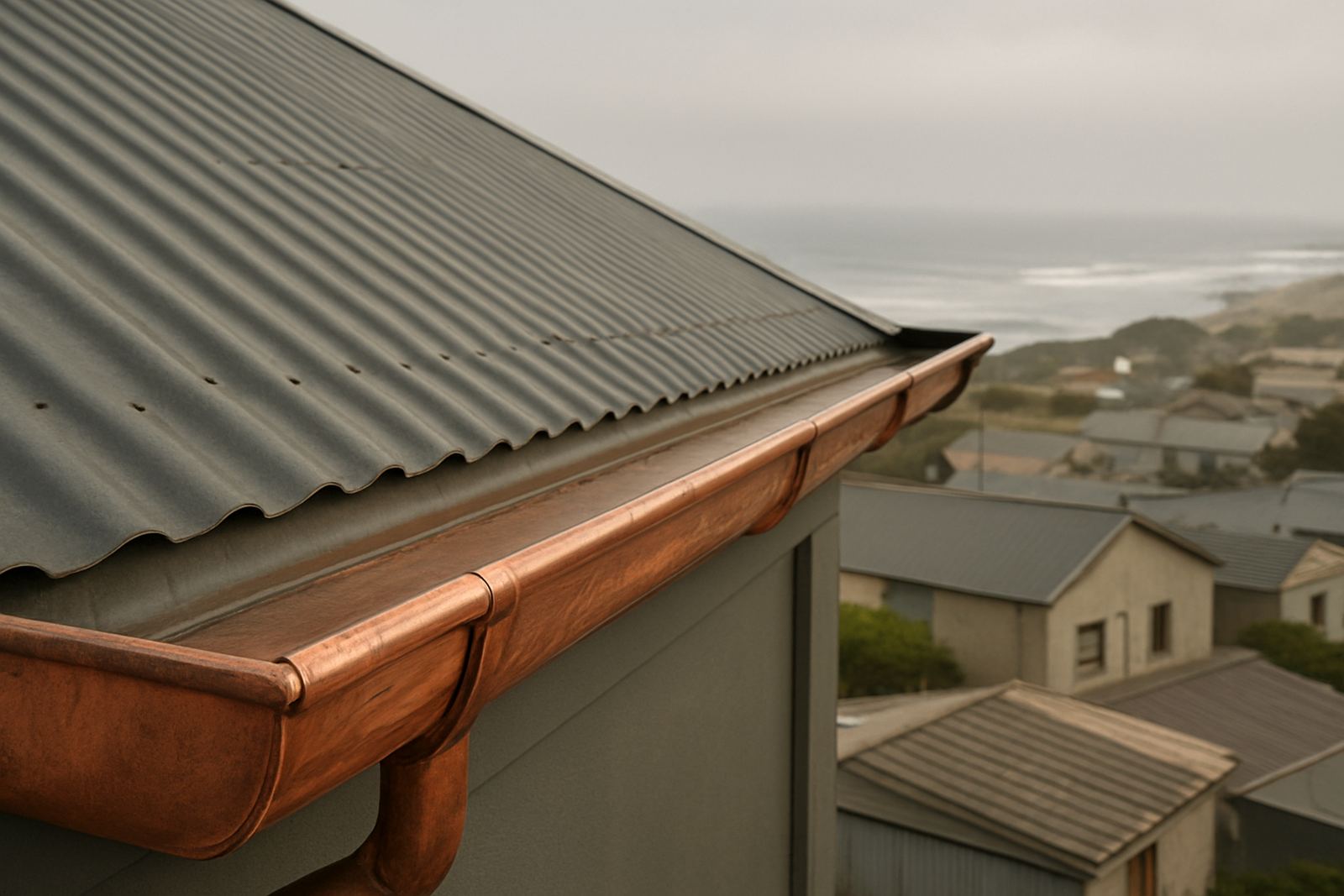
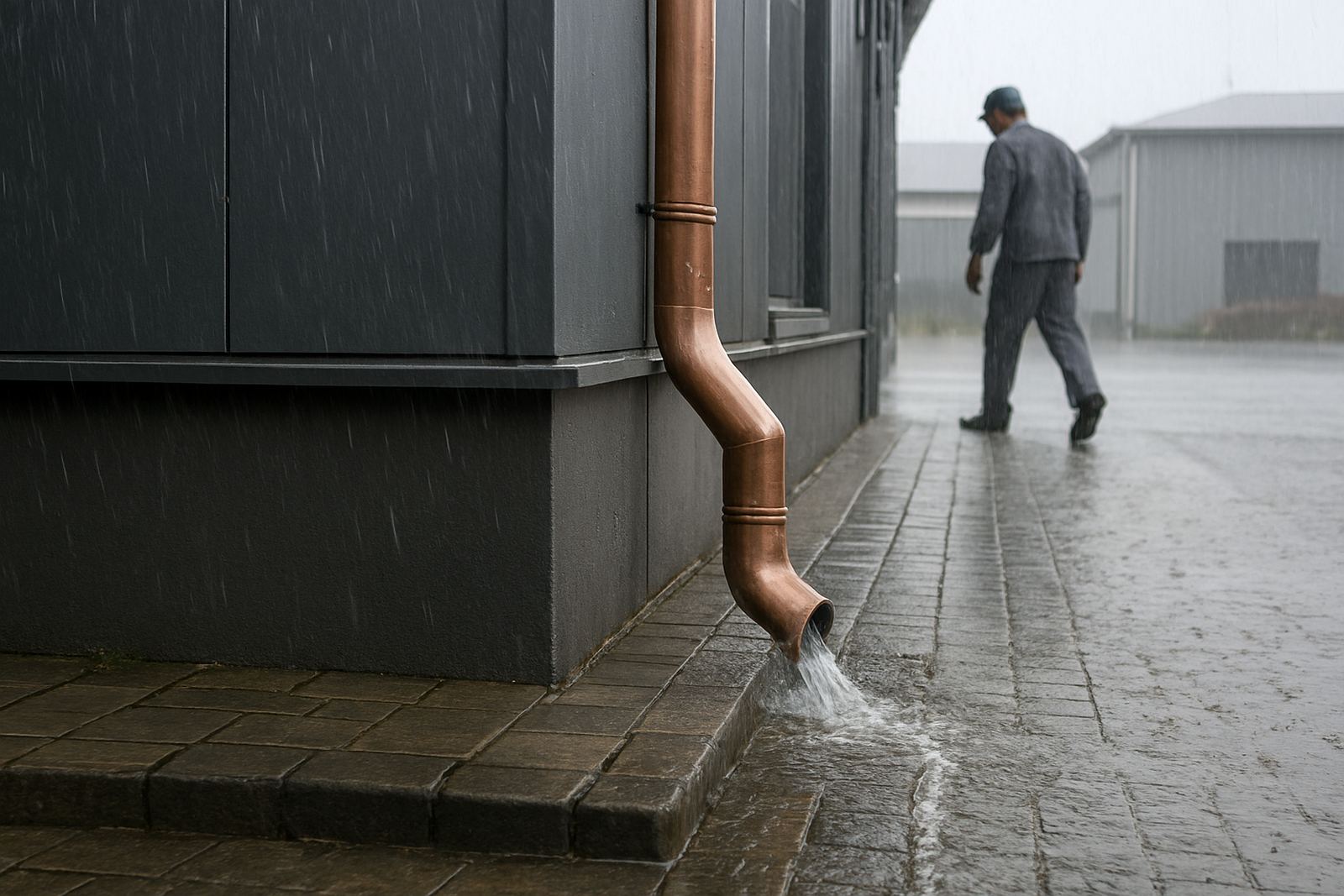
Gutter fall is the slight slope built into a gutter run so rainwater moves toward the downpipe. It is not a big tilt, just enough to keep water flowing and prevent stagnant pockets after a shower. On long roof edges, a good fall helps the gutter clear quickly, which matters when a hard rain arrives after days of dry weather and dust.
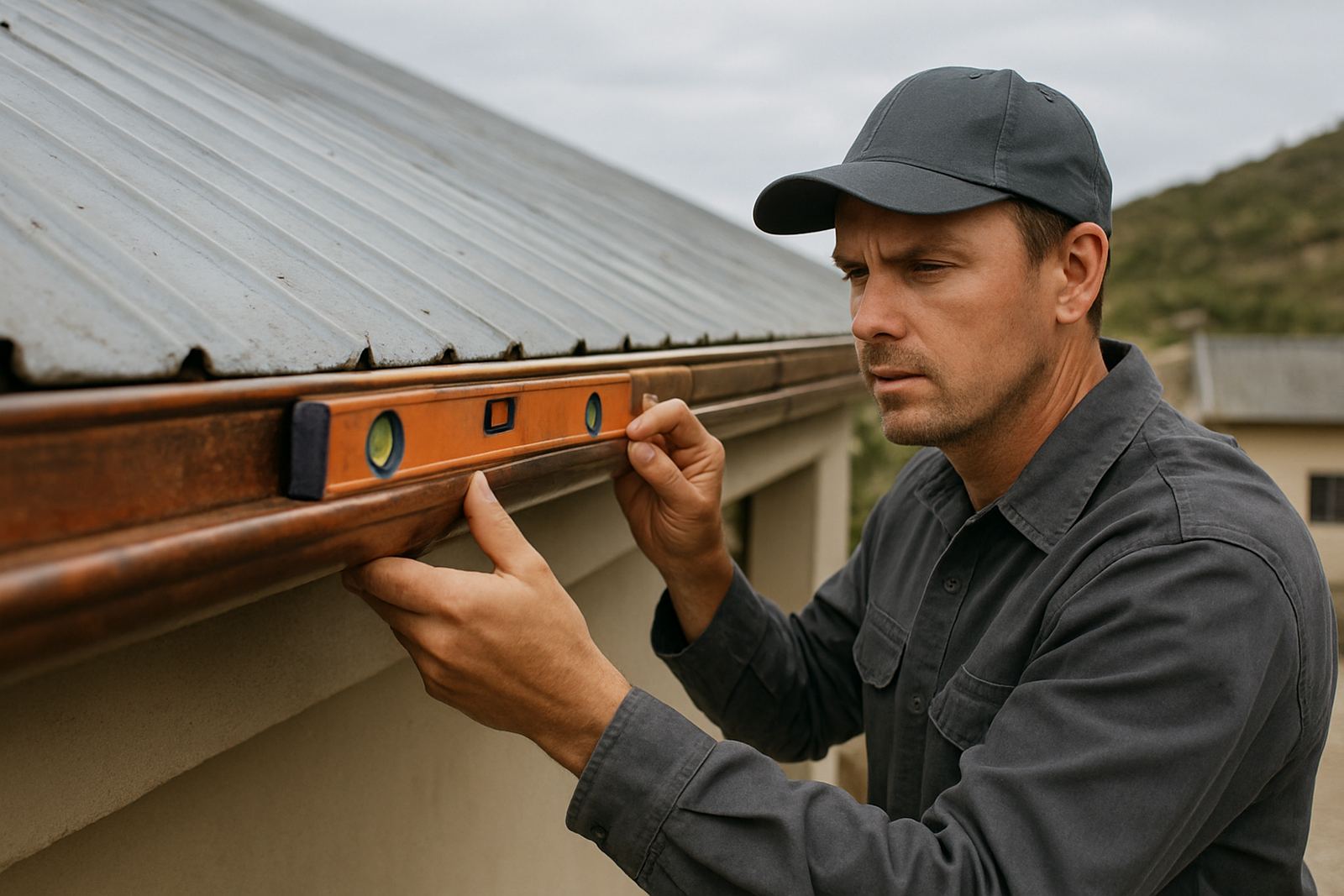
Without proper fall, water sits in low spots, carries debris with it, then backs up around joints and outlets. In coastal towns like Mossel Bay, that standing water can also hold salt and fine sand, which speeds up corrosion on metal gutters and fixings. A gutter that looks level from the ground can still be wrong by a few millimetres over the full length, so site measuring needs care.
- Water moves toward the outlet instead of pooling along the run
- Leaves, sand and roof grit are less likely to settle in low points
- Overflow risk drops at corners, joins and around the downpipe
Why the right slope matters in the southern Cape climate
We see a mix of weather along the Garden Route and southern Cape. One week can bring wind off the sea, the next a wet cold front, then strong sun that bakes roof sheets and gutters. That cycle exposes any weak point. If the fall is too flat, the first problem is usually slow drainage, then the gutter starts to overflow at the heaviest point of the storm.
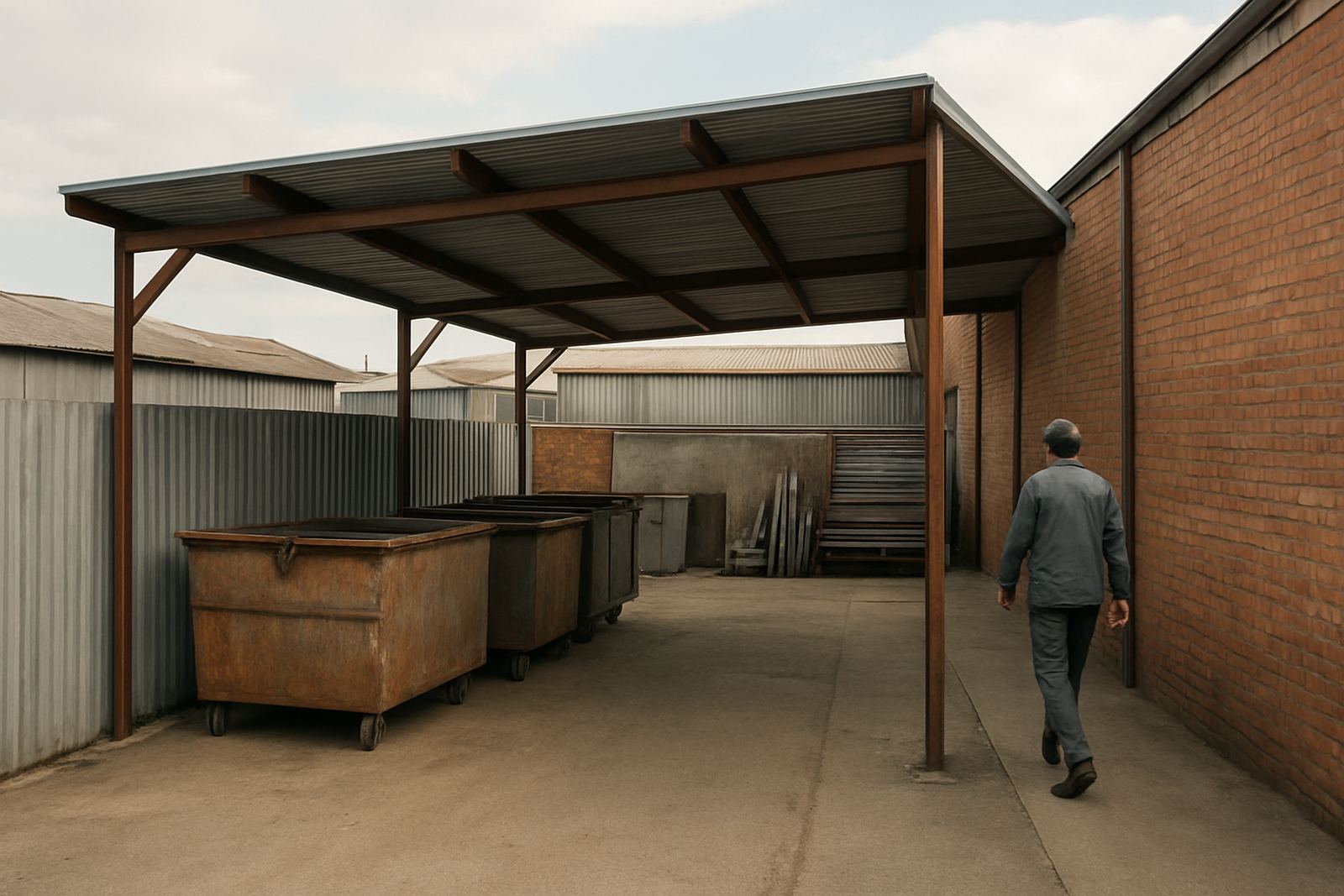
Correct fall also helps when gutters need to cope with roof area from carports, sheds and steel buildings. Those roofs may feed a lot of water into a short gutter length, so the outlet has to work properly from the first drop. On bigger commercial runs, poor fall can send water back toward fascia boards, wall cladding or entry paths, which means avoidable repairs.
- Fast run-off during short, heavy downpours
- Less chance of water spilling over walkways and drive areas
- Better performance where wind-blown debris is common
How much fall a gutter should have
There is no single figure for every roof, because gutter size, run length and outlet position all affect the final answer. As a practical guide, smaller residential runs often need only a gentle fall, while longer lengths need more thought to avoid a flat section in the middle. The important thing is consistency from one end to the other, not a steep angle that leaves a visible drop.
During installation we look at where the water must go, where the downpipe can be placed, and how the roof line sits against the wall. If the gutter is too high at one end or too low at the other, the result can be a dip that traps water or a low point that looks neat but drains badly. The measurements should be checked before the first bracket goes in, not after.
- Short runs may only need a slight, steady fall
- Long runs need careful planning around corners and outlets
- Visible slope should never create a sharp step in the gutter line
Common mistakes that lead to overflow
Most gutter overflow problems start with one of a few avoidable mistakes. A gutter may be installed level by eye, but level is not the same as correct fall. Another issue is setting the outlet too small for the roof area, so water reaches the gutter faster than it can leave. Blocked leaf guards, loose brackets and poorly joined sections can also hold water in the run.
In Mossel Bay we often find that wind has packed fine debris into corners near garages and workshops. The gutter still looks fine from the yard but the outlet is half blocked. Once rain starts, the water has nowhere to go and it climbs over the lip. That is how staining appears on walls, paving starts to hold puddles, and small leaks become regular call-outs.
- Gutter installed level instead of with a measured fall
- Downpipe outlet undersized for the roof catchment area
- Debris build-up around corners, valleys and outlets
A local example from Mossel Bay
On a steel building in Gouriqua Park, a workshop roof was carrying rain into a long front gutter that overflowed every time a quick shower blew in from the sea. The issue was not the gutter size alone. The outlet was placed too far from the low point, and part of the run had settled over time so water was sitting in the middle before it reached the downpipe.
After site measuring, the gutter line was reset with a proper fall and the outlet position was corrected. The overflow stopped, the wall cladding below stayed dry, and the maintenance team no longer had to clean the same wet strip after each storm. Small adjustment, big difference. That is usually how gutter fall works in practice, not dramatic but it saves trouble.
- Check the full run, not only the outlet end
- Look for settling on older brackets and fixings
- Inspect after the first heavy rain if a system has been altered
When to repair, replace or remeasure a gutter run
If a gutter overflows even after cleaning, the fall may be wrong or the system may have sagged. Repairs can include re-hanging sections, adding brackets, resealing joints, or replacing damaged lengths. In some cases the gutter profile or outlet size is simply not suitable for the roof and a replacement is the better call.
For homes and businesses in Hartenbos, Great Brak River, George, Wilderness and Sedgefield, a maintenance inspection before winter can catch problems early. Look for rust, loose screws, cracked joints, and signs of water marks below the gutter line. If you are already getting damp fascia boards or water running over paths, it is worth checking the fall before the next storm arrives.
- Clean and inspect gutters before the rainy season
- Fix sagging sections before they damage the roof edge
- Recheck fall after any roof work or building movement