Why overflow water needs a planned route
A gutter and downpipe system is meant to carry the full flow from a roof, but real weather does not always behave neatly. In Mossel Bay and the southern Cape, a single storm can bring heavy rain, wind driven rain and leaves from nearby trees all at once. If the system cannot cope, water will spill over the gutter edge, back up behind flashings or run down walls and paving.
That is why overflow paths matter. They give extra water a safe direction away from doorways, electrical fittings, boundary walls and low lying patches around the building. On a home, garage or steel structure, a good overflow route is not fancy it is simply planned. You want the water to leave the roof, travel where damage is least likely, and discharge in a spot that can accept it.
This matters even more along the coast where corrosion, wind and salt all shorten the life of sheet metal parts. If overflow water keeps soaking one area, the damage shows up fast in paint, fasteners, wall sheeting and even concrete finishes.
Where roof water usually causes trouble
Before choosing an overflow route, look at the places where water already causes problems. The most common trouble spots are easy to miss during dry weather, then obvious once the first big storm hits.
- Door thresholds and garage entries where water can push indoors
- Boundary walls where water backs up and runs into neighbouring erven
- Walkways and driveways where pooling creates slip risk
- Low garden beds close to the house where roots and soil stay wet
- Wall cladding joints and window surrounds that are not meant to carry constant flow
A small overflow can look harmless at first, but repeated wetting leaves stains, lifts sealant and can soften the ground below paving. On commercial sheds and carports, the first sign is often rust streaks beneath the gutter line or water marks on stored goods. If the building sits on a slope, overflow can gather speed and turn into a narrow stream that cuts into soil or washes gravel away.
Designing the overflow path before the storm
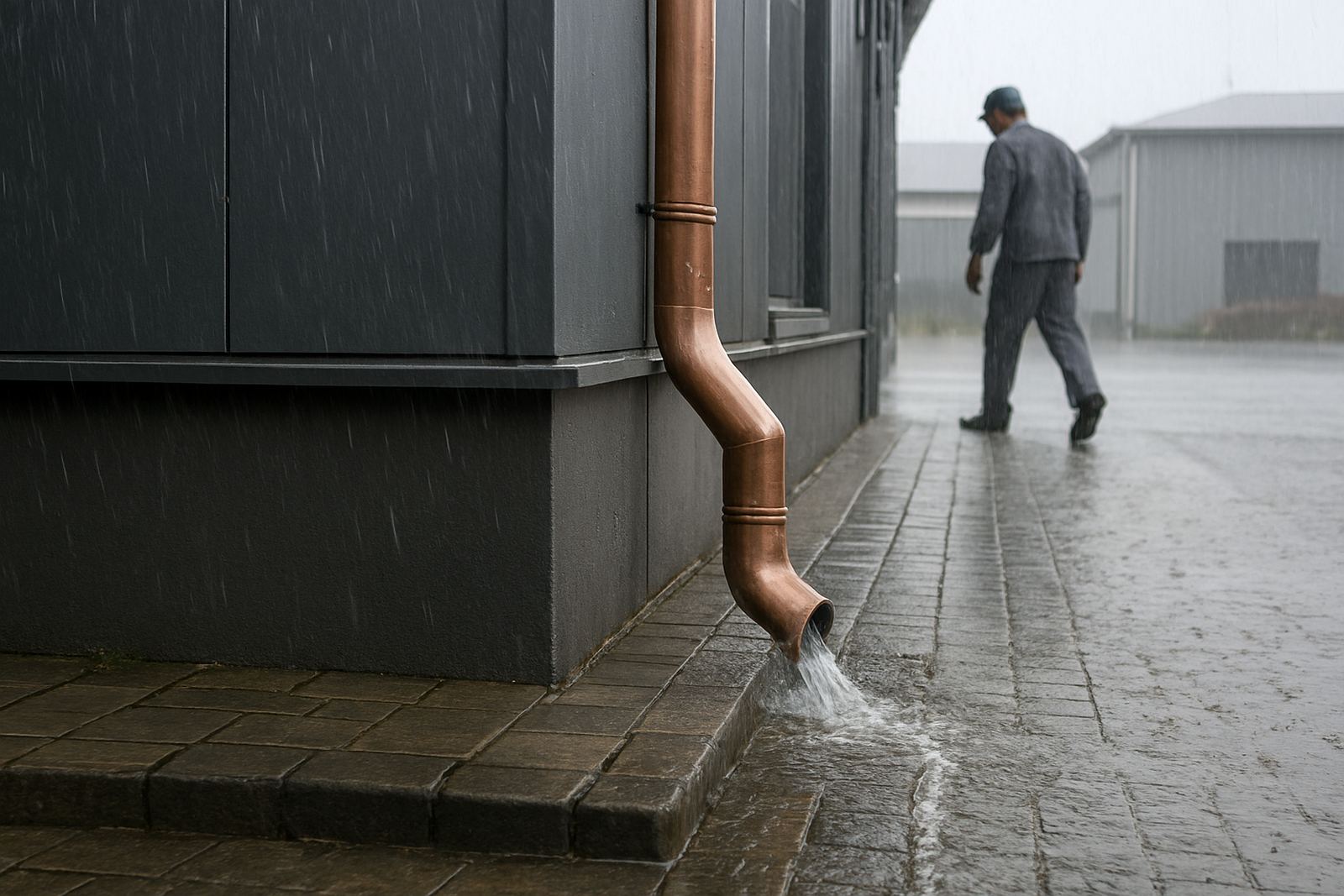
The safest overflow route is one that sends excess water where it will do the least harm. On many buildings that means letting the roof drain to open ground, a stormwater channel or a gravel strip that can slow the water down. Where a downpipe is overwhelmed, the overflow should not dump beside a doorway or into a confined corner.
A proper plan starts with site measuring and a check of roof size, gutter fall, outlet position and the slope of the ground. From there you can decide whether the system needs larger gutters, an extra downpipe, a secondary outlet or a controlled spill point. In some cases a gutter is better designed with a deliberate overflow lip at one end so the water leaves in a known direction instead of forcing the gutter to fail wherever it likes.
It also helps to think about maintenance. If gutters collect leaves, sand and roofing screws, the overflow point must still work when the channel is partly blocked. In coastal areas that means making allowances for wind blown debris and the occasional heavy burst after a long dry spell.
- Keep overflow away from entrances and covered braai areas
- Direct discharge to a gravel strip, lawn edge or approved stormwater route
- Use gutter sizes and outlet positions that match the roof area
- Allow for blockages, not just perfect clean conditions
How custom flashings and gutter details control spill
Overflow planning is not only about the downpipe. Custom flashings, gutter aprons and roof edge details all help control the way water leaves the roof. If the roof sheet ends too short or the flashing turns water back toward the wall, the overflow path becomes the building itself.
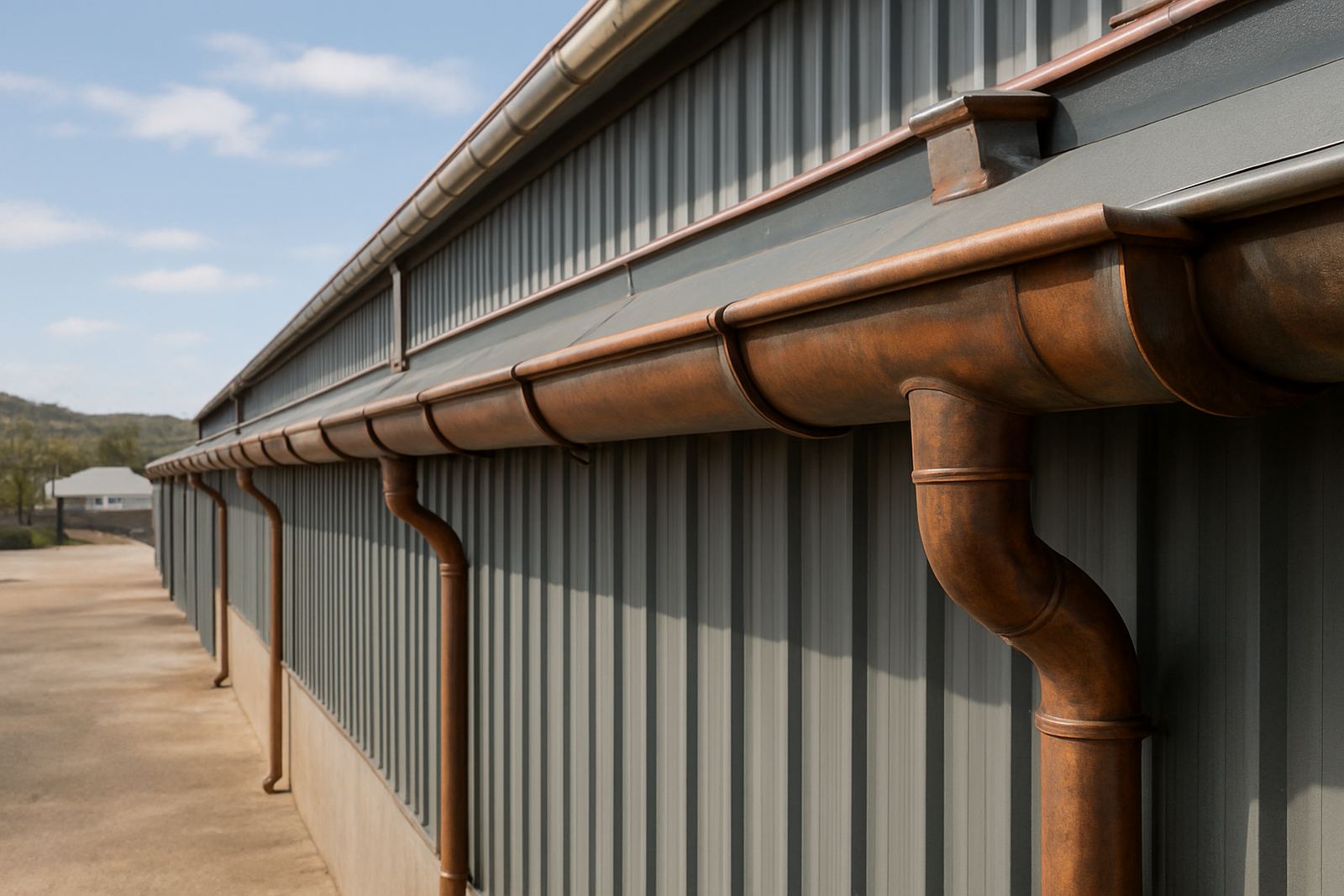
On sheet metal roofs, the edge detail should move water into the gutter cleanly even when wind is blowing across the roof. On steel structures with long spans, the gutter line often takes a lot of water quickly, so a badly shaped outlet can become the weak point. A properly formed flashing can stop water from sneaking behind the gutter and running into the fascia or wall cladding.
For Mossel Bay conditions, we also look at fixing methods and material choice. Salt air and constant moisture can punish poor joints, so the overflow route has to work without relying on one tiny sealant bead. If the design gives the water a clean path, the building lasts longer and the maintenance bill stays more predictable.
A Mossel Bay example after one hard downpour
Consider a light industrial unit in Gouriqua Park with a long roof pitch facing the prevailing weather. The original gutters were too small for the roof area and the only downpipe sat near a pedestrian entrance. During one heavy storm, water spilled over the gutter lip, ran across the paving and found its way toward the doorway. The owner called for a repair after noticing damp patches inside and a rust line below the eaves.
The fix was not just a bigger pipe. The roof edge was checked, the gutter line was adjusted and the overflow route was moved to a safer discharge point at the side of the building. A new section of guttering was fabricated to suit the measured roof length, and the downpipe discharge was taken to an area where the ground could handle the extra water without flooding the entrance. The result was simple the roof still drains, but if the rain is too intense the water exits where it is expected.
That is the practical part of overflow planning. You are not trying to stop heavy rain from happening, you are choosing where the excess goes. When the route is sensible, the building can take a hard storm with far less mess and less damage.
Signs your overflow route needs work
If you already have gutters and downpipes, watch for warning signs after rain. These clues usually appear before major damage sets in, so they are worth acting on early.
- Water spilling over the same point each storm
- Staining on wall cladding or fascia boards
- Soft ground, erosion or puddles near the foundation
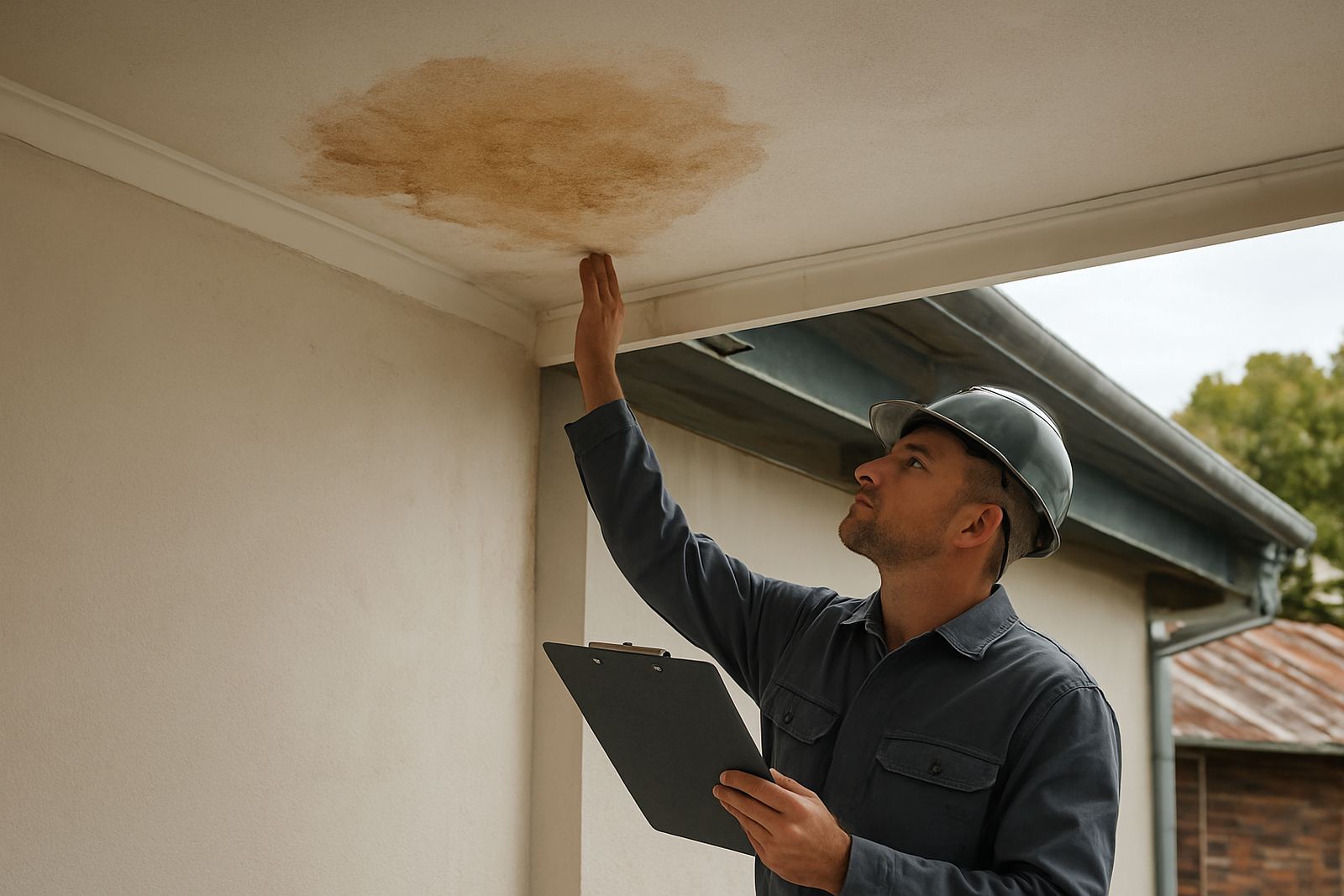
- Damp spots around ceiling lines or internal corners
- Loose gutter brackets from repeated water load
Do not wait for a leak to become permanent. In many cases a maintenance inspection will show that the roof is fine but the overflow route is wrong. Sometimes a small adjustment solves the problem. Other times the system needs extra capacity, a new outlet or a full gutter replacement. The sooner it is checked, the easier the work usually is.
What property owners should check before winter rains
Before the wetter months, walk the site and look at where rainwater will go if the gutters fill up. Check downpipe outlets, gutter falls, joints, rust spots and any area where paving meets a wall. Make sure stormwater leaves the property without crossing a walkway or pooling against a structure.
If you manage a home, workshop or carport in Mossel Bay, Hartenbos, Great Brak River, George, Wilderness or Sedgefield, it is worth using someone who knows sheet metal and steel building work well enough to see the weak points quickly. The aim is not to oversell the job, just to make the roof drainage behave properly in local conditions. A good overflow route is quiet in normal rain and clear about where it sends the extra water when the weather turns rough.
That one choice can protect the building, the paint work and the people moving around it. And when the storm passes, you are left with a dry entrance instead of a clean up.