Why long gutters behave differently in Mossel Bay weather
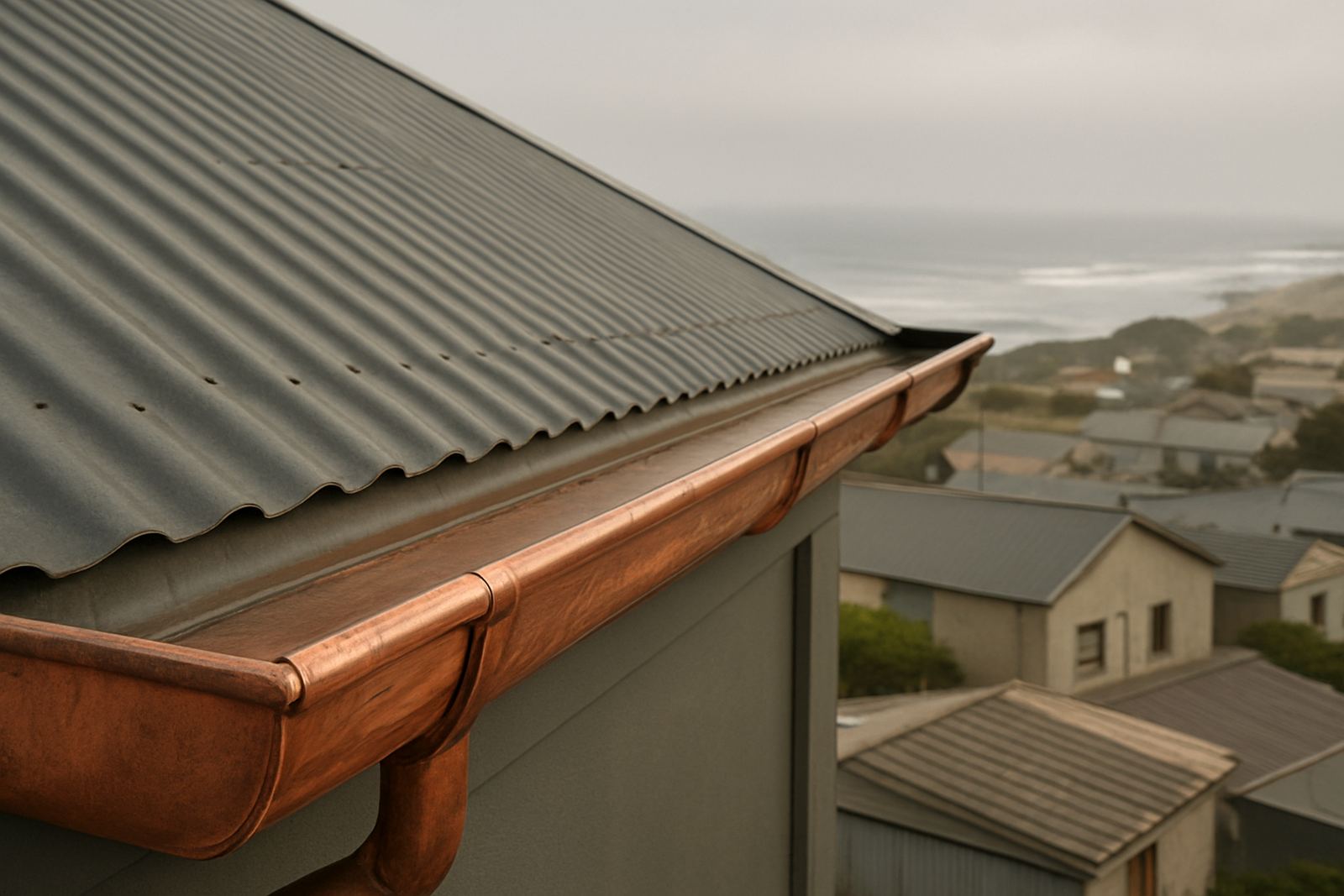
A short run on a single garage is one thing. A long gutter along a workshop, carport or warehouse behaves differently because the metal moves more, holds more water and has less forgiveness if anything is out of line. In Mossel Bay and nearby towns, you also get salt in the air, strong afternoon sun and rain that can arrive sideways on a windy day.
That mix puts pressure on joints, brackets and outlets. If the gutter is too tight against the supports it can buckle. If it is too flat it holds water. If the outlet is too small or badly placed, the first heavy downpour sends water over the front edge instead of into the downpipe.
On long runs, we always start with the roof shape, the fall available and where the water has to go. A gutter is not just a tray under the eaves, it is part of the drainage system for the whole building.
Expansion space is not optional on sheet metal gutters
Metal expands when it heats up and contracts when it cools. On a hot roof in summer, the movement adds up over a long length. If a gutter is fixed too rigidly with no allowance for that movement, the joints and fasteners begin to work loose over time. You may see cracks at seals, popped screws or a slight wave in the line.
Good practice is to allow for movement where the run is long, especially on exposed coastal sites. That can mean careful joint placement, correct sealant use and a layout that gives the gutter somewhere to move without fighting the supports. The aim is simple, the gutter must still sit straight and drain well after many seasons of heat and rain.
- Allow movement at longer spans instead of locking the whole run tight
- Keep joints neat and accessible for later maintenance
- Match fixing points to the material and the length of the run
We have seen installations fail not because the metal was poor, but because the expansion was ignored. It is a small detail that makes a big difference.
Outlet placement decides whether the gutter drains or backs up
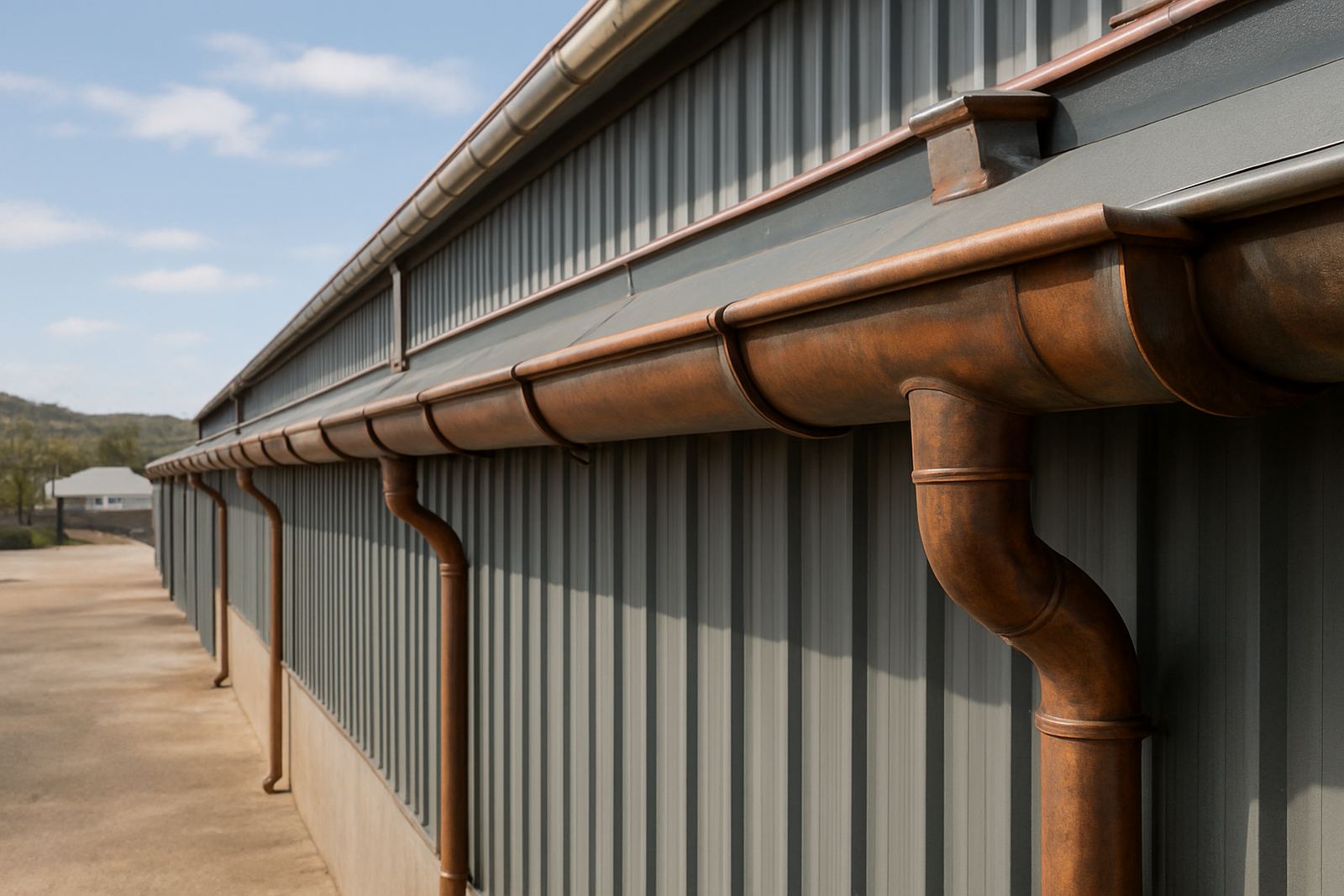
Outlet placement is one of the most important parts of a long gutter installation. If the outlet sits too far from the low point, water has to travel across too much length and can pond in the gutter. If there are several outlets but they are not balanced, one side may do all the work while the other side stays half full.
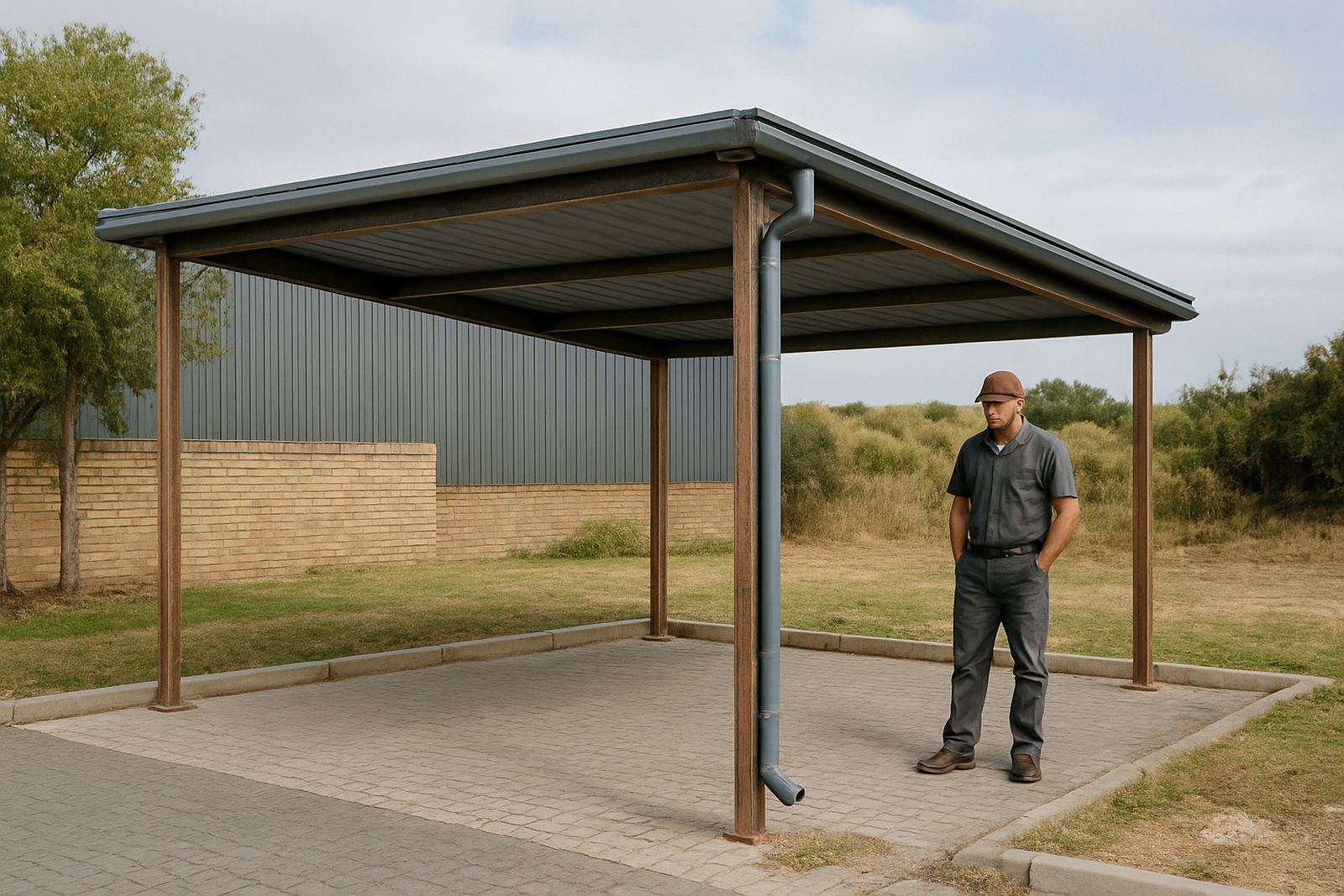
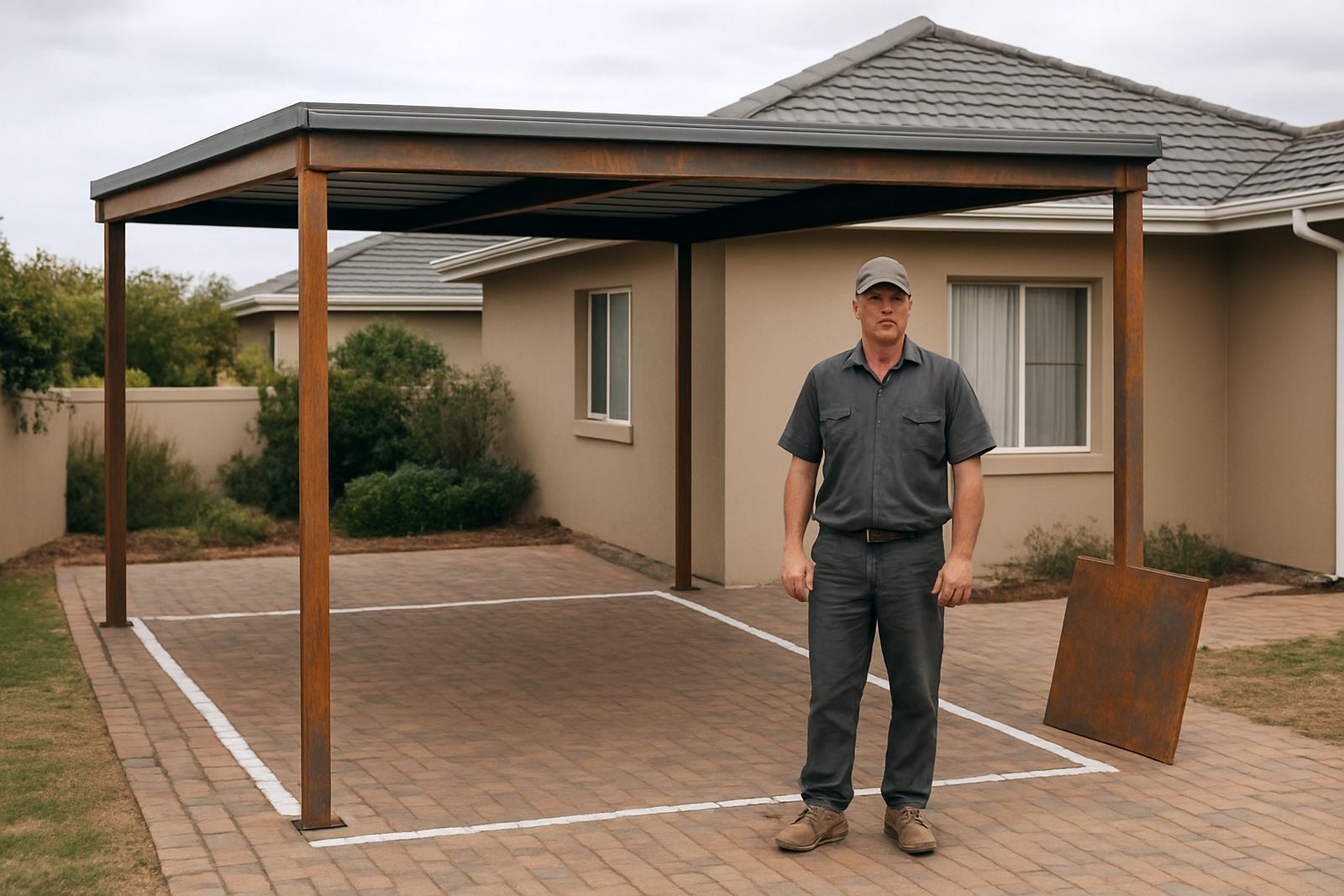
For long roof lines, we look at the volume of rain expected, the roof catchment area and the route for the downpipes. On larger carports and steel buildings, it often makes more sense to install more than one outlet rather than trying to force all the water to one end. That reduces overflow and helps the gutter empty faster during a storm.
- Place outlets at true low points, not guessed low points
- Use enough outlets for the catchment area
- Keep downpipes clear of bends that trap leaves or debris
A well placed outlet can save a customer from repeated overflows and stained walls, especialy where paving or boundary walls sit close to the building.
What happens when the slope is wrong
People often think a gutter should be level because it looks neat. In practice, a long run needs a controlled fall so water keeps moving. Too little slope and water sits in the gutter after the rain stops. Too much slope and the water moves fast but can miss the outlet, or the line starts to look awkward.
The right slope depends on the length of the run and the size of the gutter. On some buildings we can fall the gutter quietly over the full length. On others we split the run so each section drains properly. This is where site measuring matters. A tape measure alone is not enough if the roof line has a dip, a twist or an uneven fascia board.
In the southern Cape, we also check how wind drives the rain. A gutter that looks fine in still weather can spill during a hard south-easter if the slope and outlet position are not right.
A local example from a workshop in Gouriqua Park
On a recent steel workshop in Gouriqua Park, Mossel Bay, the roof line ran a long way along the side wall with only one obvious place for drainage. The owner had been getting water spillover during heavy showers, and rust marks had started forming below the gutter joins.
We measured the run, checked the fall and found that the outlet was too far from the true low point. The gutter also had no allowance for movement along the heated western side. We reworked the layout, added a better positioned outlet and adjusted the support spacing so the run could move without stressing the joints.
After that, the gutter emptied cleanly in the next rain. The change was not dramatic to look at, but it made the difference between a system that just hangs there and one that does its job when the storm hits.
Signs a long gutter run needs attention
Long gutters usually give warning before they fail. The earlier you catch the problem, the easier and cheaper it is to fix. On coastal and industrial buildings, small issues can become recurring maintenance if they are left too long.
- Water spilling over the front edge during normal rain
- Visible sagging between brackets
- Open joints, cracked sealant or rust around fixings
- Water marks on walls, paving or slab edges
- Debris sitting in one area because the slope is wrong
If you see two or more of these signs, the system should be inspected. Sometimes the answer is simple gutter replacement or new brackets. Sometimes the outlet layout needs to be changed. A proper maintenance inspection saves time, and avoids patching the same fault over and over again.
How we plan long gutter systems for southern Cape buildings
For long runs, we usually start with site measuring, then map the roof lengths, fall direction and outlet positions before fabrication. That approach suits homes, carports, small factories and steel structures in Mossel Bay, Hartenbos, Great Brak River, George, Wilderness and Sedgefield. It also helps when the building is exposed to wind, sea air or summer heat.
When we plan the system properly, the gutter is easier to clean, easier to maintain and less likely to fail at the joints. We also keep future access in mind, because a gutter that cannot be reached for clearing is a problem waiting to happen.
For long gutter work, the details matter more than the length itself. Get the expansion right, place the outlets properly and the rest of the system has a far better chance of lasting.