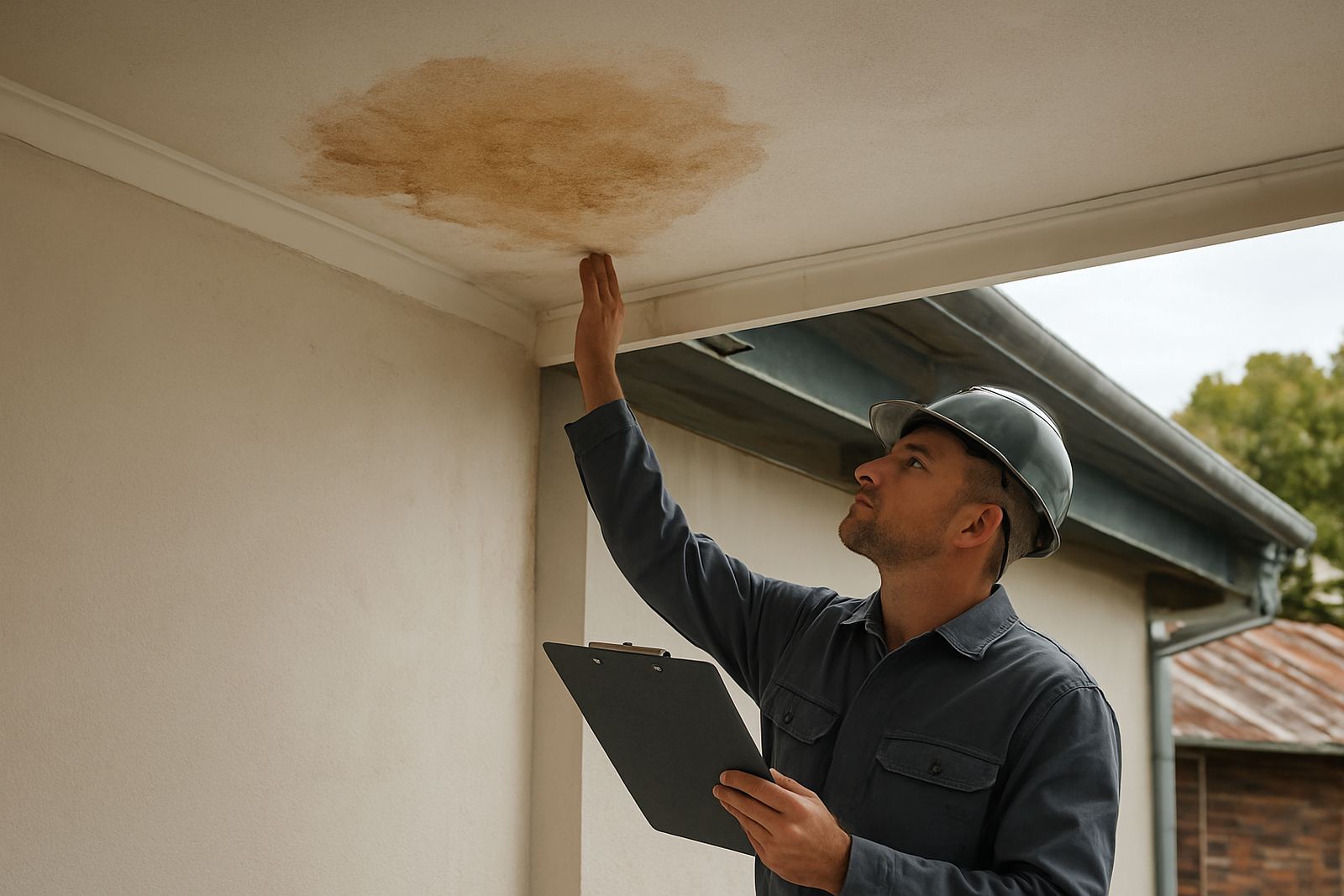
Why the drip on the ceiling is usually a red herring
Water does not always fall straight down. It can enter under a lifted sheet, travel along purlins, run down a truss member, then drip at the lowest point inside the ceiling void. On a coastal roof, wind can drive rain sideways under laps and into small gaps around flashings, screws or penetrations. By the time it reaches the room below, the source may be a few metres away.
That is why roof leak tracing is more than looking at the wet spot and patching there. The job is to follow the water path, check where it could enter during actual weather, and confirm whether the fault sits at a sheet joint, valley, ridge, gutter line, wall junction or roof fitting.
What we check first on a leaking roof
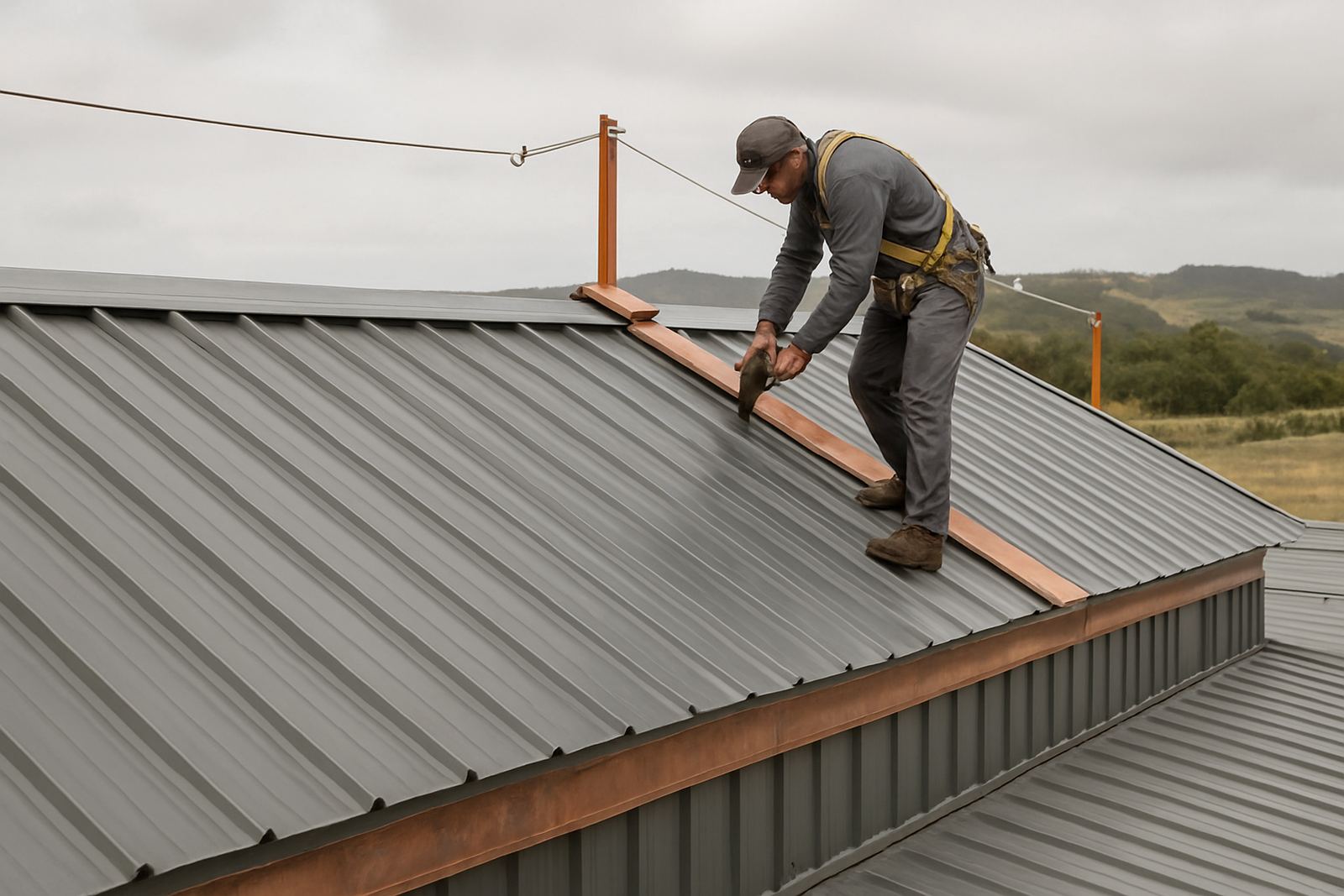
A proper inspection starts outside. We look at the roof from top to bottom, then inside the roof space if it is safe and accessible. On homes and light industrial buildings in Mossel Bay, Hartenbos and George, common trouble points often include old sealant, loose fasteners, cracked washers, blocked gutters and badly cut flashings around pipes or chimneys.
We also check for movement. Steel structures expand and contract in heat, and on some sites the first sign of trouble is not a hole but a joint that has opened slightly over time. A repair done in summer can also behave differently in winter when the wind and rain direction change.
- Lifted or corroded roof sheet laps
- Overflows from blocked gutters and downpipes
- Loose ridge cappings and barge flashings
- Ponding near low points on box gutters
- Damage from maintenance crews, ladders or tree branches
Coastal weather makes small faults show up faster
Salt in the air, strong south-easterly wind and regular rain bursts all work against a roof. In Gouriqua Park and along the southern Cape coast, tiny gaps can become recurring leaks because moisture gets into the same weak point again and again. Once corrosion starts under a sheet or around a flashing, the leak may seem minor for months before it becomes visible indoors.
Load-shedding can also matter. When a property sits dark and unused for parts of the day, people only notice a leak after a storm has already passed. By then the water may have spread through insulation or timber lining, which makes the visible damage look bigger than the entry point actually is.
A local example from Mossel Bay
We were called to a property near Gouriqua Park where water appeared over a passage ceiling after a windy rainstorm. The owner thought the problem was directly above the stain, so the first instinct was to repair that section of ceiling. After checking the roof, the real issue turned out to be at the upper edge of a flashing where a sheet overlap had opened slightly. Rain was being pushed under the lap, then moving along the steelwork before dripping well inside the building.
Once that joint was corrected and the surrounding line checked for similar wear, the leak stopped. The lesson was simple: the stain showed the end of the problem, not the start of it.
- The stain was 2 rooms away from the entry point
- Wind direction was part of the cause
- The repair needed to cover the full water path, not just the ceiling area
What homeowners and site managers should look for early
Before a leak becomes a bigger repair, there are warning signs you can see from ground level or inside the building. These signs do not always mean active water ingress right away, but they are worth checking quickly, especially before the next wet spell.
- Bubbling paint or brown marks on ceilings and cornices
- Rust streaks below screws, laps or sheet edges
- Water near walls after rain, not just under the roof centre
- Gutters spilling over in normal rainfall
- Musty smells in roof spaces after wet weather
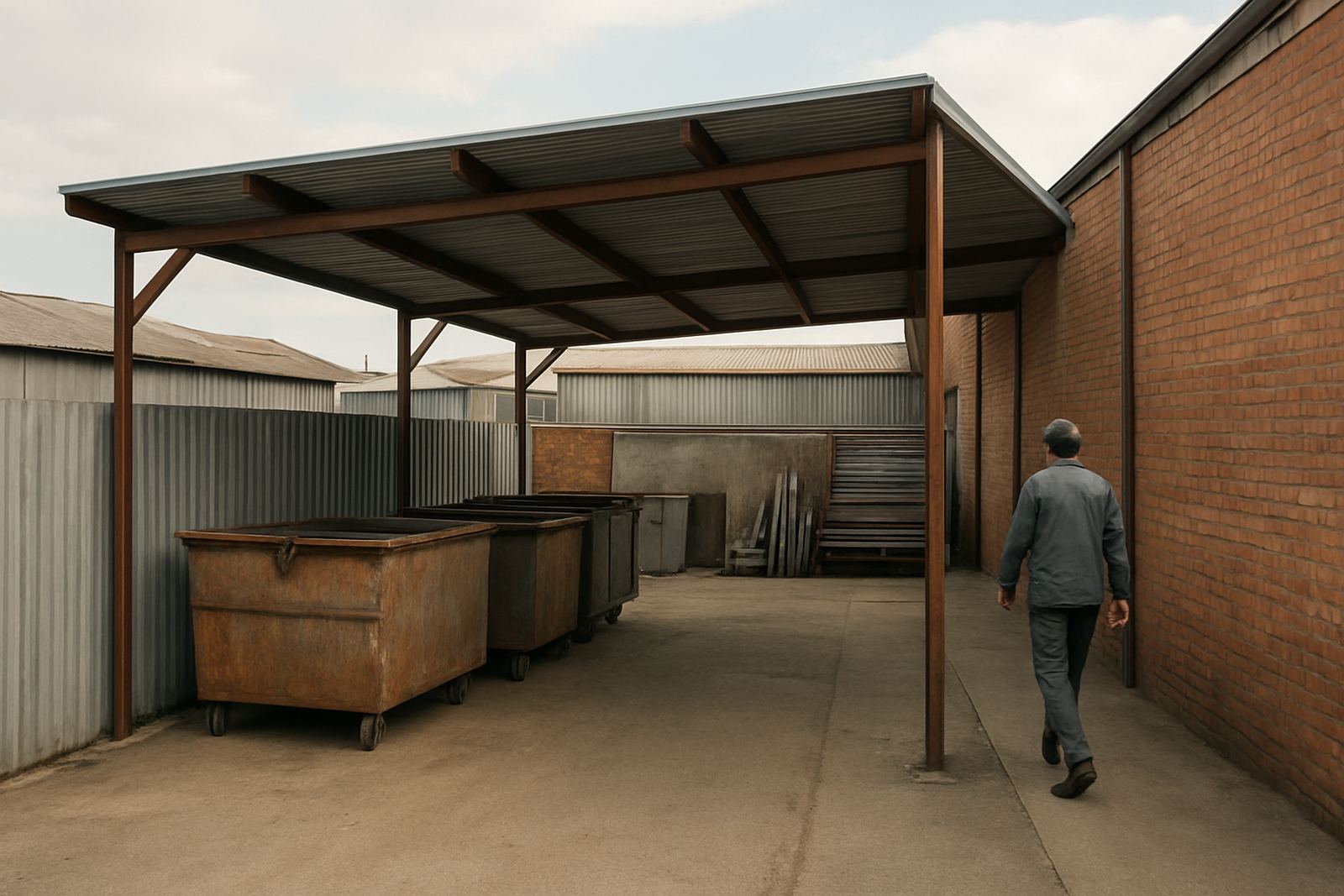
If you manage a workshop, storage shed or carport, also check for drips near doors, electrical fittings and stacked materials. A small leak can damage stock, soak insulation and create unsafe slipping conditions on concrete floors.
Why a proper trace saves money on repairs
Patch-and-hope repairs can become expensive. If the wrong area is sealed, the leak comes back and the building owner pays twice. Proper tracing helps decide whether the solution is a local flashing repair, gutter replacement, roof sheet work or a maintenance inspection across the whole line.
For steel buildings in the southern Cape, that matters because one weak point often points to a broader maintenance issue. Fixing only the visible drip can leave the corroded edge, the blocked gutter or the loose fastener untouched. A careful trace gives the repair team a clear scope and keeps the job practical.
At J&E Sheet Metal, we work on roof leak tracing, custom flashings, gutter fabrication, roof sheet installation and maintenance checks from our base in Gouriqua Park, Mossel Bay. We handle homes, carports and steel structures across Mossel Bay, Great Brak River, Wilderness, Sedgefield and George, with the aim of finding the source first and repairing the right section the first time.