Why overhang matters more on the coast
A roof sheet that finishes too short leaves the edge of the roof exposed to rain, salt-laden air and hard wind coming off the sea. In Mossel Bay, Hartenbos and Great Brak River, that can mean water running back onto the fascia, getting into the wall line, or blowing under the edge during a strong southerly. Proper overhang helps move water clear of the structure before it can start trouble.
It is not only about keeping the rain out. Good roof sheet overhang also protects the cut edge of the sheet, reduces staining on walls, and helps gutters catch water properly instead of taking a direct hit from the sheet run-off. On older buildings we often see rust starting first at the edge where the sheet was trimmed too tight, then the problem spreads from there.
- Directs rain into the gutter instead of down the wall face
- Gives better protection to fascia boards and roof edges
- Helps prevent splashback at entrances and paving
- Reduces early rust at exposed sheet ends
What the right projection should do
The correct overhang depends on the roof pitch, sheet profile, gutter size and the way the building is set out. There is no single number that suits every shed, garage or industrial roof. A short overhang can work on some structures if the gutter line is right, but in many coastal jobs a little extra projection gives better protection against wind-driven rain.
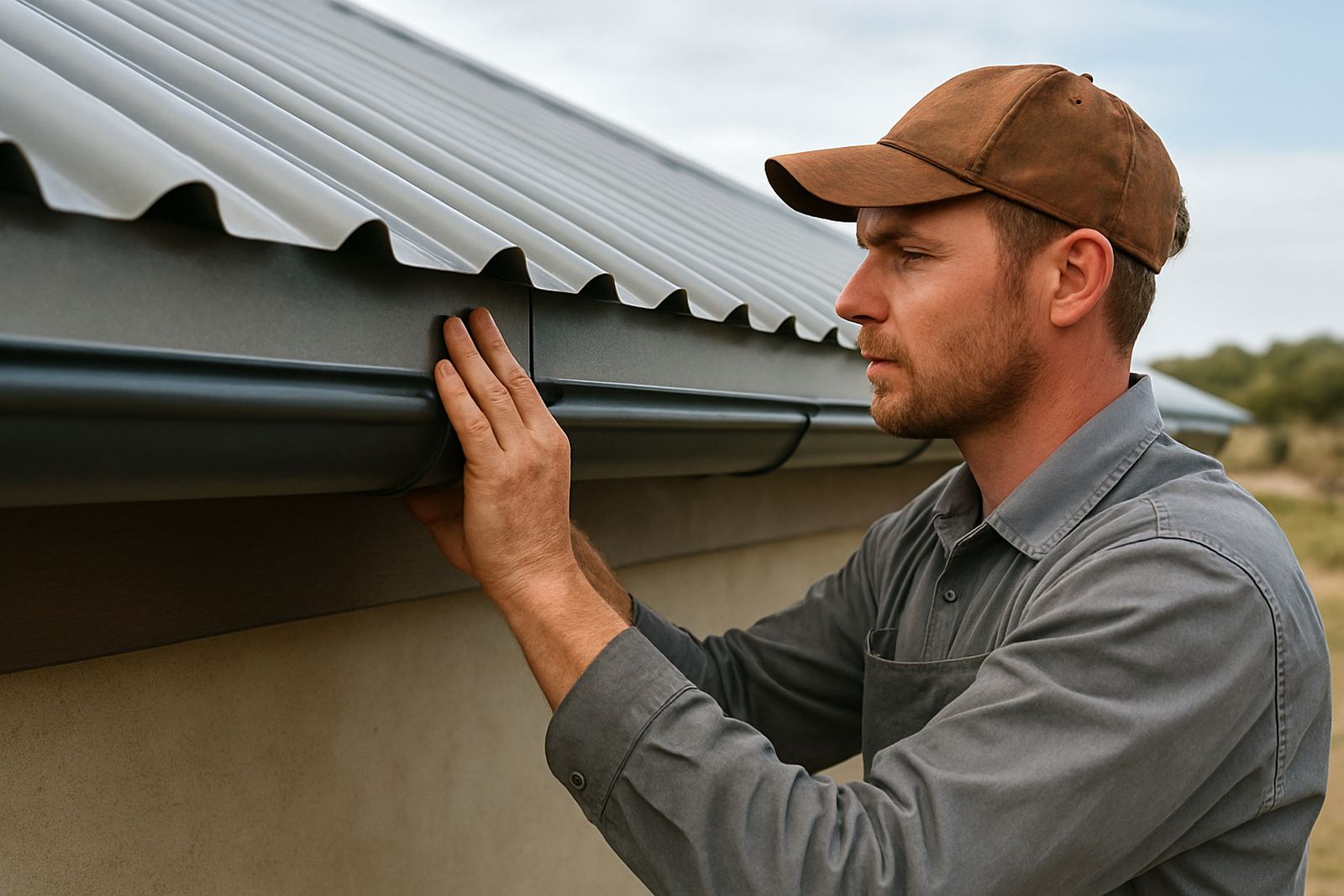
As a rule, the sheet should clear the wall and sit far enough out so water drops into the gutter without running back under the lip. If the sheet ends too far out, the gutter can miss the water or overflow in heavy rain. Too short, and the wall gets wet every time. That balance is where proper site measuring matters.
- Match the overhang to the gutter position
- Check the roof pitch before cutting sheets
- Allow for wind-driven rain, not only straight down rain
- Keep the edge neat so flashings can be fixed properly
The link between overhang and gutter performance
Many gutter complaints are really roof edge problems. If the overhang is wrong, the gutter is blamed when the issue starts at the sheet end. Water may overshoot the gutter, drip behind it, or hit too close to the front lip and splash out in heavy rain. In towns like George and Wilderness, where summer storms can dump water quickly, that becomes a real maintenance problem.
At J&E Sheet Metal we often look at the roof sheet and gutter as one system. The gutter size, bracket spacing, fall and outlet position all need to work with the sheet projection. If the building has been altered over time, old patchwork can leave the roof line sitting wrong over the gutter, and then a replacement gutter alone will not fix it.
- Overshoot can cause water to miss the gutter
- Too little overhang can send water onto the wall
- Wrong bracket spacing can let the gutter sag under load
- Loose or bent edges can worsen drip patterns
Coastal corrosion and edge protection
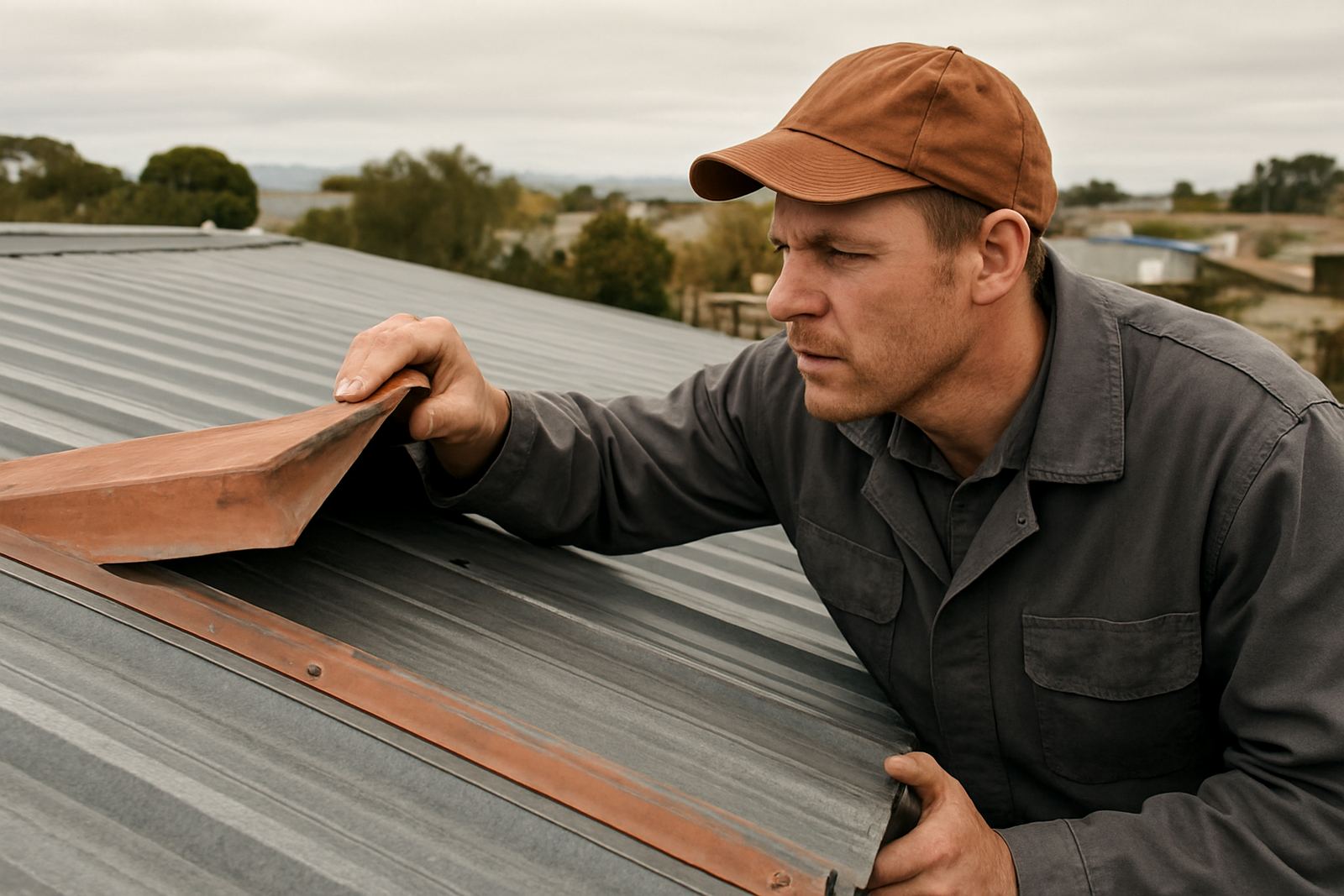
Near the coast, salt and moisture attack any exposed steel faster than most people expect. The cut edge of a roof sheet is one of the first places to show wear, especially where the overhang is short and water sits at the edge after every shower. If a sheet edge is left poorly finished, you can get early rust, staining on walls, and sometimes lifting in strong wind.
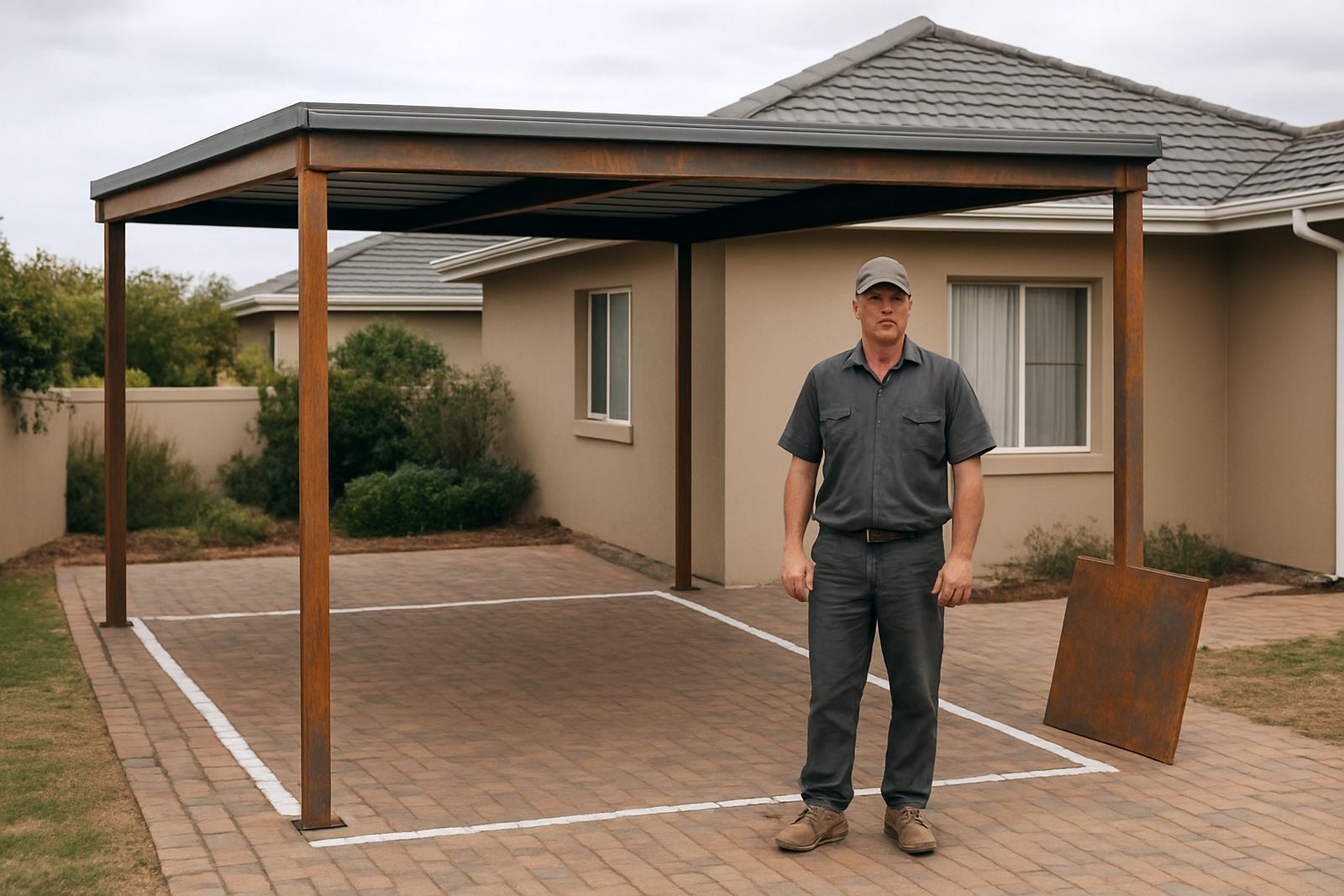
Edge protection is about more than paint. It includes proper trimming, correct fixing, suitable flashing and making sure the sheet does not leave a bare vulnerable edge where water can collect. On a small workshop in Gouriqua Park or a carport in Sedgefield, those small details make the difference between a roof that lasts and one that needs constant attention. A clean edge also helps with maintenance inspections because damage is easier to spot before it gets worse.
Signs the overhang is not doing its job
Some roof problems look like leaks but start with poor overhang. If you are seeing wet walls after rain, rust trails along the fascia, or puddles forming where the gutter should be taking the water away, the roof edge may need attention. In many cases the sheet itself is sound, but the projection, drip line or gutter position is off.
Look out for these signs:
- Water running behind the gutter during heavy rain
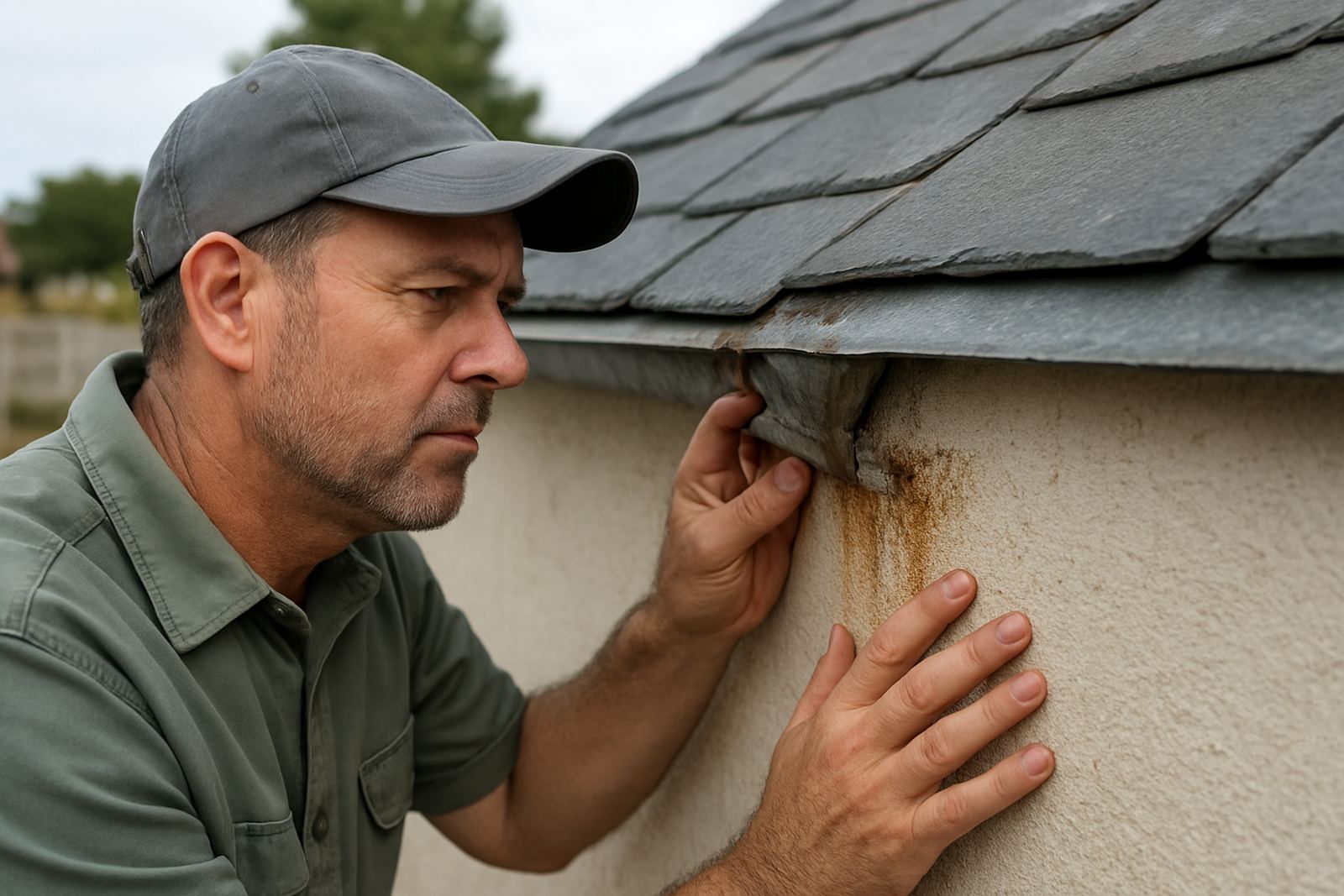
- Staining on wall cladding below the roof line
- Rust at the sheet ends or around fasteners
- Drips blowing back under the roof in coastal wind
- Repeated gutter blockages caused by poor water entry
If any of these show up after load-shedding related maintenance work, storm damage or a roof extension, it is worth getting the roof edge checked before the next wet season. A small correction now is usually cheaper than replacing damaged boards or patching a wall later.
A local example from Mossel Bay
We were called to a light industrial building in Mossel Bay where water kept running down the front wall every time it rained hard. The gutter had been replaced not long before, so the owner assumed the new gutter was faulty. On inspection, the roof sheets were finishing too short and the water was dropping just behind the gutter line. On windy days it was worse because the rain was being pushed back under the edge.
We adjusted the roof edge detail, fitted new flashings and checked the fall and fixing points. After that the runoff went where it should, and the wall stopped taking the abuse. It was not a big change, but it solved a problem that had been going on for months. That is often the case with roof sheet overhang. The answer is usually in the measuring, not in guesswork.
Getting the detail right before the sheets go up
Roof sheet overhang should be planned before installation starts, not corrected later with extra sealant or makeshift trims. When we measure a roof, we look at the wall line, gutter position, pitch, sheet profile and what the building is doing now, not only what was drawn years ago. That matters on new steel structures, carports, replacement roofs and cladding jobs alike.
For owners in Mossel Bay, Hartenbos, Great Brak River and the wider southern Cape, the best approach is simple: measure properly, allow for local wind and rain, and finish the edge so water is controlled from the start. A roof that sheds water well does not call attention to itself. It just does its work, year after year.
- Measure the actual roof line on site
- Confirm gutter size before cutting sheets
- Allow for coastal wind and driving rain
- Inspect the edge after installation and after heavy weather