1. Start with the safe, visible checks from the ground
Do not rush onto the roof straight after a storm. Wait until the wind has dropped and the ground is dry enough to move safely. From street level or a secure viewing point, scan the whole roof line, gutters, carports and any steel structures for obvious movement. Look for sheets that have lifted, gutters hanging low, flashing that has slipped, and any new bends in support members.
If you manage a property in Gouriqua Park, Hartenbos or near the coast, check for items that could have blown onto the roof as well. Branches, plastic sheeting and loose debris can block water flow and hide damage. A quick first look helps you decide whether the issue is only surface damage or if you need a proper inspection before the next rain arrives.
- Check for missing screws or loose fasteners on visible roof edges.
- Look for staining on ceilings and wall tops inside the building.
- Watch for gutters that overflow in one section but not the next.
- Take photos before moving anything, so you have a record of what changed after the storm.
2. Gutters and downpipes need the first cleaning
Blocked gutters are one of the most common storm-time problems. Heavy rain pushes leaves, sand and roof grit into the system, and once the water has nowhere to go it starts spilling over the edges or backing up under the roof sheets. In coastal areas, even a small blockage can become a bigger issue because salty moisture speeds up corrosion on standing water points.
Walk the line of the gutters and check for sagging, separated joints and downpipes that have come loose from the wall. If water is running straight past the outlet, the downpipe may be blocked lower down or damaged where it meets the stormwater line. It is worth clearing these issues quickly, because repeated overflow can stain walls, soften fascia boards and shorten the life of the whole gutter run.
- Remove leaves, twigs and roof grit from the gutter.
- Check that brackets are still holding the correct fall.
- Flush the gutter with clean water and watch how fast it drains.
- Make sure downpipes discharge into a proper drainage point, not against the foundation.
3. Check flashings where wind and rain usually get in
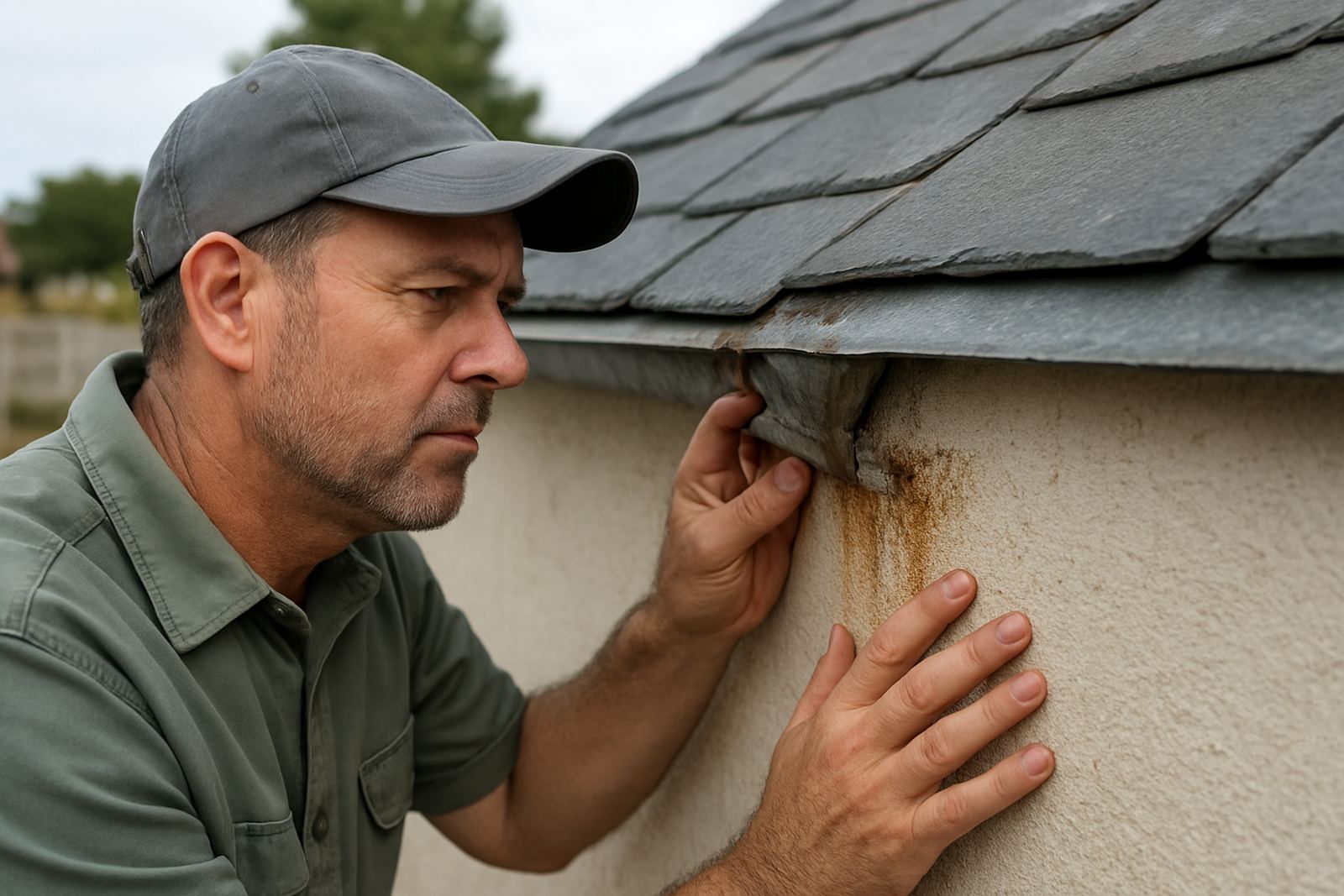
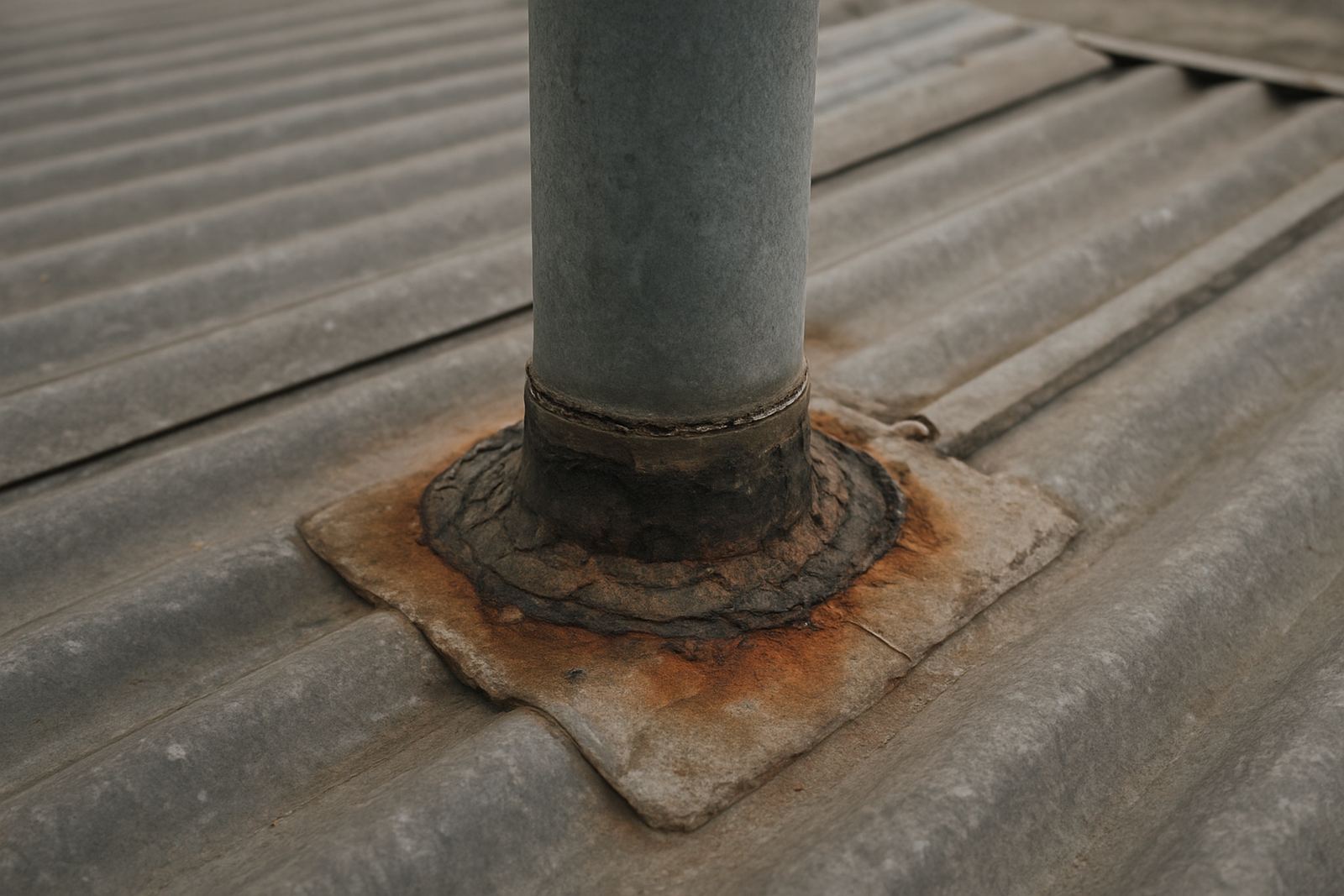
Flashings do most of the quiet work on a roof. They seal the weak points around roof edges, wall junctions, ridges and penetrations. After a storm, these are the places where wind-driven rain often forces its way in. If a flashing has lifted even slightly, you may not see a leak immediately, but the water can travel into the roof assembly and show up later as damp patches or rust marks.
Look closely at any roof-to-wall junction, parapet line, chimney area or change in roof pitch. Coastal wind can work a sheet loose where the fixing points are already tired. In older steel buildings, repeated movement can also open up tiny gaps at the overlaps. It does not take much. One missing fastener or a bent edge can let in enough water to cause trouble during the next afternoon storm.
If you spot cracked sealant, lifted flashings or a section that looks out of line, get it repaired sooner rather than later. A small repair now is usually far cheaper than replacing damaged insulation, ceiling boards or corroded sheet edges later on.
4. Look for signs that roof sheets or wall cladding moved
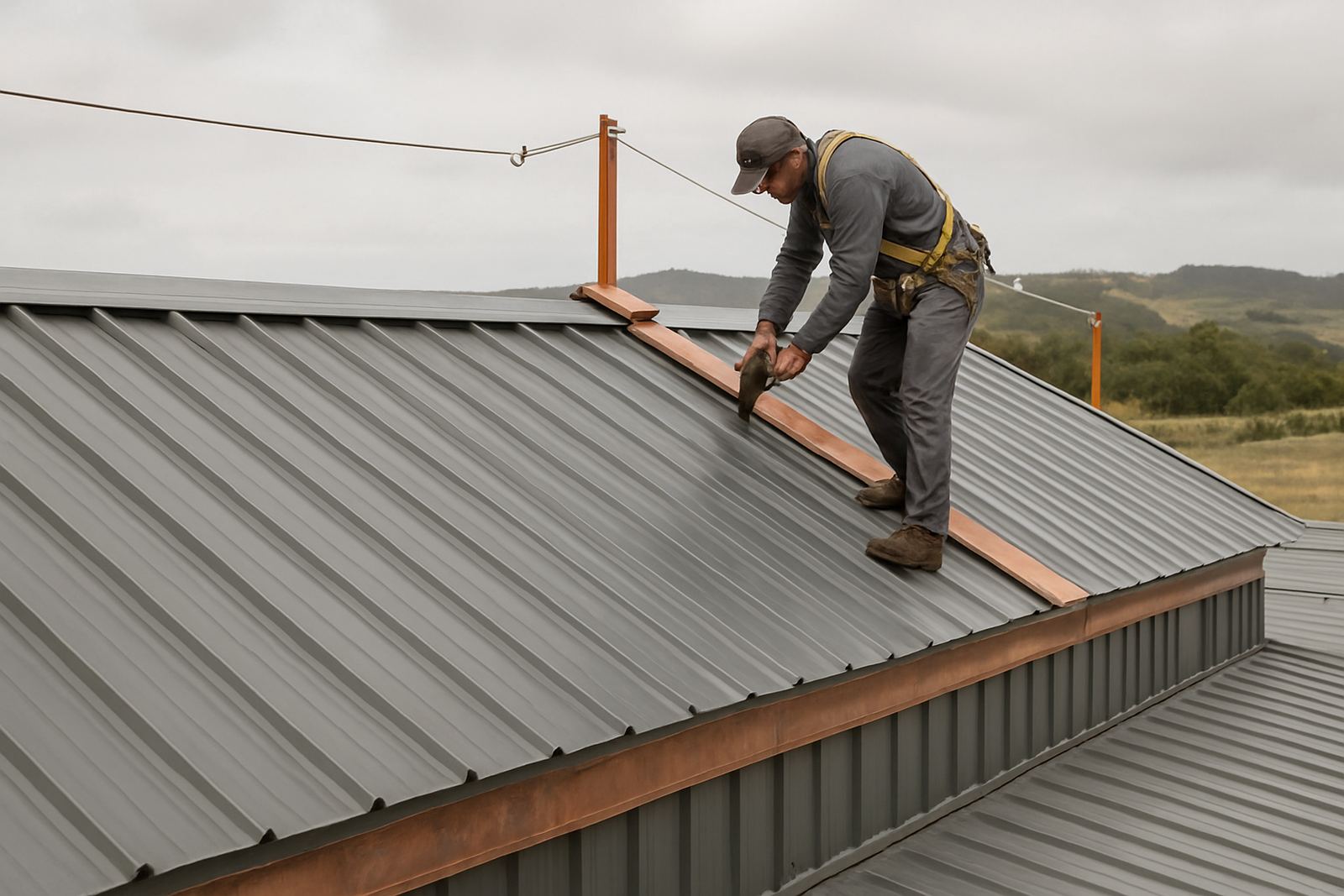
Wind does not always tear a sheet off completely. More often it loosens fixings, shifts overlaps or leaves the panel slightly out of alignment. That is why the roof may look fine from a distance but still let water in. Check for ripples, lifted laps, loose screws and sections that sound different when lightly tapped from a safe access point.
Wall cladding can also take a knock from flying debris. A sheet that dents or lifts at the edge may not seem urgent, but in a salt-heavy coastal climate it can become a rust point very quickly. If your building is used for storage, light industrial work or vehicle cover, keep an eye on any area where rain could be entering around a seam or fixing line.
- Inspect the ridge area for movement or missing cappings.
- Check overlap lines for gaps created by wind lift.
- Look for new dents from branches, roofing debris or blown stones.
- Listen for rattling sheets when the next breeze picks up, that is often a sign of loose fixings.
5. Steel structures and carports should be checked for movement
Carports, canopies and light steel structures often show storm damage in the form of twisted members, pulled bolts or posts that have shifted at the base. This is especially important where structures sit on exposed sites in Mossel Bay, Great Brak River or Wilderness, where wind can come through hard and fast. If a frame has taken a knock, do not wait for the next storm to expose the fault.
Check that posts are still vertical, base plates are secure and all connections look even. If the structure has a roof cover, inspect the fixing lines for any tears or pulled fasteners. Rust can start at a damaged point quickly, especially where water sits in a corner or on a cut edge. A good post-storm check should also include the ground around the structure, since pooling water can point to drainage problems or a shifted footing.
For commercial or sectional title properties, it is also wise to keep a simple storm log. Note the date, what was damaged and what was repaired. This helps with maintenance planning and makes it easier to show a pattern if a section keeps failing after each strong front.
6. What to do before the next weather system arrives
Once the immediate checks are done, deal with the small jobs quickly. Clear gutters, tighten loose fixings where safe to do so, and arrange repairs for anything that is bent, cracked or leaking. Do not leave temporary patching in place for weeks. On the coast, a short delay can turn a minor problem into a bigger one because constant moisture keeps working on exposed edges.
A practical post-storm routine should always include inside and outside checks. Inside, look for dripping, damp corners, water marks and musty smells. Outside, check the roof line, gutters, flashings and steelwork. If you can, inspect again after the next rainfall to see whether the problem has stopped or is still active. That second check often tells you more than the first.
For property owners in the southern Cape, the best approach is simple: deal with drainage first, then sealing, then structural repairs. If you need measuring, repair work or a replacement section made to suit the site, it is better to have it assessed properly than to guess. A clear plan now can prevent the same fault from coming back after every windy week.