Start With the Water Test, Not the Patch
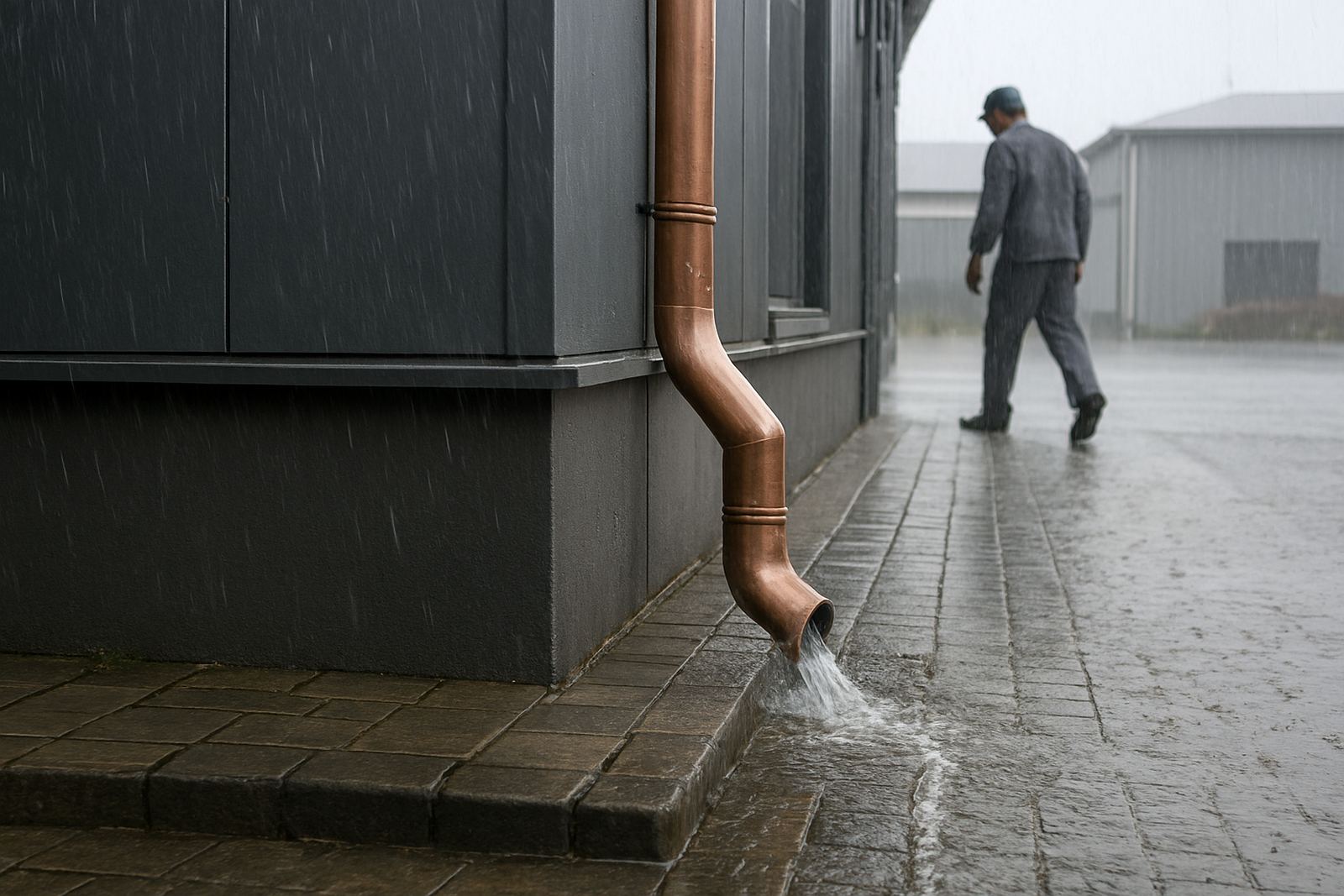
The first sign that gutters are past simple repair is water that no longer flows where it should. If rain runs over the front edge, spills at corners, or pours behind the fascia board, the system may be holding too much water or sitting out of line. In coastal areas like Mossel Bay and Hartenbos, windblown sand and salt can wear down joints and fasteners faster than many owners expect.
A single split sealant joint or a loose bracket can usually be repaired. But when several points fail at once, the guttering is telling you it has reached the end of its working life. That is especially true on older homes and small industrial buildings where the gutter size was never ideal for the roof pitch or the rainfall run-off.
- Water spilling over during normal rain
- Visible leaks at more than one joint
- Sections that sag even after re-fixing
- Overflowing during short but heavy showers
When Rust, Soft Spots and Splits Keep Coming Back
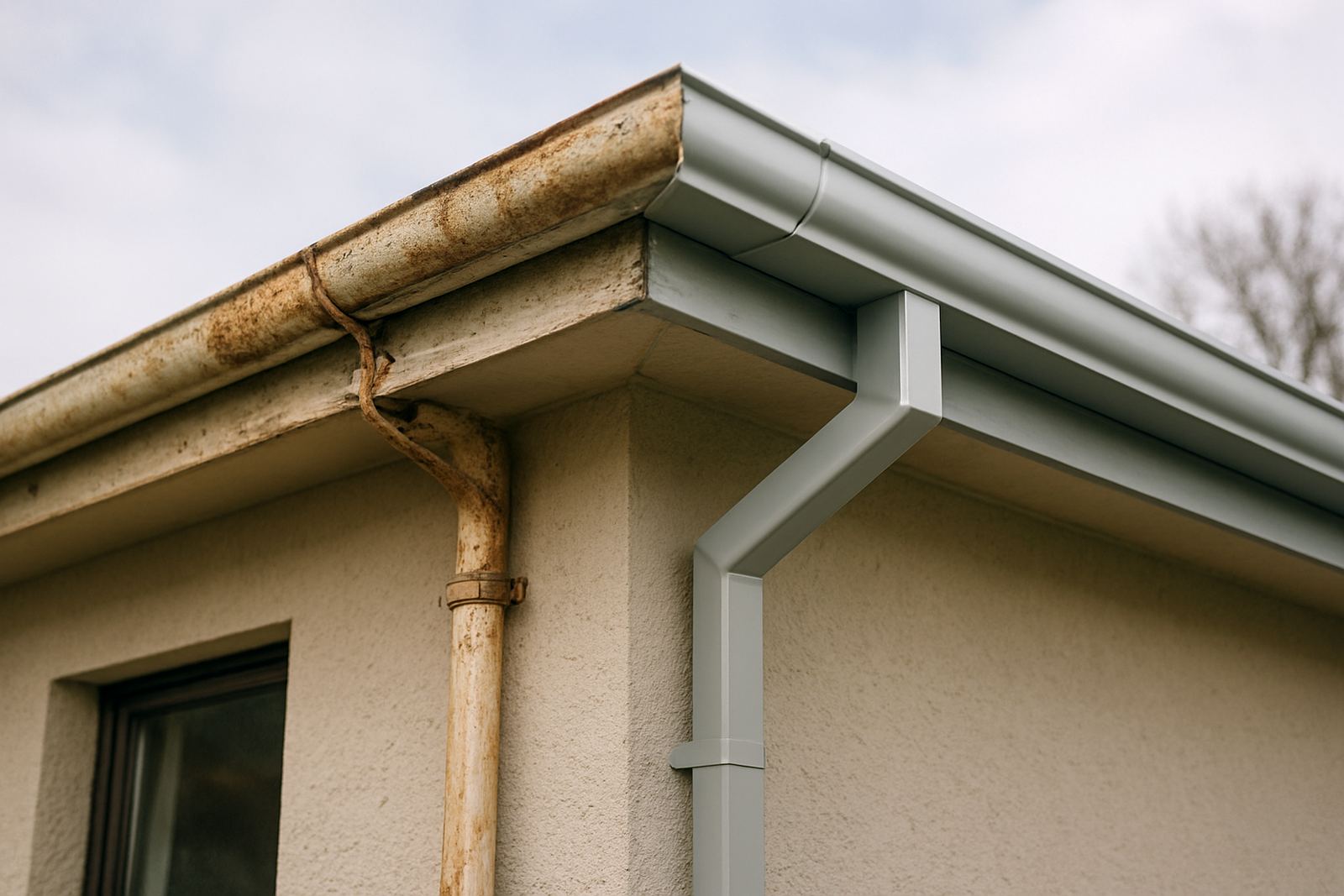
Patch jobs make sense when the problem is local. They do not make sense when the same gutter keeps rusting through, cracking or opening at the seams. Once steel has thinned out, sealant will only hold for a short time. On coastal properties, fine rust often starts on the inside first, so by the time you see it on the outside the damage may already be spread.
If you press a section and it feels soft, flakes apart, or has rust around every hanger point, replacement is usually the practical option. Repeated repairs also add up. After two or three callouts, many owners are spending money on old material instead of putting that money into a new system that will last better in the conditions here.
- Rust returning after earlier repairs
- Cracks that reopen after sealing
- Holes near brackets or joins
- Thin metal that bends easily by hand
Sagging Gutters Can Affect the Roof Edge Too
A gutter that sags may look like a small issue, but it can pull away from the roof edge and let water soak into timber, wall finishes and ceiling lines. In time, that can lead to staining inside the house or damp patches along the eaves. On steel buildings, it can also cause water to run back toward wall cladding and fixings.
Where the fall of the gutter is wrong, simply tightening a few brackets does not always solve the problem. The line may have shifted because the old metal has stretched, the hangers are failing, or the original installation was not set correctly. When the whole run is out of line, replacement lets the new system be set with proper fall from the start.
That is why a site measure matters. A gutter that looks fine from the ground can still hold standing water between hangers. If water sits in the run after rain, the metal works harder and the next leak is usually not far off.
If Repairs Are Becoming a Routine, Replacement Saves Time
There is a point where the owner is no longer dealing with one problem but with a tired system. If you need sealant every season, a few extra brackets after each windy spell, and regular leak repairs after heavy rain, replacement starts to make better financial sense. This is common on older houses, garden units and workshop buildings in the southern Cape where gutters have taken years of sun, salt air and debris build-up.
Replacement also reduces disruption. A new gutter run is measured, made to suit the roof, and installed as one coordinated job instead of many small callouts. For property managers, body corporates and workshop owners, that means less time arranging repairs and less chance of water damage during the next storm.
- Frequent emergency callouts
- Multiple small leaks across one run
- Clips and hangers no longer holding well
- Repair costs nearing the price of a new run
A Mossel Bay Example: Coastal Spray and South-Easter Damage
Take a light industrial unit in Gouriqua Park or a house closer to the bay. The owner notices dripping at one corner after every strong south-easter, then a stain appears on the fascia board. A quick repair holds for a while, but by winter another section starts leaking and the gutter line is visibly uneven. That is usually the moment to stop patching and inspect the full run.
In a local case like this, replacement makes sense because the problem is not just the leak. It is the age of the system, the coastal exposure and the load from water, leaves and wind. The same logic applies in Great Brak River, Wilderness and Sedgefield, where weather and salt air can shorten the working life of metal components.
Good replacements also give the owner a chance to improve the outlet positions, check the roof edge, and match the gutter size to the actual water flow from the roof.
What a Proper Replacement Should Cover
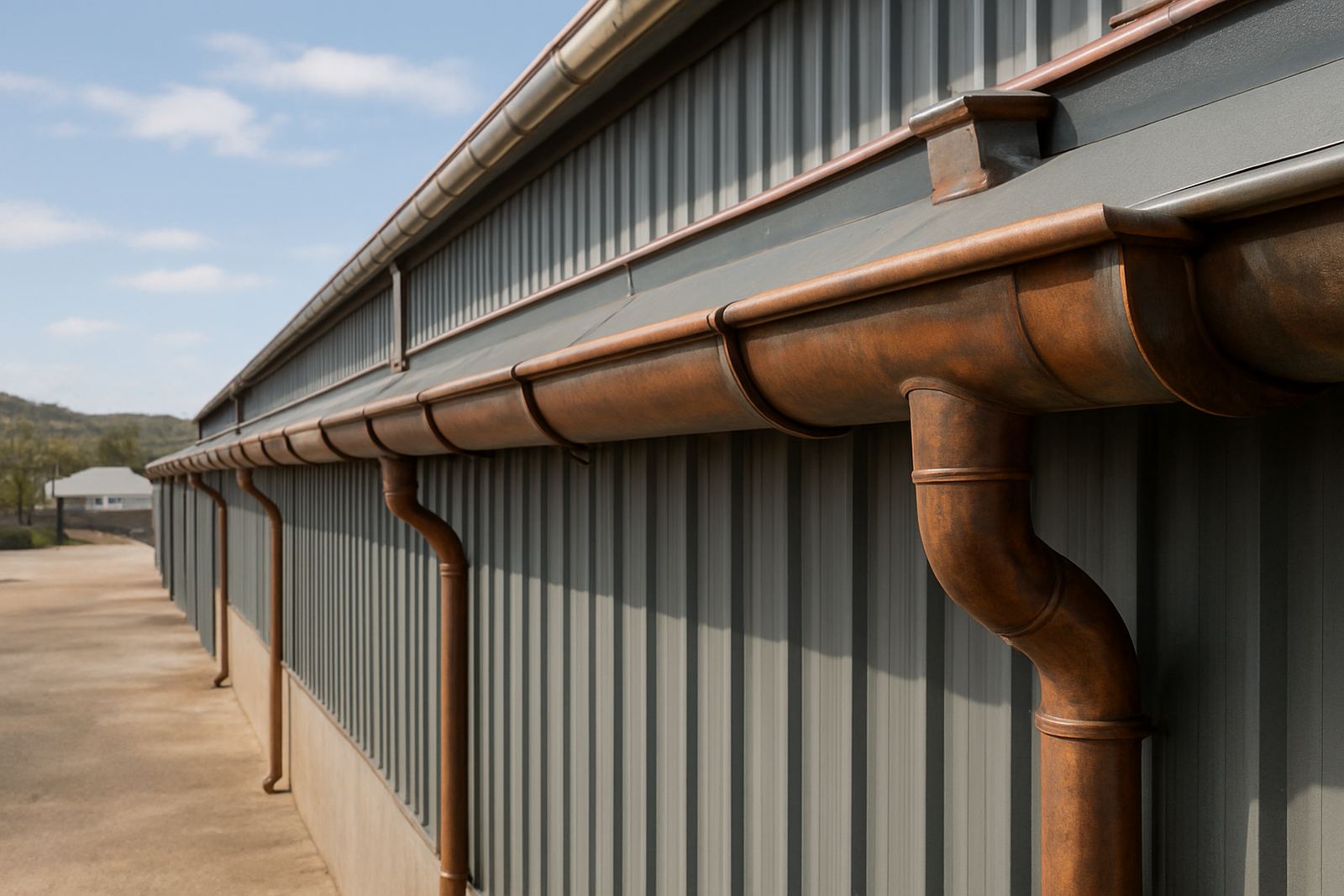
When replacing gutters, the job should not stop at the visible section that leaks. The full run needs checking so the new installation works as a system. That includes the fall, the brackets, the joints, the downpipes and the points where water leaves the roof.
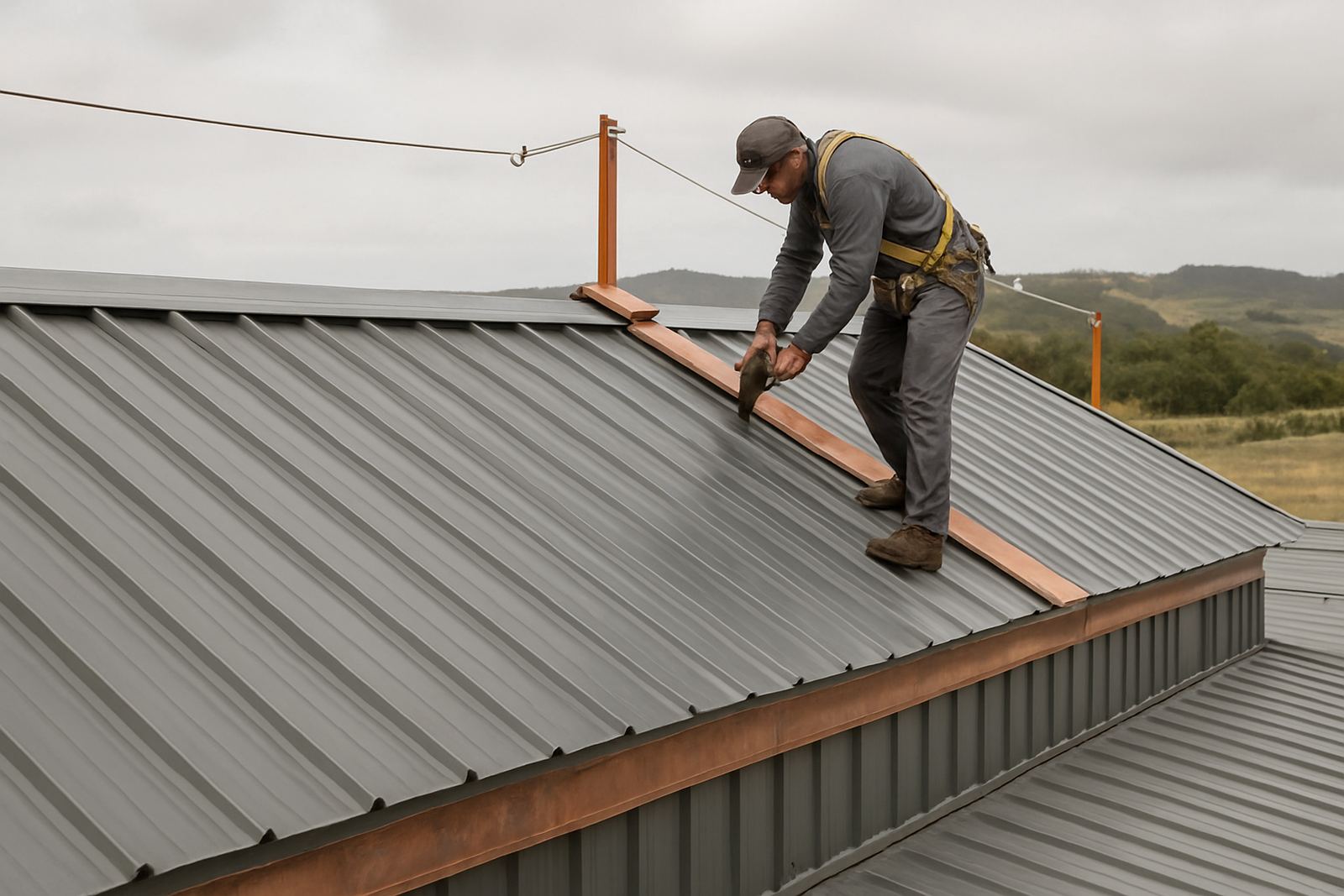
A proper replacement can also uncover hidden issues with flashings or roof sheet edges. If those parts are weak, water can still enter behind the gutter even after new sections are fitted. That is why careful measuring on site matters, especially on older steel buildings and carports where several elements meet at the eaves.
- Measure the full roof line before fabrication
- Check brackets, outlets and downpipe positions
- Inspect fascia boards and roof edges for damage
- Confirm the fall so water drains cleanly
For owners across Mossel Bay, George and nearby towns, replacement is often the best choice when the gutter system is old, uneven and repeatedly failing. Fixing one leak can buy time, but it should not hide the fact that the full run is no longer doing its job.