Why coastal wind changes the rules for roof sheeting
On the coast, wind is not only stronger, it is more irregular. One day you get steady south-easterly pressure, then a gusty afternoon can pull at corners, ridge lines and overhangs with very different force. That matters on light-gauge roof sheeting because the sheet itself may look fine while the fixings and edge details start working loose.
In Mossel Bay, Hartenbos and Great Brak River, we often see the same pattern after a windy spell. Sheets at the perimeter move first, then screw holes open up, then water starts finding its way under laps. A roof can still look straight from the ground but the small movements are already there. If those are ignored, you get vibration, noise and eventually leaks around flashings and fasteners.
The practical point is simple: wind loading is not only a structural issue, it is also a maintenance issue. The better the fixing layout and edge support, the less the roof has to fight the wind on every gust.
Fixings need the right spacing and the right bite
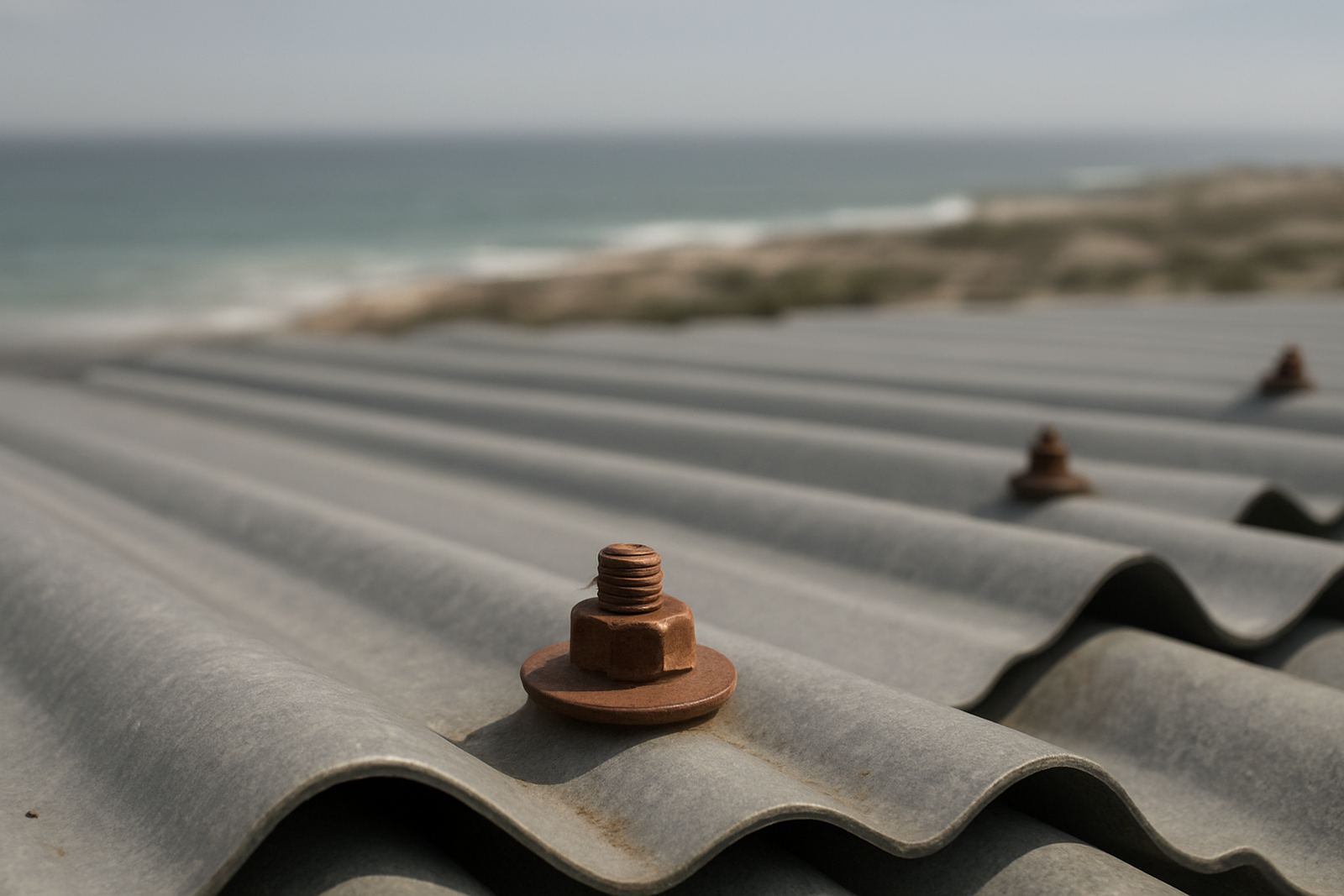
When sheet metal is fixed for coastal work, the holding power of each fastener matters as much as the sheet thickness. A screw that is too short, too close to an edge or fitted into tired timber will not hold the way it should. On steel purlins, washer seating and correct drilling are just as important. If the washer is not sealing flat, wind can work water under the head and start corrosion around the hole.
We normally look at fixing spacing, edge rows and whether extra fasteners are needed at corners, ridges and eaves. Those are the places where suction is highest. On a long roof in George or Wilderness, for example, the middle of the sheet may stay stable while the first metre at the edge takes the worst of the lift.
- Use fixings suited to the substrate, whether timber or steel
- Check that washers are seated properly and not over-tightened
- Increase fixing density at exposed edges and corners
- Replace rusted or stripped screws before the next windy season
It sounds basic, but a lot of roof trouble starts with one poor fixing row and then spreads from there.
Edge details carry more load than most people expect
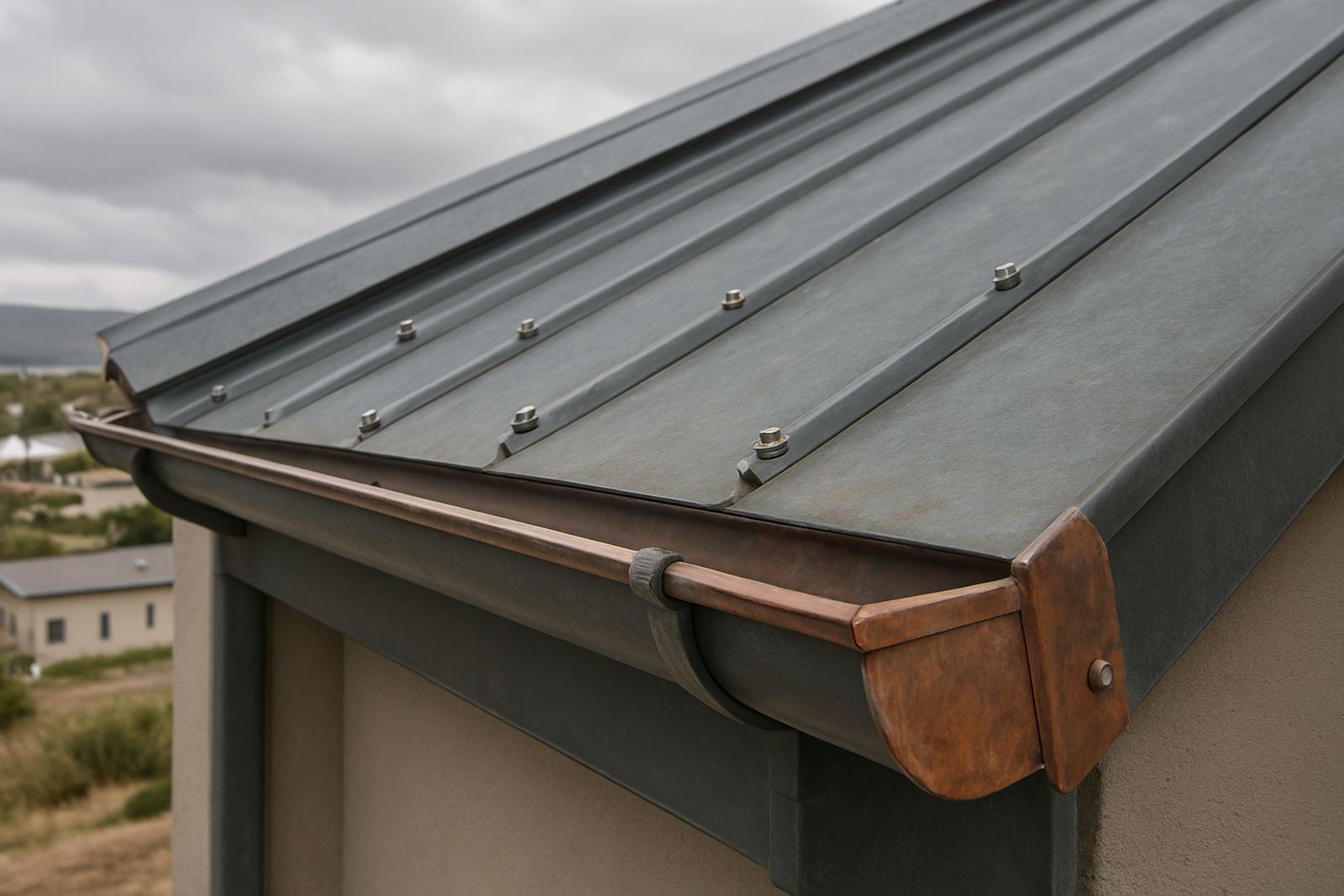
The edges of a roof are where wind gets underneath first. That is why barge flashings, verge closures, ridge caps and apron flashings need to be made and installed properly. If those details are loose, thin or badly overlapped, the wind uses the opening like a lever. On a coastal building, the edge detail must also deal with salt in the air and driving rain, not only uplift.
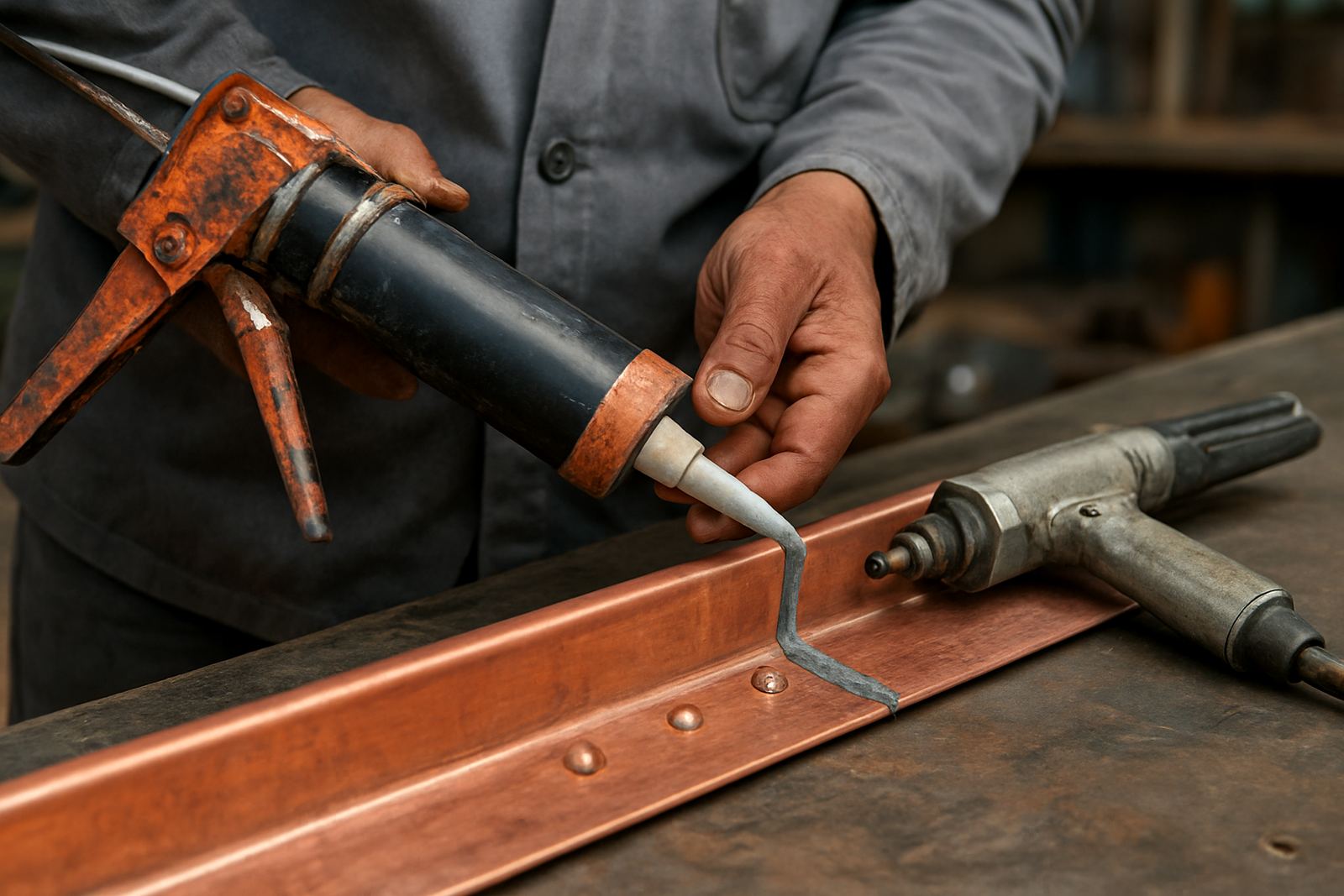
At our workshop in Gouriqua Park, we make custom flashings for jobs where the standard piece does not suit the roof line or wall finish. That is common on older buildings, extended carports and new steel structures with unusual spans. A proper flashing should do three things: cover the joint, shed water, and stay fixed under movement.
- Keep overlaps consistent and oriented away from prevailing wind where possible
- Seal lap joints where the roof profile and exposure call for it
- Allow for thermal movement so the flashing does not buckle
- Use thicker sections where the edge is fully exposed
A flashing that looks neat but has no real fastening pattern will not last through a windy winter.
How wind lifts water in under a roof line
People often think leaks come from rainfall alone, but wind changes how water behaves. In strong gusts, rain can blow upward and sideways, forcing moisture into laps, around screw holes and beneath poorly formed drip edges. That is why a roof with no visible damage can still leak after a storm.
One practical example is a workshop roof near Hartenbos that had repeated wet patches after south-easterly weather. The sheets were sound, but the ridge detail was too open and the gutter line had a weak return edge. Wind was pushing spray and rain under the roof edge and into the fascia area. Once the ridge cap, flashing turns and gutter entry detail were corrected, the problem stopped.
If the roof is already ageing, inspections should focus on the small entry points, not only the big visible faults. Look at overlaps, fastener lines, side laps, ridge joints and the first sheet row at the eaves.
What to check before the windy season starts
Before winter or before a stretch of coastal front weather, a proper inspection saves money. For industrial roofs, carports and residential steel roofs, the check should cover more than just loose sheets. You want to know whether the fixing pattern is still holding, whether corrosion has started, and whether the edge metal is still locked down.
Our maintenance inspections usually start with a visual walkdown and then a closer look at problem areas. If needed, we replace damaged fasteners, refit loosened flashings and repair localised leaks before they spread.
- Check for rust staining around screws and sheet laps
- Inspect ridge caps, barge flashings and valley lines
- Look for lifted edges after previous wind events
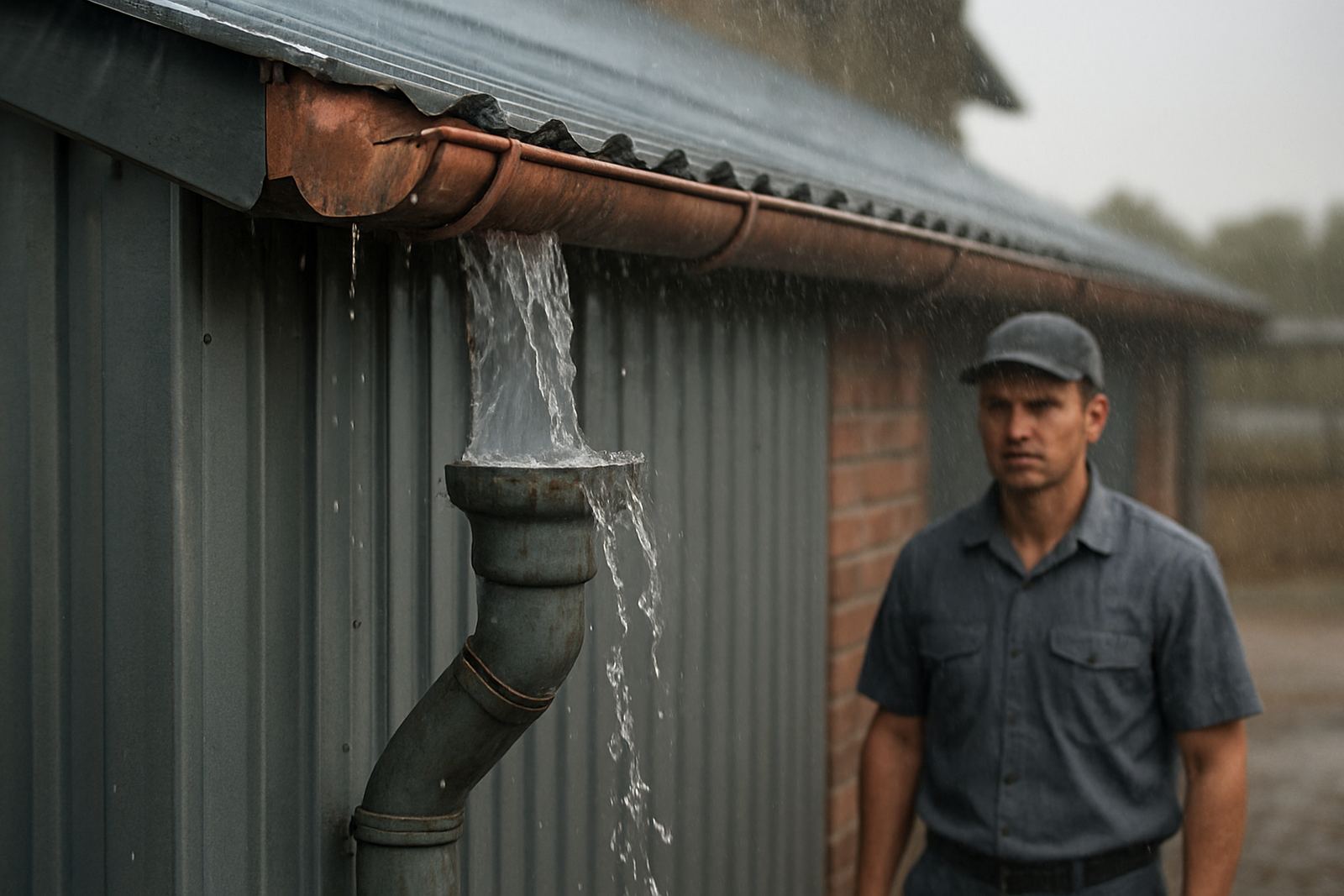
- Confirm gutters are clear so overflow does not back up under the sheets
- Check for movement where sheets meet walls, parapets or chimneys
On coastal jobs, small maintenance work is usually cheaper than emergency callouts after a blowy weekend.
A Mossel Bay approach that suits the coast
In Mossel Bay, roof and wall sheeting has to cope with wind, salt air and quick weather changes. That means the detailing must be practical, not just neat on paper. Whether we are installing a carport, replacing a gutter run or erecting a steel frame for cladding, the fixing pattern and edge trims need to suit the exposure on that site.
For a property in Gouriqua Park or a commercial building closer to the water, we will usually factor in extra attention to exposed corners and open-sided structures. Carports and lean-to additions often need stronger edge restraint than people expect because wind can get under them from the side. The same applies to open industrial bays and long roof runs where the structure flexes a little in strong gusts.
If you are planning new sheeting work, the best time to deal with wind is before the first sheet goes up. Once the roof is on, changes become more expensive and awkward. Getting the fixings, flashings and gutters right from the start is the safer option.